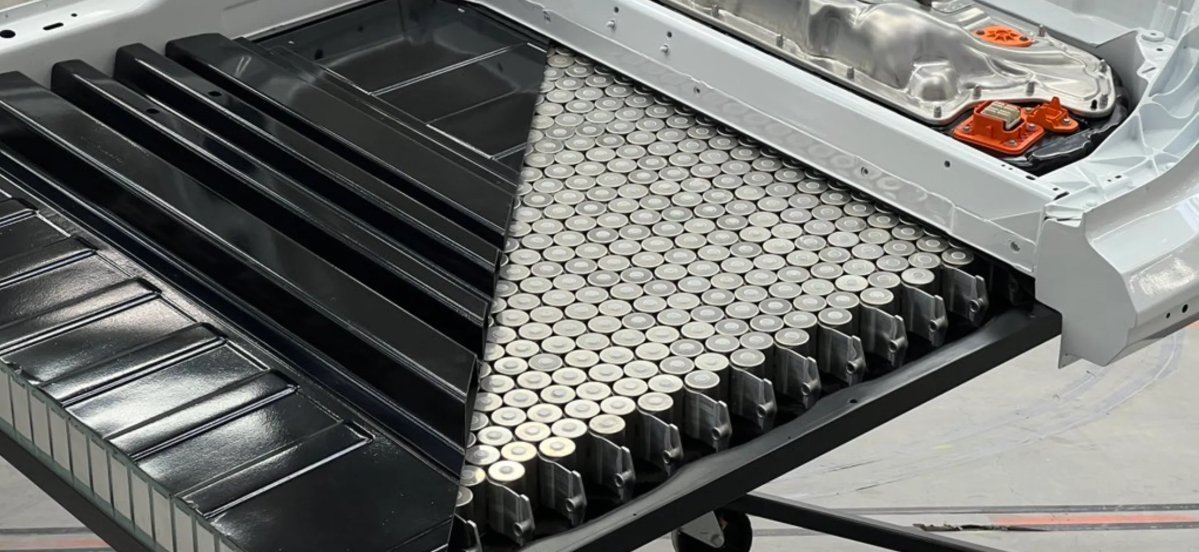
Mass manufacturing of the long-awaited Cybertruck range extender battery pack has officially entered high-volume production in mid-2026. Official company disclosures indicate that assembly lines dedicated to the auxiliary power pack are operating near maximum designed capacity. This critical manufacturing ramp aims to resolve lingering range limitations while fulfilling early reservation holders across North America.
The add-on structural pack drops directly into the truck bed, providing additional energy storage that expands total driving distance past four hundred miles per charge. Automotive industry analysts note that scaling this specialized battery architecture represents a key milestone for electric utility vehicles. Achieving stable yield rates has unlocked broader commercial viability for heavy-duty EV haulers across demanding sectors.
Mass Production Milestones at Giga Texas
Engineering data submitted to state environmental regulators highlights the dedicated footprint assigned to the range extender pack within the Gigafactory Texas complex. Production lines utilize advanced high-speed robotic cell assembly, automated module placement, and continuous laser welding systems. These automated processes drastically cut down manufacturing bottlenecks that previously delayed large-scale deployment of high-voltage accessory packs.
Initial factory output was constrained by cell availability and complex structural mounting integration within the stainless-steel bed. However, official company disclosures confirm that factory modifications introduced in early 2026 stabilized cell insertion speeds. The facility now completes hundreds of individual pack assemblies daily, matching current vehicle assembly line throughput and streamlining install schedules.
Factory technicians install the secondary packs using specialized overhead gantries, ensuring rigid connection to chassis hardpoints. Regulatory filings detail extensive crash testing and thermal isolation validation conducted prior to final assembly sign-off. These structural reinforcements prevent pack displacement during off-road operations or severe impacts, maintaining structural integrity across rigorous driving conditions.
Technical Architecture and Energy Density
The range extender leverages second-generation 4680 cylindrical cells featuring refined dry cathode manufacturing technology. Engineering data confirms that these improved cells offer a ten percent increase in gravimetric energy density compared to early production runs. This chemical refinement allows the bed-mounted module to deliver roughly fifty kilowatt-hours of extra capacity while weight penalties remain strictly managed.
Integrated liquid cooling plates interleave between cell banks to maintain optimal operating temperatures under continuous heavy discharge. Official company disclosures highlight that liquid thermal loops connect seamlessly into the primary vehicle coolant manifold upon physical installation. This shared thermal architecture prevents overheating during rapid high-power Supercharging sessions and sustained high-speed towing scenarios.
To maximize payload functionality, the aluminum structural housing features protective armored plating against cargo abrasion and debris. Engineering data reveals that the protective casing adds rigidity while occupying roughly one-third of the total cargo bed volume. High-voltage connectors link directly to the high-voltage bus, enabling real-time power balancing between the primary bottom-mounted battery and auxiliary pack.
Supply Chain Dynamics and Cell Logistics
Securing raw material streams for expanded 4680 cell manufacturing required extensive restructuring across global supply chain networks. Regulatory filings show expanded supply agreements for refined cathode active materials and battery-grade lithium hydroxide. Industry analysts note that domestic precursor processing facilities in North America have significantly reduced geopolitical logistics risks and lowered per-kilowatt-hour production costs.
Cathode processing yield improvements have directly accelerated production velocity across regional manufacturing hubs. Official company disclosures mention that localized cell manufacturing near Texas assembly sites drastically minimizes transit expenses. By keeping cell fabrication and vehicle integration within localized geography, transport emissions and transit delays are cut by more than forty percent.
Strategic recycling loops integrated into the production line allow prompt recovery of scrap materials from early manufacturing stages. Engineering data confirms that closed-loop cathode re-processing yields highly purified active powders suitable for immediate re-entry into cell manufacturing line runs. This process minimizes raw material waste while stabilizing overall manufacturing overhead during high-volume production operations.
Market Impact and Delivery Timelines
Service centers across North America have begun installing the range extender unit for existing dual-motor and tri-motor vehicle owners. Official company disclosures indicate that certified installation procedures take under three hours per vehicle at qualified service locations. Demand remains high as commercial fleet operators prioritize extended range capability for long-distance payload hauling and remote jobsite work.
Industry analysts note that optional range extenders offer a scalable model for utility-focused pickup truck adoption. By unbundling heavy long-range batteries from base vehicle purchases, buyers select battery sizes according to operational requirements. This approach reduces initial vehicle acquisition costs while providing upgrade paths for buyers requiring maximum driving range later in ownership.
Broader Automotive Industry Implications
Competing electric truck manufacturers are evaluating modular auxiliary battery solutions following this successful high-volume rollout. Regulatory filings reveal several patent applications from rival automakers seeking modular chassis-mounted auxiliary energy storage designs. Industry analysts predict that modular range extension will become a standard option across commercial utility trucks by the late 2020s.
As 2026 progresses, high-volume production of the Cybertruck range extender highlights shifting priorities toward flexible battery configurations. Engineering data indicates that software integration between main packs and add-on packs sets new standards for multi-battery vehicle management. The successful manufacturing deployment proves that add-on energy storage can resolve commercial electric vehicle range challenges at scale.