Elon Musk Boring Company Reaches $23B Valuation Led By UAE
The Boring Company has finalized a massive $3 billion Series D funding round led by investment entities affiliated with the United Arab Emirates. According to regulatory disclosures, the deal elevates the tunneling enterprise to a $23 billion valuation. This marks a fourfold surge from its 2022 evaluation of $5.7 billion, despite much of the market value relying on unexcavated infrastructure.
The primary investor group features major financial institutions, including Sequoia Capital, Andreessen Horowitz, Temasek, Valor Equity Partners, Vy Capital, Human Capital, Shamal Holding, and Baron Capital. Executive announcements indicate that capital will be allocated toward engineering hiring, scaling regional transit operations, and advancing research into the next-generation Prufrock tunnel-boring machines to battle urban gridlock.
Middle East Expansion Takes Center Stage
The centerpiece of the funding package links capital investment directly to commercial deployment across the Middle East. Sovereign entities have committed to building more than 150 kilometers of subterranean transit networks across the UAE. Industry filings reveal that the primary financial backer of this funding round will simultaneously act as the main customer for the enterprise.
Initial work builds upon the previously awarded Dubai Loop pilot, which encompasses a 6.4-kilometer subterranean corridor featuring four dedicated transit stations. While structural precast segment production for the project is currently underway, actual tunnel excavation is scheduled for late 2026. To date, no active passenger-carrying tunnels are operating within the region.
Automotive analysts observe that the regulatory framework in the UAE provides distinct advantages for high-risk infrastructure projects. Streamlined permitting processes allow rapid deployment compared to western jurisdictions. Regional leadership has shown a willingness to fund ambitious infrastructure experiments, aligning with the aggressive operational timelines championed by executive leadership.
The Vegas Loop Reality and Hard Rock Drilling
Las Vegas remains the sole municipality where the transit venture operates a fully functional commercial service. Municipal records show the Vegas Loop has transported over four million passengers to date. Local authorities in Clark County recently approved 19 additional stations, expanding the total authorized network to 123 stations across the city.
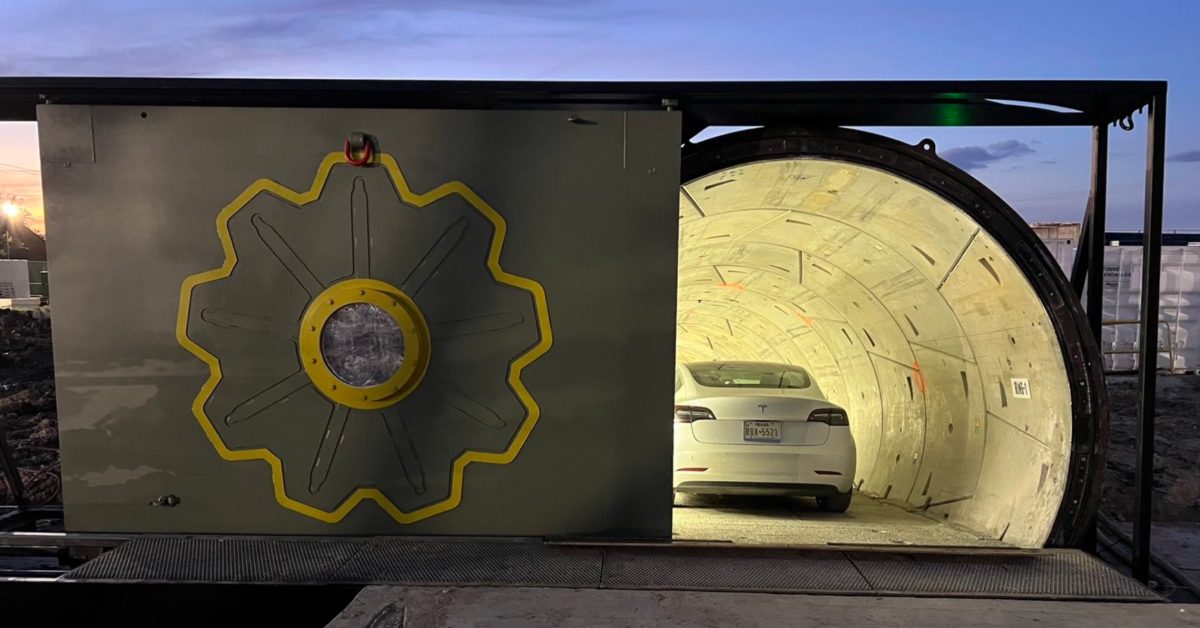
Crews recently initiated excavation on the 14th tunnel segment in Las Vegas, bringing the enterprise's cumulative total to 25 completed tunnels globally. Despite these operational milestones, passenger transport relies primarily on human drivers operating Tesla Model Y vehicles at moderate speeds, prompting ongoing industry debates regarding whether the system outperforms traditional mass transit solutions.
Outside of Nevada, the enterprise has expanded into hard-rock mining with the Music City Loop in Nashville, Tennessee. State regulatory permits were issued on February 25, 2026, with active tunneling commencing immediately. By late summer, two Prufrock machines were actively mining beneath the surface, while a third unit underwent final assembly at Texas manufacturing facilities.
A Graveyard of Unfulfilled Infrastructure Promises
The company's soaring market valuation stands in sharp contrast to its historical project execution across North America. Since 2017, corporate announcements introduced nearly a dozen municipal transit proposals in major metropolitan areas. However, nearly all of these proposed projects were eventually stalled, canceled, or quietly abandoned before breaking ground.
High-profile failures include the Chicago O'Hare Express, unveiled in 2018 under a proposed $1 billion private financing framework. The project lacked formal contracts and collapsed following a municipal administration change in 2019. Similarly, a proposed high-speed underground link connecting Washington, D.C., to Baltimore received preliminary state approvals before being quietly scrubbed from public disclosures.
Municipal negotiations in California and Texas suffered similar outcomes. An airport connector proposal in Ontario, California, was abandoned after estimated costs rose from $45 million to nearly $500 million. In San Antonio and Fort Lauderdale, local transit agencies reported that contract negotiations stalled completely after project developers ceased official communications regarding proposed airport and beach connections.
West Coast ambitions hit significant administrative barriers as well. Projects in Los Angeles, including a proposed test tunnel beneath Sepulveda Boulevard and the Dugout Loop serving Dodger Stadium, were permanently shelved. Stringent environmental review procedures and vocal community opposition ultimately prevented the necessary municipal permits from being issued.
High Valuations Versus Commercial Execution
Industry analysts note that a $23 billion market valuation places immense pressure on execution speed and technical validation. Investors are betting heavily on automated tunneling machinery drastically lowering subterranean construction costs. However, proving financial viability requires transitioning from small-scale vehicle transport to mass-capacity urban transit networks.
Independent transit experts continue to question the fundamental efficiency of underground point-to-point vehicle loops. While full-scale computational simulations demonstrating superior capacity over traditional light rail were promised years ago, clear public data remains limited. Demonstrating high-throughput vehicle routing without station bottlenecks remains critical for long-term public adoption.
The influx of $3 billion in fresh capital provides the necessary runway to refine tunneling hardware and demonstrate viability in Middle Eastern developments. If advanced Prufrock boring machines can significantly increase excavation speeds, the company may finally fulfill its original vision of revolutionizing urban transit and solving global traffic congestion.
