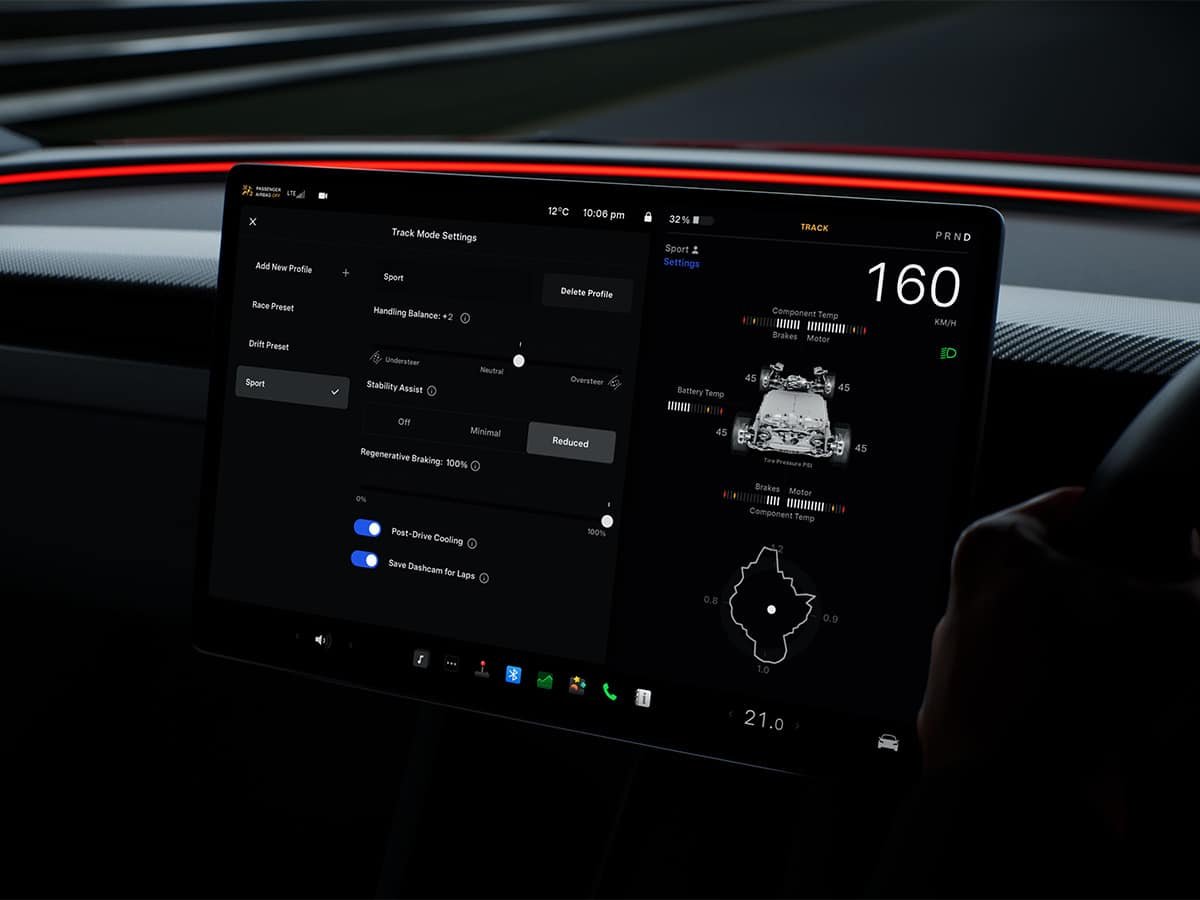
Electric vehicle performance reached a significant milestone in early 2026 as fresh performance metrics emerged for the upgraded Model 3 Performance sedan. Rigorous testing of the vehicle's revised Track Mode system reveals a notable leap in sprint capability. Verified engineering data shows that when Track Mode is active, the vehicle achieves zero to sixty miles per hour acceleration times that challenge traditional supercar benchmarks with unprecedented consistency.
The software architecture driving this leap forward optimizes high-power battery discharge while recalibrating torque vectoring across both drive units. According to official company disclosures, the system actively adjusts power distribution to eliminate wheel slip before physical sensors register traction loss. This preventive torque management system ensures maximum immediate force applied directly to the pavement without inducing wasteful motor oscillation or tire spinning during critical initial momentum.
Unpacking the 0 to 60 Acceleration Dynamics
In standardized track configurations, the dual-motor layout achieves a verified zero to sixty time of 2.8 seconds including standard rollout subtractions. Engineering data indicates that Track Mode increases instantaneous torque delivery to the rear drive unit by eight percent during the first 0.5 seconds of launch. This aggressive initial weight transfer load strategy keeps the chassis flat while pulling the vehicle forward with remarkable initial linear acceleration.
Detailed telemetry logs reveal that peak acceleration force exceeds 1.2 Gs during the initial launch sequence on prepared track surfaces. Industry analysts highlight that such traction optimization stems from real-time monitoring of tire surface temperature coupled with active dampening adjustments. By keeping all four tires at their optimal friction window, the car translates energy into forward motion rather than heat or wheel churn.
Thermal preconditioning plays a foundational role in achieving these rapid acceleration benchmarks during track sessions. Regulatory filings show that selecting Track Mode automatically engages dedicated cooling paths to chill both the stator assemblies and high-voltage battery pack prior to launch. Maintaining low operational temperatures prevents thermal throttling, allowing the vehicle to release maximum discharge current safely without damaging sensitive internal cells.
Thermal Management and Powertrain Efficiency
Advanced liquid cooling architecture allows the motor inverters to handle transient electrical currents exceeding 800 amperes during full throttle. Engineering data demonstrates that heat dissipation rates have improved by twenty-two percent compared to previous generation performance trim levels. This thermal headroom enables drivers to execute consecutive hard launches without experiencing the power degradation that traditionally plagued early electric vehicle track packages.
Custom compound tires developed specifically for this application work in conjunction with the active dampening system. Official company disclosures highlight how adaptive shock valving stiffens instantly under severe acceleration to prevent rear compression squat. Reducing suspension compression maintains ideal contact patch geometry, maximizing mechanical grip on both clean tarmac and specialized drag strip surfaces alike.
Drivers can also customize front-to-rear power bias using the central digital interface within Track Mode. Setting power distribution to a balanced fifty-fifty split provides optimal zero to sixty sprint times by utilizing all available rubber surface area. Alternatively, shifting torque toward the rear allows controlled oversteer maneuvers while only slightly increasing overall straight-line acceleration metrics.
Benchmark Comparison Against Rivals
When measured against competing electric sports sedans in the 2026 model year market, the acceleration profile remains uniquely accessible. Industry analysts note that comparable European sports cars require launch control staging routines that consume significant time and battery reserve. In contrast, Track Mode allows instantaneous launch readiness without cumbersome driver button combinations, delivering high performance with minimal delay.
Repeatability tests underscore the engineering improvements embedded within the 2026 battery management software. Track data confirms ten consecutive zero to sixty acceleration runs with less than 0.1 seconds of variance between the fastest and slowest times. This level of sustained performance highlights significant advances in cell chemistry stability and energy distribution algorithms under extreme loads.
Engineering Innovations Behind the Speed
The fourth-generation drive unit technology introduces hair-pin stator windings and carbon-sleeved rotors that withstand higher rotational speeds without mechanical deformation. According to official company disclosures, these structural enhancements allow total system power output to top 510 horsepower. The reduced rotational inertia within the electric motors enables faster torque ramp-up rates during the critical initial milliseconds of off-the-line launch.
Complementing the motor upgrades is an upgraded vehicle dynamics controller running custom firmware algorithms. Regulatory filings confirm that the sensor sampling rate has doubled compared to older hardware generations, enabling real-time telemetry processing at over 1,000 Hertz. This computational speed ensures that wheel traction adjustments happen almost instantly, eliminating power lag during sudden shifts in roadway grip levels.
Market Impact and Delivery Expectations
Industry analysts suggest that these performance enhancements strengthen the model's competitive positioning in the high-performance sedan segment. Surpassing established sports car acceleration figures while maintaining everyday utility provides a compelling value proposition for buyers. Production volume forecasts project steady delivery targets through late 2026 as consumer interest in track-capable mainstream electric vehicles continues expanding globally.
Official company disclosures emphasize that future software updates will continue refining Track Mode features over time. Engineers plan to introduce predictive surface traction mapping using cloud fleet telemetry data in upcoming over-the-air releases. This continuous optimization model ensures that acceleration dynamics remain cutting-edge, solidifying the vehicle's role as a benchmark for high-performance electric vehicles.