
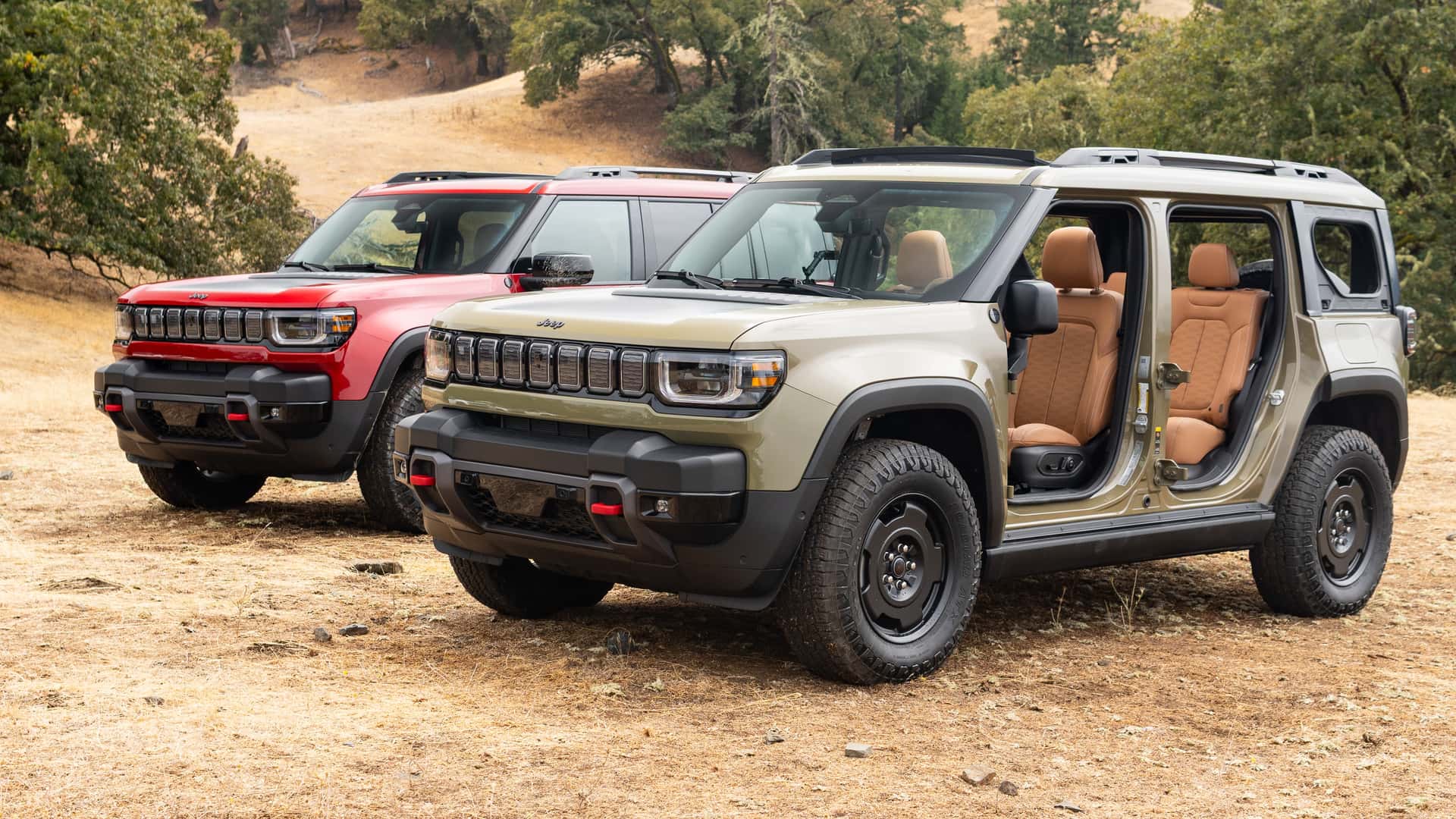
Why The Jeep Recon EV Range Backlash Misses The Mark
The Controversy Over The Electric Off-Roader
Automotive enthusiasts and prospective buyers recently voiced sharp criticism regarding the upcoming Jeep Recon Moab EV. Initial specification sheets revealed an EPA-estimated range of just 222 miles on a full charge, paired with a starting price tag of $66,995. Many online commenters and industry observers quickly declared that the brand had under-delivered, demanding both greater battery range and a significantly lower entry cost for a modern EV.
However, asserting that a manufacturer can deliver high-end off-road capability, extended driving range, and a budget price point simultaneously fundamentally misinterprets automotive engineering. Automotive design is ultimately an exercise in managing conflicting performance goals. While a 222-mile range might appear lacking compared to streamlined street crossovers, evaluating the vehicle strictly through a highway commuting lens misses the primary purpose of its technical design and mechanical layout.
The Uncompromising Physics Of Off-Road Engineering
Drivers accustomed to internal combustion vehicles already understand this dynamic, even if they do not explicitly frame it in EV terms. A gas-powered, body-on-frame truck equipped with lifted suspension, wide all-terrain tires, and aggressive four-wheel-drive gearing rarely achieves respectable fuel efficiency. Most lifted off-road trucks struggle to exceed 15 miles per gallon on highway routes. Physics enforces the exact same energy penalties on electric powertrains as it does on gas engines.
When engineers raise a vehicle’s ride height to increase ground clearance, they drastically enlarge its frontal area and disrupt airflow underneath the chassis. Fitting massive 33-inch all-terrain tires provides essential mechanical grip in mud and over loose rocks, but those deep tread patterns create immense rolling resistance and aerodynamic drag at highway speeds. Every design choice that enhances off-road survival directly degrades energy efficiency when traveling fast in a straight line.
Comparing The Recon Moab To The Wagoneer S
A direct comparison within the brand’s own electric lineup illustrates how mechanical hardware impacts efficiency. The sleeker Jeep Wagoneer S utilizes the exact same 100.5 kilowatt-hour battery pack as the Recon Moab, yet achieves an impressive EPA-estimated range of up to 294 miles. The significant 72-mile disparity between the two models does not stem from battery chemistry differences or motor inefficiency, but rather from their vastly divergent physical purposes.
The Wagoneer S sits low to the ground with street-oriented tires and a smoothed exterior engineered to slice through wind. Conversely, the Recon Moab features 9.1 inches of ground clearance, aggressive approach and departure angles, heavy underbody skid plates, and a boxy silhouette. The extra weight from protective armor and the drag from open trail geometry consume significant electrical energy. Jeep deliberately traded high-speed highway efficiency to secure legitimate off-road capability.
Gearing Ratios And The Low-End Torque Dilemma
A frequently overlooked technical detail driving the Recon’s range reduction involves internal gear reduction ratios. While electric vehicles typically operate without multi-speed transmissions, they rely on fixed gear sets between the electric motor and the drive axles to deliver power to the wheels. Tall gear ratios favor high-speed cruising efficiency, whereas short gear ratios amplify low-speed torque for climbing steep obstacles and crawling over rugged terrain.
To grant the Recon Moab true trail dominance, engineers implemented a short 15:1 gear ratio on the rear motor assembly. This aggressive gearing significantly increases wheel torque from a complete standstill, allowing the vehicle to push through deep sand, mud, and technical rock sections. However, this mechanical advantage forces the electric motor to spin at much higher revolutions per minute during highway cruising, causing energy consumption to spike dramatically.
Why Off-Road EV Range Is A Necessary Trade-Off
Industry filings and technical disclosures confirm that electric off-roaders encounter unique engineering boundaries that conventional road cars never face. Sacrificing highway efficiency is not a design oversight; it is an unavoidable consequence of building a platform capable of tackling demanding backcountry trails. If the vehicle featured a low air dam, reduced clearance, and slick highway tires, it could easily hit 300 miles, but it would lose its essential trail identity.
Analyst reports highlight that early adopters of electric trail rigs must reframe their expectations around charging metrics and utility. Off-roading has always required compromises in fuel economy, ride comfort, and noise levels. The Recon Moab prioritizes low-speed wheel torque, underbody protection, and ground clearance over aerodynamic slipperiness. Evaluating an off-road specialist purely on highway range ignores the complex physics required to build a genuinely capable trail machine.
Ultimately, expecting a vehicle to deliver extreme rock-crawling prowess while maintaining a low price point and class-leading battery efficiency remains an engineering fantasy. Specialized vehicles require specialized hardware, and specialized hardware comes with inherent energy costs. The Recon Moab’s range reflects a deliberate commitment to rugged performance over suburban compromise, delivering true capability to enthusiasts who prioritize dirt over distance.
As battery energy densities improve and charging infrastructure expands into remote areas, the range penalty associated with off-road EVs will gradually diminish. For now, buyers must choose which capabilities matter most to their daily driving habits. Accepting a 222-mile range is simply the price of admission for genuine off-road capability in the zero-emission era.
