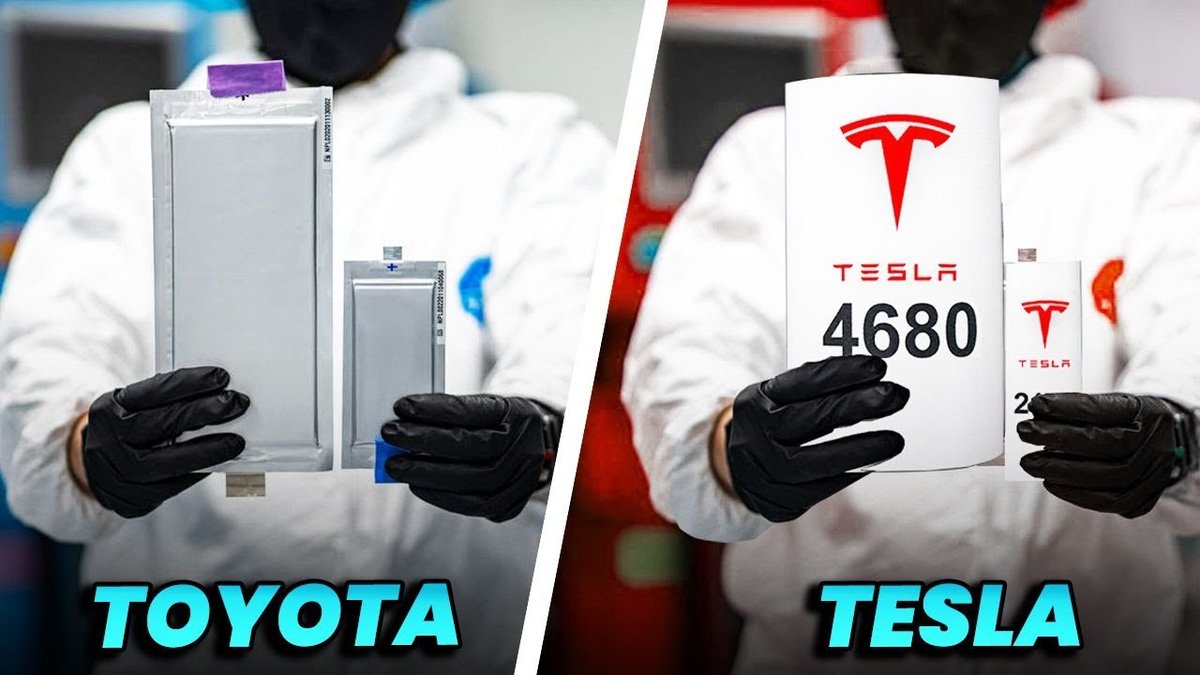
As the electric vehicle sector enters mid-2026, the global automotive market faces a defining technological fork in cell architecture. Engineering data shows that the cost divergence between high-volume 4680 cylindrical cells and emerging solid-state chemistries is shaping vehicle design strategies. While mass-market manufacturers focus on driving production costs down through manufacturing speed, premium brands are absorbing higher initial expenditures for energy-dense solid-state solutions.
Scaling Economies of the 4680 Format
Official company disclosures indicate that scaled 4680 cell production has achieved unprecedented manufacturing efficiency in 2026. The widespread implementation of dry electrode coating techniques has successfully eliminated energy-intensive baking ovens from production lines. Industry analysts estimate this process innovation has reduced cell-level manufacturing costs by nearly eighteen percent compared to traditional wet-slurry methods, bringing 4680 production close to seventy-five dollars per kilowatt-hour.
Beyond individual cell economics, structural battery pack integration has further expanded the financial advantages of 4680 formats. Regulatory filings from major automakers reveal that using the cell casing as a structural load-bearing member eliminates hundreds of redundant pack components. This structural consolidation lowers overall assembly expenditures, enabling vehicle manufacturers to maintain healthy profit margins on mid-tier mass-market electric sedans and crossovers.
However, raw material volatility continues to impact the cost trajectory of high-nickel 4680 variants entering market deployment. Engineering data highlights that while process efficiencies offset factory overhead, fluctuations in precursor metals maintain pricing pressure on cell chemistry. Automakers are increasingly pairing 4680 form factors with lithium iron phosphate chemistries to secure predictable cost floors for high-volume vehicle fleets.
Solid-State Production Hurdles and Premiums
Conversely, commercial solid-state battery production remains significantly more expensive on a per-kilowatt-hour basis in 2026. Official company disclosures acknowledge that synthesizing solid inorganic electrolytes, particularly sulfide and oxide compounds, requires costly precursor materials and specialized processing environments. Industry analysts estimate current pilot-scale solid-state cells cost between one hundred forty and one hundred eighty dollars per kilowatt-hour, representing a substantial premium over mature liquid-electrolyte formats.
Manufacturing yield rates present another critical economic obstacle for early solid-state commercialization efforts. Engineering data suggests that micro-crack formation during solid electrolyte separator pressing leads to scrap rates exceeding fifteen percent on pilot production lines. These high scrap losses inflate effective cell costs, forcing pioneering automakers to restrict solid-state applications exclusively to flagship luxury vehicles and ultra-high-performance sports cars.
Despite elevated cell-level expense, solid-state technology offers compelling system-level savings that partially bridge the financial gap. Regulatory filings demonstrate that solid-state cells can safely operate across wider temperature thresholds without risk of thermal runaway. This inherent stability allows engineering teams to strip away heavy, complex liquid-cooling plates and associated plumbing from the battery enclosure.
System-Level Integration and CapEx Realities
The reduction in auxiliary cooling systems yields substantial weight savings and simplifies overall battery management software requirements. Engineering data confirms that solid-state packs achieve superior volumetric energy density, allowing vehicle designers to fit equivalent energy capacity into significantly smaller physical footprints. This spatial efficiency reduces the structural steel and aluminum necessary for chassis construction, partially offsetting the higher baseline cost of solid-state cells.
Capital expenditure demands also diverge radically between these competing battery formats across global manufacturing facilities. Industry analysts report that converting existing Gigafactory lines to accommodate 4680 cylindrical production requires modest capital investment relative to throughput output. In contrast, solid-state manufacturing requires clean-sheet facilities equipped with ultra-dry environment controls and high-pressure hot-isostatic pressing equipment, representing immense upfront capital deployment.
Supply Chain Maturity and Material Costs
Supply chain readiness heavily favors the 4680 format throughout the 2026 calendar year. Official company disclosures show that global refining capacity for standard cathode and anode materials fully supports mass 4680 manufacturing scaling. Existing supply chains leverage established bulk purchasing agreements, insulating 4680 producers from the localized bottlenecks currently plaguing specialized solid electrolyte material suppliers.
For solid-state producers, securing consistent supplies of high-purity lithium metal anodes remains a major cost driver. Engineering data indicates that thin-film lithium foil manufacturing processes suffer from high equipment depreciation costs and limited supplier redundancy. Consequently, material inputs for solid-state batteries are expected to remain elevated until supply chains mature toward the end of the decade.
Market Segmentation and Future Parity
Market dynamics in 2026 indicate a clear bifurcation in how automakers deploy these two distinct battery architectures. Regulatory filings confirm that mainstream original equipment manufacturers are doubling down on 4680 configurations for high-volume trucks, crossovers, and commercial vans. The format provides the optimal intersection of cost efficiency, structural utility, and rapid manufacturing throughput necessary for mass EV adoption.
Simultaneously, solid-state technology is carving out a profitable niche in premium automotive segments where consumers tolerate higher retail price tags. Industry analysts project that as solid-state production yields improve and material supply chains expand, cell costs will gradually decline toward one hundred dollars per kilowatt-hour by 2030. Until that threshold is reached, 4680 cells will remain the dominant engine of cost parity with internal combustion engines.