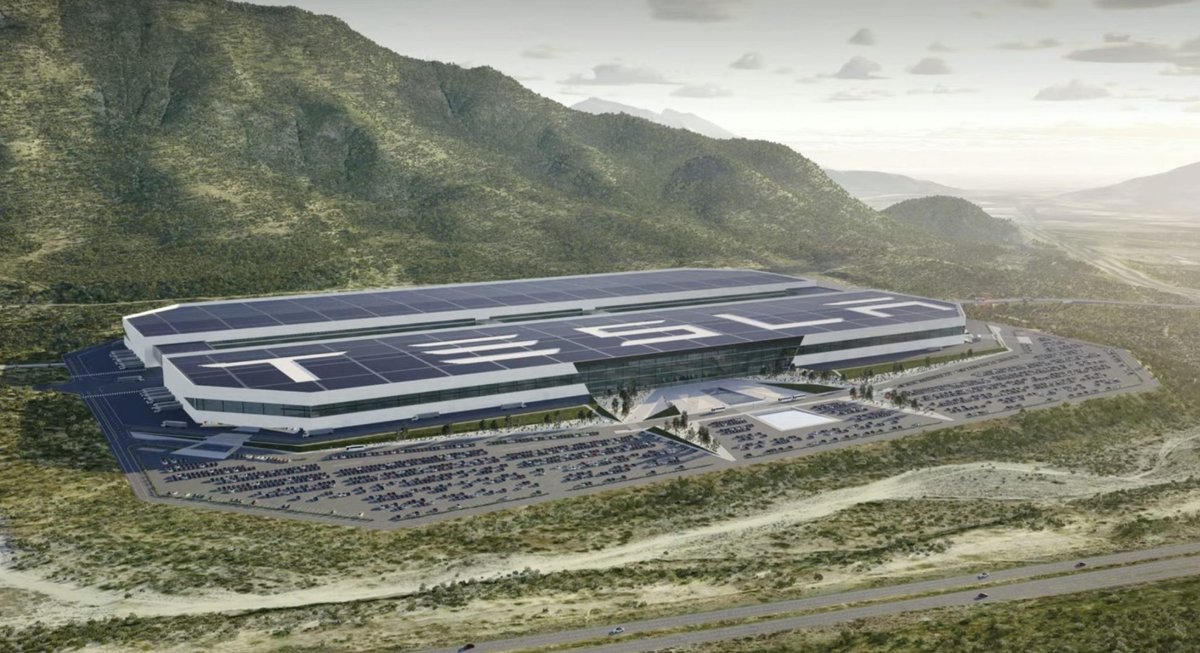
Tesla has officially initiated the secondary infrastructure buildout at Gigafactory Mexico in Nuevo León, marking a decisive shift in its Latin American manufacturing timeline. Official company disclosures indicate that the second construction phase prioritizes advanced modular assembly lines alongside dedicated battery manufacturing bays. This strategic pivot ensures the facility can rapidly scale production of next-generation platform vehicles, establishing a crucial hub for regional supply chain consolidation and North American export expansion.
The accelerated phase focuses primarily on installing high-precision robotics, unboxed process infrastructure, and automated material handling networks across the Santa Catarina campus. Industry analysts note that this approach significantly reduces structural footprint requirements while maximizing annual unit capacity per square meter. By integrating these advanced systems early in Phase Two, the company aims to optimize capital expenditure while maintaining maximum operational flexibility as market demand shifts across North America.
Modular Manufacturing and Assembly Innovation
Engineering data submitted to state environmental regulators highlights an innovative structural layout designed specifically for the unboxed vehicle manufacturing model. Rather than utilizing a traditional linear assembly system, the facility relies on parallel sub-assembly zones that merge during final integration. This methodology promises to reduce manufacturing factory space by up to forty percent while cutting vehicle production time dramatically compared to existing Gigafactory operations globally.
To support this modular paradigm, Phase Two includes an adjacent stamping shop equipped with next-generation gigapress machinery capable of forming massive single-piece castings. Official company disclosures emphasize that these casting units reduce body-in-white part counts by hundreds of components. Consequently, overall vehicle weight declines significantly, yielding improved energy efficiency metrics and lower raw material procurement expenses across the supply chain footprint.
Supply Chain Localizations and Ecosystem Development
Localization remains a central pillar of the revised Phase Two construction strategy. Regulatory filings reveal that over sixty supplier contracts have been executed with Mexican parts manufacturers to create a localized tier-one ecosystem near Monterrey. Industry analysts observe that establishing an immediate regional vendor radius mitigates transatlantic freight costs and shields domestic assembly lines from unpredictable geopolitical disruptions and cross-border transport bottlenecks.
In tandem with component suppliers, high-capacity energy infrastructure is currently being constructed to supply the secondary phase buildings with continuous zero-emission power. Engineering data indicates that dedicated solar arrays combined with grid-scale energy storage units will provide peak power buffering. This localized energy ecosystem ensures uninterrupted plant operation while satisfying stringent internal sustainability metrics mandated for all global manufacturing facilities operated by the automaker.
Water conservation protocols form another vital element of the Phase Two environmental impact plan. Engineering data outlines advanced closed-loop recycling installations capable of reusing up to eighty-five percent of industrial process water. By minimizing fresh water draw from municipal aquifers, the factory addresses regional resource constraints while securing municipal operational permits under accelerated regulatory oversight in the state of Nuevo León.
Workforce Expansion and Talent Development
The physical expansion of Giga Mexico necessitates a parallel influx of specialized engineering talent and skilled assembly technicians. Regulatory filings show new partnerships between the company and local technical universities to establish customized vocational training programs. These curriculum initiatives aim to prepare thousands of local workers for roles in high-voltage system maintenance, automated robotics management, and AI-driven quality assurance processes within the factory.
Industry analysts stress that establishing a robust local workforce is key to avoiding operational delays previously encountered during early factory ramp periods elsewhere. By offering competitive regional wages and structured advancement paths, the automaker seeks to retain top technical talent. This workforce stability is expected to drive steady yield improvements as Phase Two lines transition from low-rate initial testing to full volume assembly protocols.
Advanced Logistics and Trade Corridor Integration
Logistical connectivity represents a primary competitive advantage for the newly expanded Nuevo León site. Official company disclosures highlight dedicated freight lanes connecting the facility directly to commercial border crossings in Texas, streamlining international parts delivery. Combined with on-site rail infrastructure, this transport network permits rapid transit of completed vehicles to major distribution hubs throughout North America without municipal transit delays.
Furthermore, regulatory filings underscore ongoing investments in specialized cross-border customs terminal automation. By integrating automated customs pre-clearance tracking systems, the company reduces transit bottlenecks at international shipping checkpoints. Engineering data suggests these customs integration upgrades will lower overall distribution lead times by up to twenty-four hours, accelerating total vehicle turnarounds from factory output to final customer delivery across destination markets.
Financial Outlays and Production Scale Projections
Capital expenditure for Phase Two represents a substantial portion of the company’s global infrastructure budget for 2026. Official company disclosures project total investments in the Santa Catarina location will exceed five billion dollars upon completion of the secondary buildout. This capital commitment underscores management’s confidence in lower manufacturing costs achievable within the region while supporting aggressive global unit volume growth targets over coming fiscal years.
Production volume expectations remain high among automotive market watchers monitoring the expansion timeline. Industry analysts project that upon full operational ramp of Phase Two, Giga Mexico will achieve an annual output capacity of over five hundred thousand units. This scale places the plant alongside the company's highest-volume facilities in Shanghai and Austin, fundamentally shifting regional supply dynamics and solidifying its position within global manufacturing.
Ultimately, the successful execution of Giga Mexico's Phase Two strategy signals a mature evolution in global EV scaling methodologies. By balancing unboxed process innovations, localized tier-one supplier networks, and strategic logistical corridors, the plant establishes a benchmark for efficient automotive production. Official company disclosures reaffirm that lessons learned during this phase will directly inform upcoming global factory developments as electric mobility adoption reaches unprecedented levels.