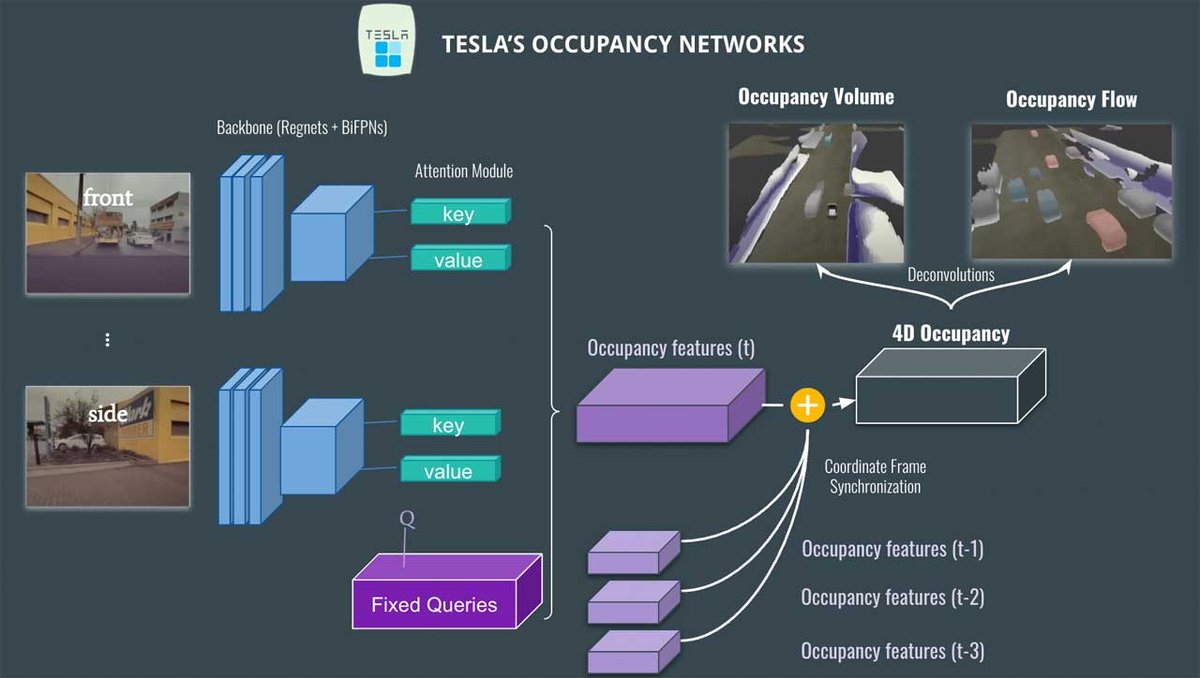
Tesla has officially deployed a major architecture upgrade to its vision-based full self-driving platform, targeting long-standing edge case navigation challenges. Recent engineering data indicates that the updated occupancy network utilizes temporal spatial queries to resolve complex urban obstacles that previously caused vehicle hesitation. This technical milestone marks a significant leap forward in autonomous vehicle reliability without relying on external radar or lidar systems.
The primary focus of this software breakthrough involves fine-grained volumetric perception in highly dynamic environments. According to official company disclosures, the system now processes video streams at higher resolution across a temporal window, constructing three-dimensional vector space in real time. Consequently, the vehicle identifies non-standard roadway debris, sagging power lines, and extended truck loads with unprecedented precision.
Industry analysts note that solving rare visual anomalies has historically posed the steepest hurdle for camera-only self-driving architectures. By leveraging massive fleet telemetry, the updated network trains on millions of rare real-world scenarios gathered across global markets. As a result, the neural network generalizes unexpected physical hazards significantly better than previous software iterations released over the past year.
Next-Generation Spatial Voxel Resolution
Central to the architectural breakthrough is the refined voxel grid resolution operating within the vehicle's onboard inference computer. Engineering data confirms that voxel grid density has doubled, allowing the occupancy network to map tiny geometric boundaries with sub-centimeter accuracy. This enhancement ensures that subtle road features, such as curbs, potholes, and construction cones, are recognized instantly by the occupancy engine.
In addition to higher spatial density, the occupancy network incorporates direct volumetric semantic segmentation. Official company disclosures reveal that each voxel within the predicted three-dimensional space carries both geometric occupancy status and semantic class probability. This dual-layer processing enables the autonomous driving computer to distinguish between soft visual occlusion, like exhaust smoke, and solid structural barriers.
Furthermore, the system reduces computational latency despite processing exponentially denser visual data streams. According to regulatory filings detailing hardware utilization, custom silicon kernels optimize matrix multiplication steps, preventing thermal throttling during continuous heavy inference. This hardware-software synergy guarantees rapid reaction times during high-speed highway maneuvers and tight urban navigation scenarios alike.
Overcoming Adversarial Weather and Low Visibility
Severe weather conditions have long presented challenging edge cases for optical camera networks during night operations. Engineering data demonstrates that the upgraded occupancy network extracts high-contrast feature maps even under intense rain, dense fog, and direct solar glare. By reconstructing occluded surfaces using surrounding temporal context, the vehicle maintains a stable perception profile despite localized camera degradation.
Industry analysts point out that rain spray from heavy commercial trucks previously created ghost obstacles for vision systems. The latest neural network revision filters out transient mist and water droplets by analyzing temporal consistency across consecutive video frames. Consequently, the vehicle eliminates unnecessary phantom braking events while maintaining safe follow distances behind large vehicles on wet highways.
Nighttime driving safety also sees substantial measurable improvements under the new software pipeline. Official company disclosures highlight enhanced low-light camera sensitivity combined with predictive ray-casting algorithms to map unlit roadways. Even when headlights fail to illuminate distant road hazards, the network predicts spatial geometry based on ambient light reflections and structural roadway continuity.
Temporal Memory Integration and Trajectory Prediction
Beyond static obstacle detection, the revised occupancy network incorporates expanded temporal memory modules across prolonged time horizons. Engineering data shows that the neural network retains spatial representations of objects even after they are temporarily blocked by intervening traffic. This persistent memory prevents sudden pathing re-calculations when pedestrians or cyclists briefly step behind parked vehicles or roadside structures.
Integrated trajectory forecasting now operates concurrently with occupancy grid generation inside the neural network backbone. Industry analysts emphasize that predicting the future volumetric occupancy of dynamic agents allows the vehicle to execute smoother defensive maneuvers. Rather than reacting solely to current position vectors, the planner proactively yields space for aggressively merging or swerving neighboring motorists.
The combination of spatial memory and predictive occupancy significantly improves performance at complex multi-way intersections. Official company disclosures indicate that the vehicle now negotiates blind turns and crowded drop-off zones with human-like confidence. The vehicle accurately estimates hidden traffic flow by evaluating the motion vectors of visible surrounding traffic and predicting open corridor availability.
Regulatory Filings and System Deployment Metrics
Safety metrics submitted in recent regulatory filings reflect a marked drop in driver intervention rates across test fleets. The data indicates that miles per critical disengagement have increased substantially following the wide-scale deployment of the updated occupancy framework. Regulatory bodies are currently evaluating these empirical validation logs as part of ongoing commercial autonomous transport assessments.
Industry analysts project that these edge-case breakthroughs will accelerate approval timelines for fully driverless operation in key metropolitan regions. By proving that optical vision networks can match or exceed multi-sensor suites in extreme edge cases, manufacturing costs remain significantly lower than competitors. This cost advantage provides a compelling foundation for scaling autonomous ride-hailing services globally.
As software updates roll out to consumer vehicles, real-world data collection will continue to refine the neural network weights. Official company disclosures confirm that continuous shadow-mode validation runs concurrently across millions of customer cars to catch remaining rare anomalies. This massive feedback loop ensures that the vision occupancy network continuously adapts to evolving global road conditions.