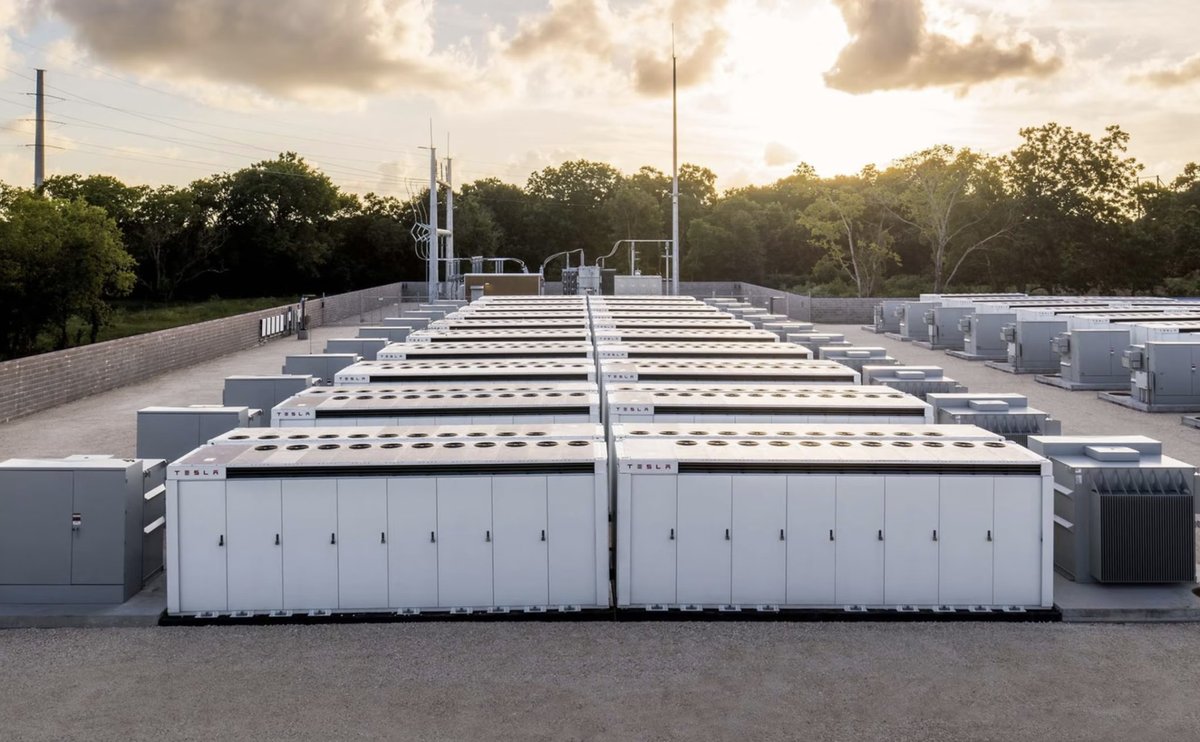
Tesla Energy has officially commissioned a landmark 500-megawatt-hour Megapack battery storage system near Houston, Texas, marking one of the largest utility-scale energy storage deployments in North America. The facility is designed to stabilize the regional electricity grid while capturing excess renewable power generated during peak production hours. According to official company disclosures, the installation represents a critical milestone in expanding the company's energy ecosystem throughout the state.
The project features hundreds of individual Megapack units connected directly to high-voltage transmission lines, providing rapid grid stabilization services to offset power fluctuations. By absorbing solar and wind energy when generation exceeds demand, the battery installation mitigates grid congestion and lowers overall operational costs for local utilities. Industry analysts note that this project establishes a new benchmark for rapid utility-scale storage deployment in competitive energy markets.
Expansion of Grid Storage Infrastructure
Texas has faced severe grid stress in recent years due to extreme weather events, accelerating the demand for localized energy backup systems. The addition of 500 megawatt-hours of energy storage delivers substantial dispatchable capacity to the Electric Reliability Council of Texas network during critical demand surges. Regulatory filings reveal that the facility can instantly dispatch power to thousands of homes within milliseconds of an unexpected outage event.
Unlike traditional power plants that require hours to ramp up electricity generation, utility-scale battery systems provide instantaneous response capabilities. This rapid output helps stabilize voltage and frequency across transmission corridors, maintaining grid equilibrium during summer heatwaves and winter freezes. Engineering data underscores that high-capacity storage is increasingly essential as intermittent solar and wind sources account for larger shares of total power generation.
The Texas installation utilizes Tesla’s modular Megapack units, each integrated with thermal management systems, power electronics, and bi-directional inverters. The turn-key design allows engineers to rapidly assemble and scale energy storage facilities with minimal site preparation compared to conventional power generation facilities. Official company disclosures indicate that site construction was completed in under nine months, highlighting the efficiency of modular energy deployment.
Technical Performance and Engineering Data
At the core of the 500MWh installation is advanced lithium iron phosphate battery chemistry, selected for its thermal stability and extended cycle life. Engineering data confirms that these cells maintain high energy density while supporting thousands of full charge and discharge cycles over a twenty-year operational lifetime. Built-in liquid cooling loops maintain optimal cell temperatures during heavy discharge periods, ensuring peak performance under harsh environmental conditions.
Autonomous control software manages charging and discharging cycles dynamically by analyzing real-time market pricing and grid frequency data. The site’s software continuously forecasts energy demand patterns, automatically discharging stored power when wholesale electricity rates peak. Industry analysts highlight that this automated arbitrage strategy optimizes profitability for storage owners while simultaneously driving down peak electricity prices for local grid consumers.
Market Impact and Commercial Growth
The completion of this project highlights the rapidly accelerating revenue trajectory of Tesla's utility energy division. Official company disclosures show that stationary energy storage deployments experienced three-digit percentage growth year-over-year, outstripping the growth rate of the automotive sector. Financial analysts emphasize that high-margin energy storage installations are transforming the company from an electric vehicle manufacturer into an end-to-end energy technology leader.
Utility companies across the United States are observing Texas as a real-world testbed for massive battery storage integration. The economic viability of 500MWh facilities is incentivizing other energy providers to retire legacy natural gas peaking plants in favor of zero-emission battery sites. Industry analysts project that capital investments in grid-scale energy storage will double over the next three years as renewable energy integration mandates expand nationwide.
Regulatory Filings and Deployment Timeline
Regulatory filings with federal energy commissions detail the extensive interconnection procedures and safety certifications required for the site. The complex permitting process involved environmental impact assessments, grid stability simulations, and stringent fire safety compliance protocols. According to engineering data included in the public filings, the installation met or exceeded all regional environmental safety standards prior to full commercial activation.
Construction of the Texas project progressed rapidly due to standardized modular manufacturing at dedicated Megafactory production facilities. By assembling components offsite and shipping pre-tested battery units directly to the installation location, engineers drastically reduced onsite assembly timelines. Official company disclosures highlight that standardized unit design has reduced project deployment cycles from years down to mere months, setting a new precedent for energy infrastructure.
Future Outlook for Utility-Scale Energy Storage
The 500MWh installation serves as a key pillar in expanding virtual power plants, where distributed energy assets work in sync. By linking utility Megapacks with residential Powerwalls, energy operators can build resilient, decentralized grids capable of handling unpredictable power surges. Industry analysts estimate that software-driven aggregate energy storage will dominate grid balancing strategies throughout North America and Europe over the next decade.
Global demand for massive energy storage projects continues to grow as countries aim for aggressive decarbonization goals by 2030. Manufacturing facilities in California and Shanghai are scaling production capacity to meet growing global backlogs for utility-scale battery hardware. According to official company disclosures, output expansions across major production plants aim to support annual storage deployments exceeding tens of gigawatt-hours annually.
As energy grids face increasing demands from data centers, industrial expansion, and electric vehicle adoption, high-capacity installations offer a reliable buffer. The Texas 500MWh installation proves that large-scale battery storage is economically viable, technologically robust, and rapidly deployable. Engineering data indicates that this project will serve as a technical operational template for massive renewable integration across global power networks.