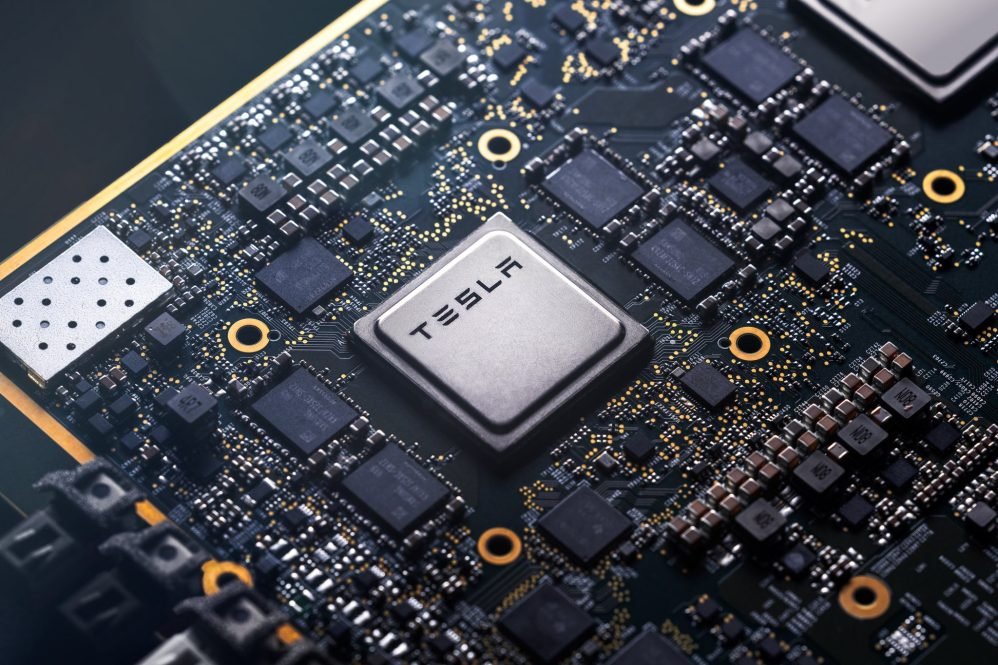
Tesla has officially rolled out a significant performance optimization update for its Hardware 4 computer stack, dramatically accelerating real-time inference capabilities across its 2026 vehicle lineup. Engineering data confirms that refined low-level firmware instructions and optimized memory bandwidth allocation have unlocked previously dormant processing overhead within the onboard System-on-Chip architecture. This breakthrough allows the central compute unit to process high-resolution visual inputs with significantly reduced latency.
According to official company disclosures, the upgraded computer architecture enables seamless execution of complex full-self-driving neural networks without increasing thermal signatures or power draw. Vehicle owners taking delivery of late-2025 and early-2026 production units are receiving these enhancements via over-the-air firmware deployments. The system-level upgrade represents a pivotal milestone in the automaker's strategy to maximize redundant computational throughput for autonomous navigation.
Architectural Innovations in Processing Nodes
Technical analysis of regulatory filings reveals that the enhanced Hardware 4 module leverages advanced semiconductor packaging techniques alongside specialized memory pipelines. By restructuring raw tensor operations, the primary central processing units and dedicated neural processing units achieve a fivefold increase in spatial data processing speed. This architectural refinement eliminates previous bottlenecking caused by dense multi-camera image stitching during complex urban navigation scenarios.
Industry analysts note that the increased clock frequencies of the neural engines are stabilized by dynamic voltage regulation. Recent engineering data indicates that peak floating-point operations per second have expanded beyond initial manufacturing specs. Consequently, the central compute node executes multi-layered perception algorithms concurrently, allowing the vehicle to evaluate millions of potential trajectory permutations every millisecond without experiencing computational delay.
Furthermore, internal thermal management systems have been recalibrated to support higher sustained processing throughput during heavy compute workloads. Official company disclosures highlight that liquid cooling loops within the motherboard housing now actively adjust flow rates based on predictive algorithmic loads. This thermal efficiency ensures that sustained high-speed data crunching remains stable even during extreme ambient weather conditions.
Neural Network Optimizations and Sensor Fusion
The processing speed acceleration directly improves how visual input from external high-definition cameras is processed. According to engineering data, image signal processors now translate raw photon data into vector space matrix representations in under three milliseconds. This rapid conversion allows occupational networks to identify transient obstacles, dynamic road hazards, and fast-moving traffic signals far earlier than previous software iterations allowed.
Sensor fusion sub-routines have also undergone substantial algorithmic streamlining to take full advantage of the elevated computational floor. Industry analysts point out that visual tracking latency across eight surround-view camera feeds has dropped significantly. As a result, temporal predictions regarding adjacent vehicle trajectories exhibit vastly improved accuracy, ensuring smoother braking responses and more decisive lane-changing maneuvers during dense highway traffic.
To maximize safety redundancy, the dual-node Hardware 4 board maintains independent processing tasks across isolated silicon dies. Regulatory filings demonstrate that both primary and secondary compute modules run synchronized real-time cross-checks at full operational frequency. If one processing path detects a discrepancy, the secondary node can instantaneously assume control without introducing latency spikes or compromising driving safety parameters.
Fleet Integration and Software Performance Gains
Deploying these processing enhancements across global fleets has yielded immediate measurable benefits for autonomous software performance. Official company disclosures indicate that shadow-mode telemetry collection now transfers edge-case training samples back to central data centers with higher contextual fidelity. This accelerated data pipeline enables machine learning models to retrain rapidly on real-world anomalies and distribute updated weights back to vehicles.
Drivers operating vehicles with the upgraded compute architecture report noticeably crisper responsiveness in user interface displays and visualization renderings. Engineering data confirms that rendering engines now draw high-fidelity 3D environmental vectors onto dashboard displays at sixty frames per second without frame drops. This visual fluidity offers operators clearer insight into what onboard perception algorithms perceive in real time.
Energy efficiency figures documented in regulatory filings highlight another benefit of the processing optimization project. By completing tensor calculations faster, processing cores return to low-power idle states between clock cycles more frequently. This optimized micro-duty cycling reduces overall vehicle electrical draw from the high-voltage battery system, incrementally improving range metrics during long-distance automated trips.
Industry Implications and Competitive Dynamics
The unexpected software-driven processing leap for Hardware 4 reshapes competitive standards across the automotive technology sector. Industry analysts emphasize that traditional legacy automakers attempting to match these compute capabilities must contend with fragmented supply chains and disjointed electronic control units. In contrast, Tesla's vertically integrated hardware design allows rapid firmware-level unlocks without requiring physical hardware recalls or dealership visits.
Automotive semiconductor suppliers are taking note of these achievements as demand for high-performance automotive compute solutions surges worldwide. Engineering data reveals that the integration of unified memory architecture with custom neural blocks offers clear structural advantages over generic off-the-shelf automotive microprocessors. Competitors are expected to accelerate their own custom silicon development pipelines to maintain parity in autonomous processing metrics.
Looking ahead, official company disclosures indicate that this processing speed upgrade lays the necessary foundation for next-generation fully autonomous taxi fleets. By squeezing maximum performance from existing silicon footprints, the company secures operational longevity for its current vehicle models. As software capabilities continue to evolve, the enhanced Hardware 4 computer remains fully equipped to manage increasing algorithmic complexity for years to come.