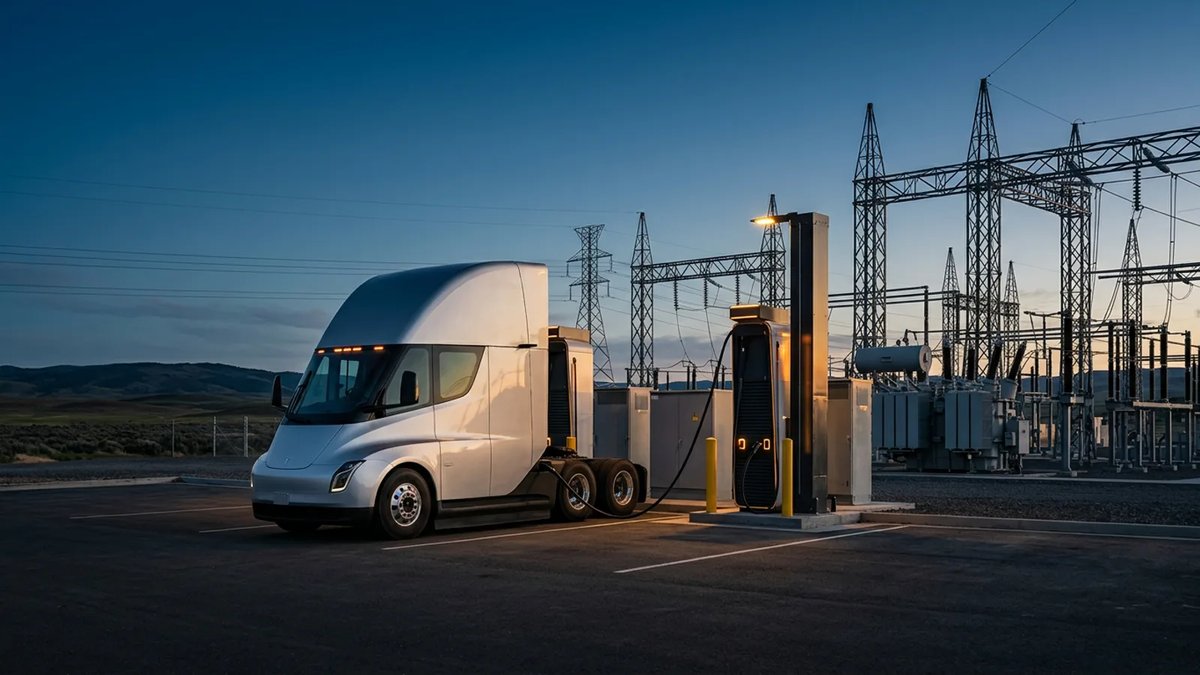
Commercial freight electrification reaches a pivotal milestone as Tesla initiates the massive expansion of its high-power charging footprint across North America in early 2026. Official company disclosures indicate that the specialized network is designed to support high-density logistics corridors connecting major industrial fulfillment centers. Engineering data confirms that these dedicated sites will enable rapid energy replenishment for heavy-duty electric trucks during mandatory driver rest intervals.
Initial deployment focuses heavily on key interstate arterial routes, including Interstate 5 in California and Interstate 10 spanning the southern United States. Regulatory filings show strategic station placements placed roughly one hundred fifty miles apart to maximize regional transit productivity. Industry analysts suggest that this infrastructure buildout addresses the historical range anxiety that previously hindered large-scale commercial fleet transition efforts.
Next Generation Megawatt Charging Infrastructure
The core of this expansion centers on updated charging cabinet architecture capable of delivering over 1.2 megawatts of direct current power per vehicle stall. Engineering data highlights advanced liquid-cooled cable assemblies designed to manage extreme thermal loads without excessive weight or bulk for operators. According to official company disclosures, the system architecture operates at ultra-high voltages to maintain peak efficiency while drastically reducing charging duration.
To prevent localized grid strain during peak charging windows, every station integrates large-scale Megapack energy storage installations alongside dedicated solar canopy arrays. Engineering data indicates that localized battery buffering allows stations to pull lower continuous power from utilities while delivering intense energy bursts to docked haulers. Official company disclosures emphasize that this design minimizes peak demand charges, directly reducing overall operational costs.
Securing municipal permits and regional grid interconnections remains a critical phase of the rapid infrastructure rollout across target states. Regulatory filings reveal that regional utility providers are establishing dedicated substation hookups to accommodate the immense power draw required by high-capacity commercial hubs. Industry analysts note that streamlined permitting frameworks in states like Texas and Nevada have accelerated installation timelines considerably throughout 2026.
Fleet Integration and Route Logistics
Enterprise logistics operators are aligning their fleet operations around these fast-charging corridors to replace legacy diesel vehicles on regional haul routes. Official company disclosures show that key corporate partners have integrated automated route scheduling software to synchronize battery conditioning with driver dispatch systems. Engineering data demonstrates that optimized pre-conditioning allows vehicles to reach zero to seventy percent state-of-charge within thirty minutes.
Driver comfort and facility layout have also received major design updates tailored specifically to commercial haulers. Regulatory filings detail wide drive-through bay configurations that eliminate complex reversing maneuvers with connected fifty-three-foot trailers. Industry analysts point out that ergonomic charging handles and overhead cable suspension systems significantly reduce driver fatigue during routine stopovers at these modernized commercial charging centers.
Manufacturing Scaling at Gigafactory Nevada
The rapid network expansion coincides directly with increased vehicle assembly throughput at specialized manufacturing facilities near Reno. Official company disclosures confirm that newly dedicated production lines are now scaling high-volume commercial vehicle manufacturing through 2026. Engineering data indicates that improved battery cell manufacturing efficiency and refined chassis integration have dramatically lowered overall vehicle production costs while improving structural rigidity.
Fleet operators cite total cost of ownership advantages as the principal catalyst driving current commercial orders across North America. Regulatory filings illustrate that lower cost per mile, combined with reduced maintenance requirements, offsets initial capital expenditures faster than previously anticipated. Industry analysts emphasize that robust megawatt charging coverage is the final key element required to unlock broad fleet replacement of internal combustion assets.
Industry Standardization and Market Impact
The adoption of standardized Megawatt Charging System interfaces is paving the way for broader cross-industry compatibility across commercial fleets. Engineering data shows that universal connector protocols ensure high-voltage safety interlocks function seamlessly across different commercial vehicle classes. Official company disclosures indicate an open-network vision where third-party commercial haulers can ultimately access selected charging stations, maximizing overall utility and asset utilization.
Competitive pressures are rising as legacy commercial truck manufacturers rush to develop competing high-power charging ecosystems. Regulatory filings show joint ventures between major truck makers attempting to establish nationwide freight charging corridors of their own. Industry analysts project that early mover advantages in megawatt charging deployment give established networks a strong operational moat over competitors through late 2026.
Future Horizons for Electric Freight
Looking further into the decade, autonomous freight technology is scheduled to integrate directly with megawatt charging station operations. Engineering data details automated docking algorithms and robotically attached charging arms designed to eliminate manual plug connection completely. Official company disclosures suggest that autonomous commercial long-haul shipping will rely heavily on these hands-free charging stations to achieve uninterrupted freight delivery cycles.
Environmental metrics reveal substantial reductions in greenhouse gas emissions along primary shipping corridors where megawatt charging centers operate. Regulatory filings indicate local air quality improvements near major logistics nodes as diesel trucks are steadily replaced by electric alternatives. Industry analysts calculate that full-scale implementation of megawatt commercial charging will prevent millions of metric tons of carbon emissions annually.
As 2026 progresses, the expansion of megawatt charging networks fundamentally redefines the economics and feasibility of heavy electric transportation. Official company disclosures point toward continued expansion across international freight routes in Europe and Asia over the next three years. Engineering data confirms that robust infrastructure combined with scaling vehicle production positions zero-emission freight transport as the new global industry standard.