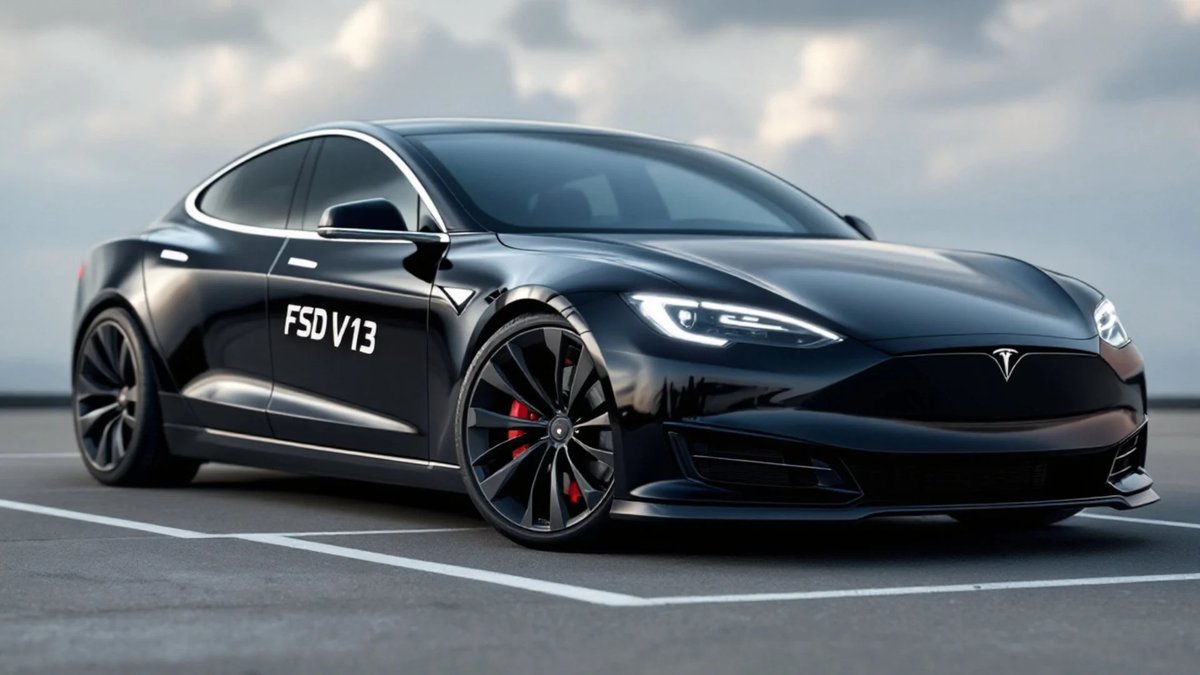
Tesla's long-awaited rollout of Full Self-Driving Version 13 has encountered significant regulatory resistance as federal safety agencies increase scrutiny over unsupervised autonomous driving. Recent regulatory filings reveal that federal authorities require extensive real-world validation data before allowing driverless commercial operations. Consequently, the electric automaker faces unexpected delays in transitioning its advanced driver-assistance software to a fully autonomous driverless network nationwide.
Engineering data indicates that Version 13 introduces an end-to-end neural network architecture capable of processing complex urban environments with vastly reduced compute latency. Despite these technological strides, government safety auditors argue that current disengagement metrics remain insufficient for driverless approval. Officials emphasize that mathematical model accuracy does not automatically equate to human-level safety compliance under unpredictable edge-case driving conditions.
Federal Scrutiny and Safety Mandates
According to official company disclosures, the National Highway Traffic Safety Administration has requested comprehensive technical logs regarding V13's decision-making algorithms during adverse weather. Federal investigators want explicit documentation explaining how the neural networks evaluate low-visibility scenarios and construction zones. Until Tesla satisfies these stringent requests, regional commercial deployment permits for driverless robotaxis will remain strictly suspended across major urban centers.
Industry analysts note that federal agencies are adopting a far more cautious framework following safety incidents involving rival autonomous vehicle operations. Regulators now demand standardized safety metrics and independent verification before granting operational exemptions for steering-wheel-free vehicles. This heightened standard forces Tesla to collect millions of additional supervised test miles to demonstrate statistical superiority over human drivers.
Engineering data submitted to safety regulators highlights that V13 achieves a tenfold increase in miles between critical interventions compared to earlier iterations. However, regulatory filings confirm that transportation authorities remain skeptical of vision-only perception systems operating without backup lidar or radar sensor suites. Regulators insist that redundancy protocols must be fully validated under diverse environmental constraints before removing safety drivers.
State-Level Authorization Barriers
State-level regulatory filings show that municipal transportation departments are establishing localized legislative barriers that further complicate Tesla's timeline. Key states currently require custom testing permits, strict operational limits, and real-time remote monitoring capabilities for all uncrewed commercial rideshare vehicles. Consequently, securing a patchwork of state-by-state approvals is proving far more time-consuming than original internal projections suggested.
Industry analysts emphasize that state regulators are particularly concerned about liability assignment during uncrewed autonomous collisions. While Tesla asserts that its software architecture is resilient, state officials insist on legal guarantees regarding corporate financial responsibility before granting driverless fleet operating licenses. This policy dispute has halted proposed robotaxi pilot programs in several high-density metropolitan testing areas.
Official company disclosures indicate that Tesla is expanding its regulatory affairs division to accelerate municipal approval workflows across core markets. The company plans to engage directly with local city councils, emergency services, and transit authorities to address specific urban operating concerns. Through collaborative pilot programs, management aims to build institutional trust and validate V13's performance metrics under transparent oversight.
Technical Hardware and Vision Challenges
Engineering data reveals that V13 relies heavily on ultra-high-resolution cameras and advanced occupancy networks to navigate complex traffic infrastructure. While performance in bright, predictable climates is exceptional, regulatory filings document recurring degradation in severe rain, thick fog, and heavy snow. Safety investigators demand proven hardware cleaning mechanisms or sensor redundancies before certifying these vehicles for unsupervised operation.
Industry analysts highlight that legacy vehicle hardware suites may require retrofits to meet impending federal safety compliance rules. Older fleet vehicles equipped with previous camera generations struggle to provide the processing fidelity required by V13's newest end-to-end neural models. Resolving these hardware disparities presents a massive operational challenge that could delay widespread software monetization strategies.
Furthermore, engineering data shows that high-compute inferencing places unprecedented thermal and electrical demands on current battery and compute architectures. Regulators are evaluating whether sustained maximum processing loads compromise vehicle power management during long autonomous commutes. Tesla engineers are working closely with certification authorities to establish safe hardware thermal thresholds under continuous operational testing.
Financial and Market Impact
Official company disclosures emphasize that deferred software revenue recognition remains tied directly to achieving key autonomous driving regulatory milestones. Market valuation models heavily depend on the rapid commercialization of uncrewed ride-hailing networks within the next two years. Delayed regulatory authorization threatens to extend monetization timelines, causing financial analysts to reassess near-term earnings expectations for the automotive giant.
Industry analysts point out that institutional investors are carefully scrutinizing capital expenditure allocations dedicated to autonomous computing clusters. With regulatory approvals stalled, the return on investment for massive data centers training V13 models faces temporary suppression. Investors are demanding clearer timelines regarding when federal permission will allow these advanced algorithms to generate recurring high-margin mobility revenues.
Long-Term Outlook for Autonomous Mobility
Despite immediate administrative friction, official company disclosures project confidence that V13 will ultimately satisfy all safety thresholds required for nationwide deployment. Tesla continues to gather billions of real-world driving data points daily, refining its neural networks to outperform human driving performance benchmarks. Strategic dialogue between corporate leadership and regulatory agencies remains active to build a viable path forward.
Regulatory filings suggest that progressive pilot frameworks may offer a compromise, allowing limited uncrewed operation within strictly geo-fenced urban zones. By demonstrating sustained safety in controlled environments, Tesla can incrementally expand V13's operating design domain while reassuring skeptical officials. This collaborative regulatory approach could pave the way for full nationwide unsupervised autonomous transportation over the coming years.