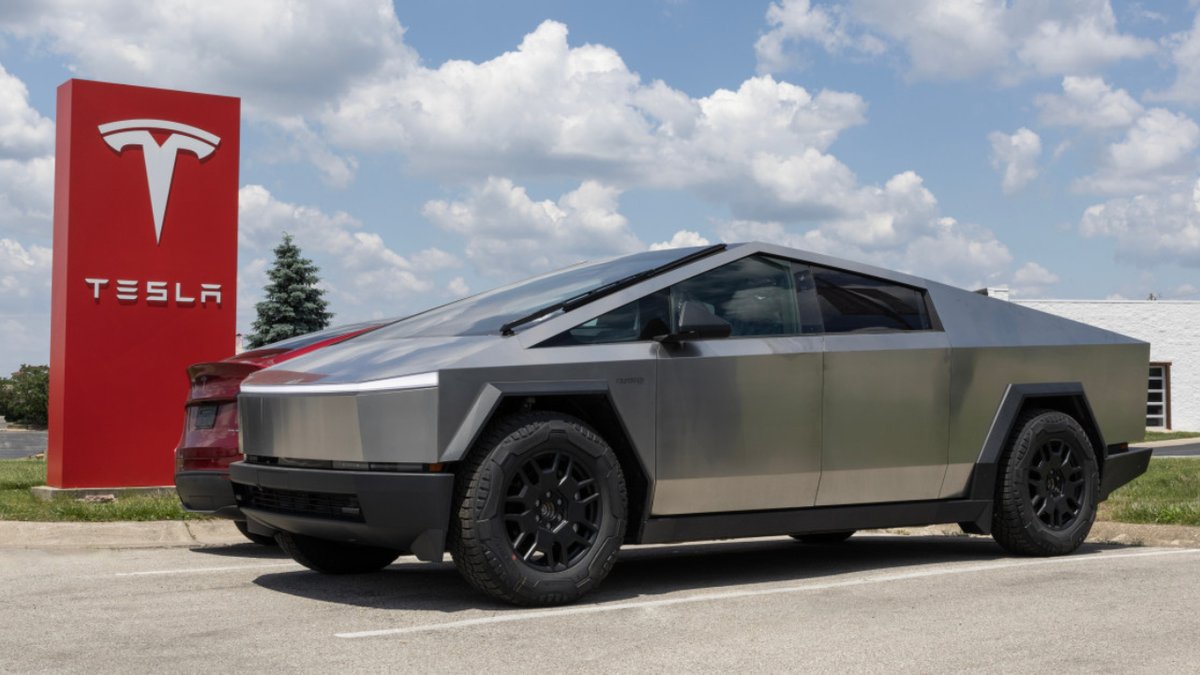
Tesla has officially launched series production of its long-awaited Cybertruck range extender battery pack at Gigafactory Texas, according to recent official company disclosures. This auxiliary power system sits inside the truck bed behind the cab, significantly expanding total driving endurance for long-haul commercial users and outdoor enthusiasts. Initial deliveries are scheduled to begin during the first quarter of 2026 following final assembly validation tests.
Engineering data reveals that the drop-in auxiliary unit adds approximately 50 kilowatt-hours of usable energy to the vehicle's primary battery pack. Designed as a semi-permanent hardware installation, the module integrates directly into the truck's high-voltage bus architecture and structural bed mounting points. The additional stored energy targets an extended total driving range exceeding 470 miles on a single charge.
Advanced Cell Architecture and Energy Density
The range extender utilizes upgraded 4680 nickel-manganese-cobalt cell chemistry featuring second-generation dry-electrode manufacturing technology, as detailed in recent regulatory filings. Industry analysts note that this refined manufacturing process delivers higher volumetric energy density while reducing production overhead. By optimizing internal cell geometry, engineers managed to maximize stored kilowatt-hours while keeping overall pack dimensions within strict physical limits inside the cargo bed.
Adding substantial battery mass requires precise weight distribution to maintain optimal vehicle dynamics and structural payload capacity. Engineering data highlights that the pack incorporates lightweight aluminum structural armor that shields internal cells against severe cargo impacts and harsh environmental exposure. While the battery module occupies approximately one-third of the bed floor, integrated cargo tie-down rails help preserve practical utility.
Thermal management represents a crucial aspect of the secondary pack's design, given its exposure to extreme exterior weather conditions. According to official company disclosures, liquid cooling channels run directly parallel to each cell bank, connecting seamlessly to the truck's main octovalve thermal loop. This unified system ensures optimal cell temperatures during high-speed Supercharging sessions and sustained heavy towing operations.
Manufacturing Milestones and Logistics
Scaling production for the range extender involved overcoming complex manufacturing bottlenecks associated with high-voltage structural casting assembly. Industry analysts report that automated robotic lines at the Austin facility are currently ramping production speed toward several thousand units per month. Yield rates have improved dramatically following mid-2025 retooling efforts aimed at simplifying cooling manifold connections.
Supply chain alignment has proven essential for maintaining consistent high-volume cell supply without disrupting primary vehicle assembly schedules. Regulatory filings indicate that domestic cathode processing facilities now supply localized materials directly to the Texas manufacturing hub. This localized supply network reduces international freight dependencies while maximizing compliance with regional clean energy production incentives.
Service center readiness represents another critical logistical phase as retail installations require specialized high-voltage training and heavy-lifting equipment. Engineering data indicates that authorized service hubs across North America are currently receiving standardized technician tools and diagnostic software patches. These comprehensive infrastructure upgrades ensure safe pack mounting, high-voltage connection validation, and final software calibration before customer vehicle handoffs.
Market Impact and Delivery Timelines
The introduction of the production extender addresses a foundational requirement for heavy-duty fleet operators seeking uninterrupted range while hauling heavy cargo trailers. Industry analysts emphasize that fully loaded electric pickups typically experience substantial aerodynamic and rolling efficiency losses, making expanded battery capacity vital. The extra onboard energy buffer dramatically reduces necessary charging frequency during long-distance highway transit.
Pricing strategy for the optional power pack remains closely watched by market observers and early reservation holders. Official company disclosures suggest that the option will carry a retail price near sixteen thousand dollars, which includes professional installation at designated service facilities. Customers who placed early deposits are expected to receive priority allocation during the initial Q1 roll-out phase.
Competitive pressures in the zero-emission truck segment have intensified as rival automakers explore alternate range-extending solutions. Engineering data shows that while some competitors favor gas-powered onboard generator systems, fully electric auxiliary batteries preserve total zero-tailpipe-emission status. Automotive market analysts forecast that this pure electric approach will appeal strongly to corporate fleets with strict sustainability targets.
Grid Support and Software Integration
Beyond vehicle propulsion, the auxiliary battery significantly enhances stationary power capabilities for remote job sites and residential backup. Official company disclosures specify that the integrated pack unlocks higher sustained discharge rates through the onboard power outlets. This allows operators to run high-draw industrial tools, welding equipment, or heavy machinery without rapidly depleting primary drive energy.
Software integration plays a pivotal role in balancing power distribution between the main vehicle floor battery and the bed-mounted extender. Regulatory filings outline sophisticated algorithms that dynamically manage discharge rates based on elevation, ambient temperature, and driving aggressiveness. The vehicle's central display provides real-time telemetry showing individual cell health and state of charge across both pack systems.
As the automotive industry pivots toward high-capacity energy solutions, the mass production of modular battery extenders establishes an important operational benchmark. Industry analysts conclude that successful deployment will validate modular pack architecture for future commercial transport platforms. With manufacturing officially underway, the electric truck landscape enters a mature phase focused on maximum utility and range capability.