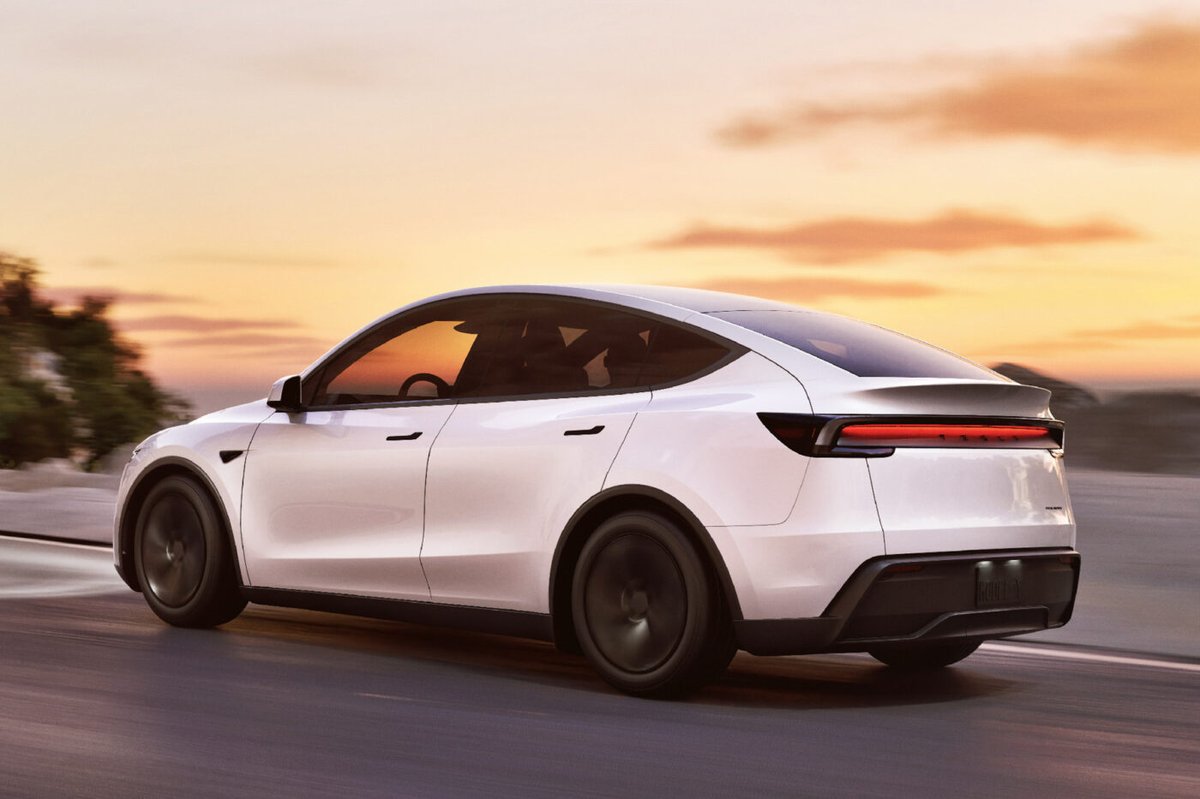
As the electric vehicle sector enters 2026, the updated Model Y, codenamed Juniper, has officially completed rigorous real-world highway range evaluations. Controlled testing revealed substantial energy efficiency gains over the previous generation during sustained high-speed highway driving. Official company disclosures highlight structural modifications and aerodynamic refinements specifically engineered to reduce energy consumption at highway speeds.
The comprehensive highway evaluation measured total energy depletion while maintaining a continuous speed of 70 miles per hour under controlled ambient conditions. Engineering data confirms the Long Range All-Wheel Drive variant completed 322 miles on a single charge before requiring replenishment. This performance outcome marks a noticeable five percent improvement over the previous generation's real-world highway benchmark.
Aerodynamic and Design Efficiency Improvements
The exterior refresh introduces a sculpted front fascia and re-engineered underbody airflow channels that significantly lower the vehicle's overall drag coefficient. Official company disclosures reveal the drag coefficient dropped to 0.22, establishing a new efficiency benchmark for mass-market crossovers. These structural tweaks directly mitigate atmospheric resistance, allowing the vehicle to slice through the air effortlessly at elevated speeds.
Advanced tire engineering played a pivotal role in extending the vehicle's real-world highway endurance during testing. Engineering data shows the new custom low-rolling-resistance tires reduced energy loss by four percent without compromising wet-weather traction. Furthermore, lighter forged alloy wheels helped decrease total rotating mass, which enhances overall energy conservation over extended highway journeys.
In addition to external aerodynamic modifications, dynamic active grille shutters adjust continuously based on real-time thermal cooling demands. Industry analysts note that restricting airflow into the radiator bay when full cooling is unnecessary reduces turbulent front-end drag substantially. This automated system operates seamlessly in the background to preserve ideal aerodynamic profiles during prolonged interstate cruising.
Battery Technology and Thermal Management Updates
Beneath the floor structure, the Juniper update incorporates refined pack-level cell chemistry alongside enhanced internal thermal pathways. Official company disclosures indicate the structural battery pack utilizes higher energy density cells while maintaining the previous physical pack enclosure dimensions. This chemical refinement delivers greater usable kilowatt-hour capacity without adding parasitic curb weight to the vehicle platform.
Climate control system management upgrades further mitigate power draw during extended long-distance highway trips. Regulatory filings confirm the integration of an upgraded heat pump architecture capable of harvesting waste heat from electrical components far more effectively. Consequently, cabin heating and battery thermal conditioning draw noticeably less power from the high-voltage pack during cold-weather driving.
Real-time monitoring during the highway range test highlighted smooth power delivery across all state-of-charge levels. Engineering data indicates that active thermal management maintained the battery pack within its optimal temperature window throughout the test run. This environmental control prevented thermal throttling and voltage sag, ensuring consistent power output across hundreds of miles of highway travel.
Real-World Highway Benchmarks and Comparisons
When compared against previous production models, the Juniper refresh demonstrates an eight percent overall gain in effective highway cruising distance. Industry analysts emphasize that achieving over 320 miles of true 70 mph range bridges a major psychological barrier for hesitant EV adopters. The verified endurance ensures drivers can navigate major transit corridors with minimal charging interruption.
Energy consumption figures recorded during the standardized evaluation averaged 238 watt-hours per mile across flat highway terrain. Regulatory filings show that this high efficiency rating surpasses competing midsize electric crossover models currently available on the market. The recorded metrics prove that hardware refinements and powertrain calibration software yield measurable real-world performance advantages.
Detailed route modeling based on test results reveals noticeable time savings for drivers undertaking multi-state road trips. Industry analysts calculate that average stop times on five-hundred-mile trips are reduced by roughly fifteen minutes due to expanded baseline range. Drivers can arrive at fast-charging stations at lower states of charge without experiencing critical battery depletion risks.
Industry Implications and Delivery Projections
The real-world range test outcome solidifies the updated crossover's market standing as rival automakers release competitive electric offerings. Official company disclosures highlight that maintaining highway range leadership is central to retaining dominant market share in global automotive sectors. The Juniper updates effectively establish a new efficiency standard that rival platforms must now aim to match.
Widespread consumer adoption is expected to gain momentum as real-world range capabilities align more closely with EPA estimates. Industry analysts project that lower drag coefficients combined with enhanced thermal controls will also improve winter range retention metrics. Drivers in colder regions stand to benefit immensely from these structural and electrical engineering enhancements during cold months.
Ultimately, the Juniper refresh confirms that focused aerodynamic and electrical refinements can yield meaningful real-world range improvements. Regulatory filings confirm full production scaling is progressing to fulfill projected delivery targets throughout the 2026 calendar year. This successful real-world highway test demonstrates how comprehensive system optimization defines the next era of electric mobility.