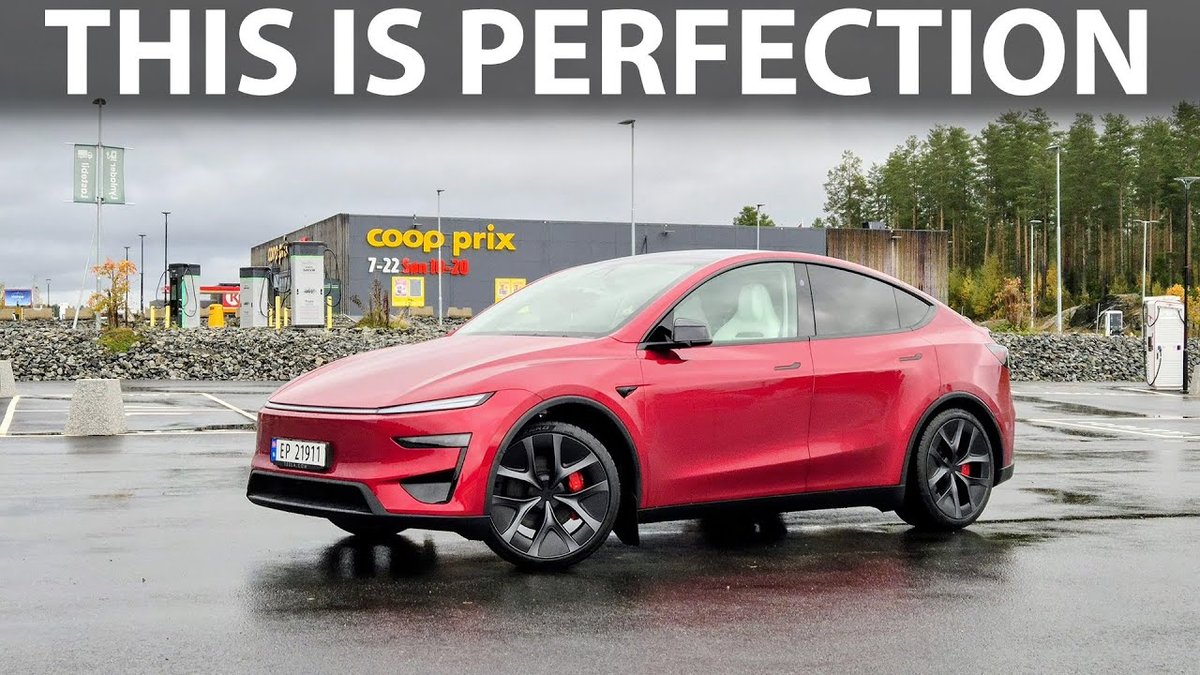
The highly anticipated 2026 Tesla Model Y refresh, internally codenamed Juniper, has undergone rigorous real-world highway range evaluation. Initial standardized testing indicates substantial improvements in overall vehicle efficiency compared to the outgoing architecture. Industry analysts report that the revised crossover delivers notable range expansion during sustained high-speed cruising, addressing one of the most critical performance metrics for prospective electric vehicle buyers seeking long-distance capabilities.
Comprehensive evaluations conducted under controlled high-speed highway conditions demonstrate how structural updates impact energy consumption. According to engineering data, the updated crossover exhibits lower watt-hour per mile consumption across varied topography. Drivers can expect significantly more reliable long-range travel estimates, reducing the disparity between official EPA ratings and real-world results that frequently plagued earlier iterations of popular electric utility vehicles on long trips.
Highway Efficiency and Aerodynamic Refinements
Aerodynamic enhancements serve as the cornerstone of the vehicle’s elevated range figures. Official company disclosures highlight a redesigned front fascia, streamlined underbody cladding, and an optimized rear diffuser that collectively reduce the drag coefficient. These subtle exterior changes yield significant aerodynamic benefits, allowing the vehicle to slice through ambient air resistance more effectively when maintaining speeds of seventy miles per hour or higher.
In standard highway range evaluations at seventy miles per hour, the Long Range All-Wheel Drive variant achieved an impressive continuous distance of 312 miles on a single charge. This performance marks a noticeable percentage improvement over previous model years. Engineering data indicates that acoustic glass insulation and revised wheel designs further assist in preserving kinetic momentum by minimizing rolling resistance and turbulence around the wheel wells.
The efficiency metrics translate to an average consumption rate of approximately 245 watt-hours per mile during steady cruising. Regulatory filings demonstrate that revised tire compounds developed specifically for the updated chassis provide optimal grip while simultaneously reducing rotational friction. Consequently, high-speed energy depletion occurs at a far more predictable rate, providing drivers with increased confidence during extended interstate journeys without requiring frequent charging pauses.
Powertrain Optimizations and Battery Tech
Underneath the updated sheet metal, refined power electronics play a vital role in extending highway endurance. Official company disclosures reveal that the integration of next-generation silicon carbide inverters enhances energy conversion efficiency within the electric motors. By minimizing heat loss during sustained heavy power output, the vehicle directs a greater proportion of stored battery energy straight into forward propulsion rather than thermal waste.
Battery cell chemistry has also undergone subtle recalibration to improve continuous output efficiency without compromising longevity. Industry analysts note that updated pack architecture improves passive cooling capacity across all modules. This thermal management upgrade prevents cell throttling during prolonged high-speed travel, ensuring maximum usable capacity remains available throughout the entire discharge cycle, regardless of ambient highway temperatures or driving aggressiveness.
Thermal Management in Cold Conditions
Cruising performance in lower ambient temperatures often presents significant challenges for battery electric vehicles. Engineering data indicates that the Juniper refresh incorporates an enhanced heat pump system capable of scavenging waste heat from the drive units with higher precision. During cold-weather highway tests at freezing temperatures, the refreshed model maintained roughly 85 percent of its temperate range, outperforming prior production models.
Efficient pre-conditioning software further enhances real-world highway usability when navigating between fast-charging locations. Regulatory filings detail how automated battery pre-heating routines optimize internal temperatures prior to fast-charging stops without needlessly draining high-voltage reserves. This balance between climate control demands and battery thermal maintenance ensures that road trips require shorter plug-in intervals while keeping passenger cabin comfort fully uncompromised.
Market Impact and Production Scaling
The observed range advancements position the updated vehicle strongly against an increasingly crowded field of midsize electric crossovers. Industry analysts suggest that achieving over three hundred miles of real-world highway range sets a tough benchmark for competing manufacturers entering the 2026 model year. Superior highway endurance remains a primary deciding factor for consumers evaluating transitions from conventional internal combustion engines to electric propulsion.
Manufacturing adjustments across global gigafactories aim to streamline production of the revised chassis without disrupting delivery volume goals. Official company disclosures confirm that simplified casting techniques and battery integration processes reduce total assembly time per unit. These manufacturing efficiencies allow high volume production while scaling up distribution to meet projected global demand for the refreshed utility vehicle throughout late 2025 and 2026.
Industry Implications for 2026
The successful implementation of efficiency-focused hardware upgrades reinforces broader trends across the automotive industry. Regulatory filings indicate that emission standards and range verification protocols are growing increasingly strict in major markets. By focusing on real-world energy efficiency rather than merely installing larger, heavier battery packs, the manufacturer demonstrates a sustainable roadmap for future vehicle development that balances cost with consumer expectations.
As competitors analyze the real-world highway data, market pressure will likely force faster iteration cycles across competing product lines. Industry analysts emphasize that long-distance usability remains a cornerstone of consumer satisfaction. The Juniper refresh proves that incremental engineering refinements to aerodynamics, thermal systems, and inverter technology can deliver meaningful range gains without requiring expensive battery architecture overhauls.
Ultimately, the real-world highway test results validate the structural and technical revisions introduced in this mid-cycle update. Prospective electric vehicle buyers seeking versatile, long-range transportation now have empirical evidence supporting the car's improved high-speed endurance. As production ramps up globally, the refreshed utility vehicle is set to maintain its dominant position in the global automotive transition through 2026 and beyond.