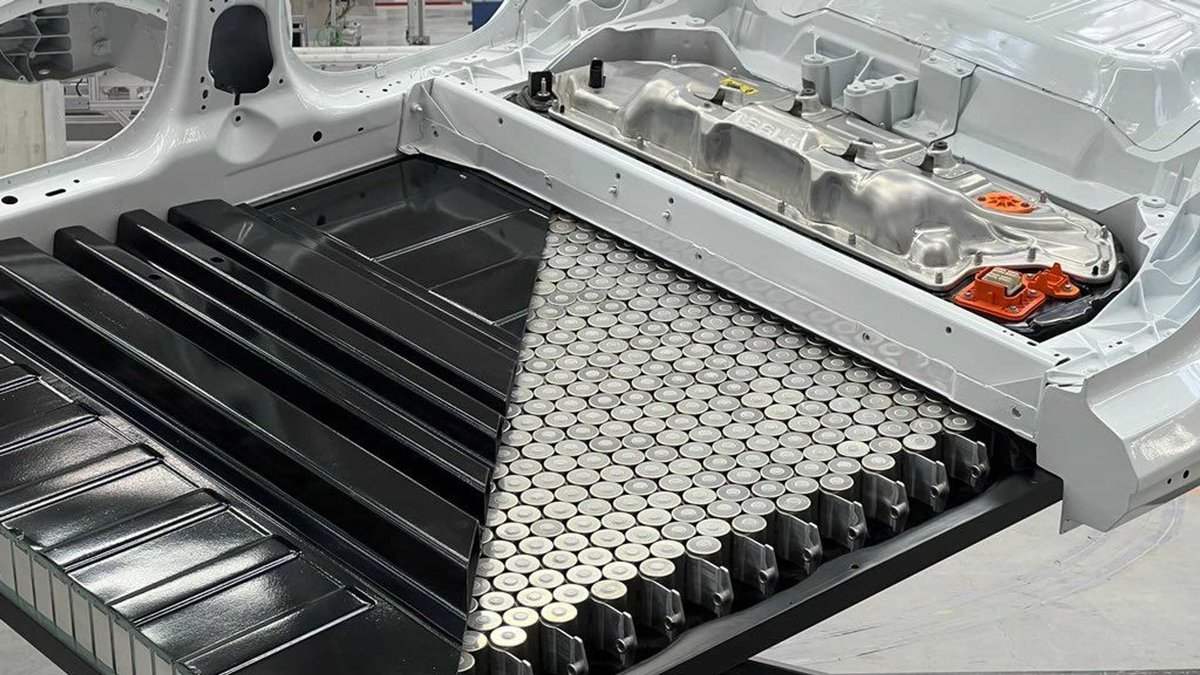
Decades of Data Confirm Remarkable Durability
As the automotive market marches through 2026, the long-term durability of lithium iron phosphate chemistry has transitioned from theoretical modeling to empirical reality. Recent official company disclosures reveal that early Tesla Model Y Standard Range crossovers equipped with LFP packs are retaining high capacity after years of heavy operational use. Drivers who initially expressed skepticism are now seeing remarkably flat degradation curves across fleets worldwide.
Engineering data submitted during multi-national transit testing confirms that LFP cathodes inherently withstand chemical stress better than traditional nickel-manganese-cobalt alternatives. Because the iron-phosphate lattice structure maintains structural integrity during repeated lithium cycling, physical cell degradation remains minimal under intense usage. Consequently, entry-level Model Y variants are outperforming baseline projections, establishing a new operational benchmark for mass-market electric vehicle longevity across global platforms.
Industry analysts note that this chemical resilience alters consumer perceptions surrounding vehicle replacement schedules and long-term ownership costs. While earlier EV owners budgeted for potential pack replacements after a decade of driving, current datasets indicate these LFP systems will outlast the chassis itself. This physical endurance lowers total cost of ownership calculations, creating a compelling financial argument for fleet operators and retail buyers alike.
Real-World Fleet Performance and Degradation Metrics
Comprehensive telemetry recorded in regulatory filings highlights how LFP batteries behave over extended operating distances. Vehicles logged with over 150,000 miles demonstrated average capacity retention exceeding 91 percent of original factory ratings. The steep initial loss curve seen during early mileage plateaus into an exceptionally flat line, proving that chemical bond stability mitigates the long-term capacity drop common in high-nickel configurations.
Ride-share companies operating Model Y units in high-density urban corridors report minimal performance variation across seasonal temperature changes. Although lower ambient temperatures temporarily suppress active discharge rates during cold months, overall state-of-health metrics stay surprisingly consistent year-over-year. Industry analysts highlight that vehicle downtime attributed to pack anomalies or module imbalances has dropped to near zero across thousands of active vehicles.
Engineering data further suggests that LFP chemistry exhibits remarkable tolerance to continuous daily charging up to a full 100 percent state of charge. Unlike nickel-based batteries which suffer accelerated degradation when stored at high voltage levels, LFP packs require frequent full charges to calibrate cell monitoring software accurately. This operational trait eliminates range anxiety related to charging limits while protecting internal cell structures over time.
Thermal Management Innovations and Charging Habits
Advanced thermal control software introduced in recent vehicle updates plays a vital role in extending cell life under harsh environmental conditions. Official company disclosures explain how updated thermal management routines dynamically control cell heating and cooling during fast charging. By regulating pack temperatures prior to charging sessions, the vehicle protects internal cathode materials from localized thermal spots that accelerate mechanical stress.
Furthermore, owner charging habits have adapted to leverage the inherent benefits of the LFP pack design. Because drivers can comfortably charge to maximum capacity without worrying about cell degradation, daily usable range matches nominal range expectations better than in nickel-based EVs. Industry analysts point out that this usability advantage compensates for the lower energy density inherent to iron-based cell chemistries.
Laboratory testing submitted in regulatory filings indicates that modern LFP cells complete over 3,000 full charge-discharge cycles before dropping below 80 percent original capacity. For an average driver, that cycle life equates to well over 500,000 cumulative driving miles under standard conditions. These empirical findings effectively eliminate battery replacement risk as a primary concern for long-term prospective owners evaluating pre-owned vehicles.
Industry Impact and Second-Life Resale Value
The strong residual health of used Model Y Standard Range units is reshaping the secondary EV marketplace in 2026. Industry analysts observe that valuation models historically penalized electric vehicles due to aggressive depreciation assumptions linked to battery decay. However, real-world LFP performance metrics are stabilizing used vehicle values, allowing pre-owned Model Y crossovers to retain higher trade-in equity than comparable internal combustion engine vehicles in the same segment.
Second-life energy storage providers are monitoring these LFP battery packs with intense interest as early vehicles age. Industry analysts project that retired LFP modules will retain significant financial value for grid-scale energy storage projects due to their remaining charge capacity and fire-safe chemistry. This economic residual value provides an additional financial backstop that reduces lifetime depreciation for original vehicle purchasers.
Furthermore, auto insurers and third-party warranty providers have adjusted their coverage parameters in response to LFP reliability data. Official company disclosures confirm that warranty claims for battery replacement in LFP-equipped units remain at record low percentages compared to legacy powertrains. Consequently, insurance premiums and extended coverage plans for these models have steadily declined, further reducing annual operating expenses for high-mileage drivers.
Future Outlook for Entry-Level Electric Vehicles
The proven durability of iron-based battery chemistry is accelerating a global shift across entry-level EV manufacturing strategies. Automotive competitors are rapidly shifting base trim offerings to LFP cell variants to match the high longevity standards established by Model Y adopters. Engineering data highlights that while LFP packs carry a weight penalty, their safety, lower costs, and exceptional lifespan make them the standard for practical mass transportation.
Looking ahead, ongoing refinements in pack integration, such as structural cell design, promise to optimize weight efficiency while preserving cell longevity. Regulatory filings submitted for upcoming vehicle platforms demonstrate that next-generation LFP formulations will maintain these high lifespan benchmarks while offering incremental improvements in cold-weather performance. The Tesla Model Y Standard Range has fundamentally rewritten expected vehicle lifespans, setting a standard for global electric transportation.