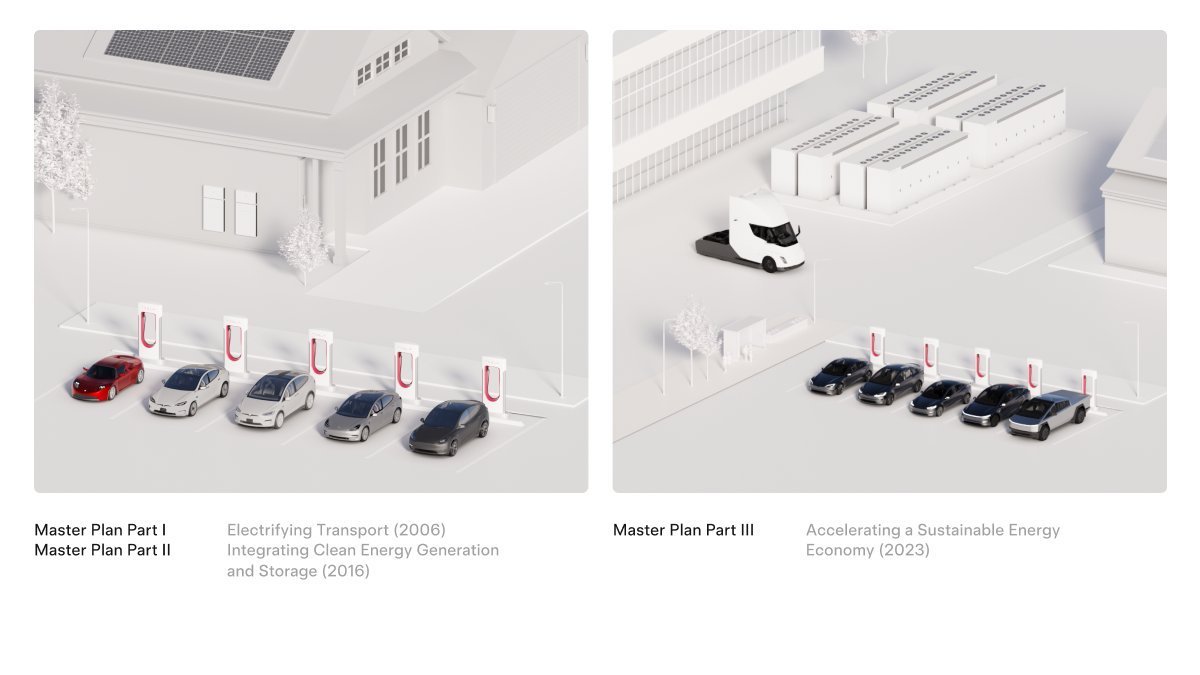
Tesla has officially launched the latest phase of its comprehensive strategy aimed at achieving a fully sustainable global economy by 2050. Official company disclosures highlight a massive expansion across utility-scale energy storage, next-generation electric vehicles, and electrified heat networks. The initiative outlines a definitive roadmap designed to eliminate fossil fuel reliance through rapid technological deployment, structural manufacturing efficiencies, and unprecedented grid integration.
Engineering data indicates that the centerpiece of this strategy relies heavily on expanding stationary battery manufacturing capacity to terawatt-hour scales. By scaling up Megapack and Powerwall output across multiple global Gigafactories, the company intends to stabilize regional grids experiencing rapid renewable energy additions. This massive industrial buildout provides the necessary infrastructure for utility providers transitioning away from peaker plants and traditional fossil fuels.
Industry analysts emphasize that achieving these ambitious targets requires combining hardware production with advanced software orchestration platforms. Tesla's proprietary energy management software automatically balances power supply and demand, maximizing efficiency across decentralized solar and storage networks. Consequently, public utility operators are increasingly adopting these integrated solutions to maintain grid reliability during peak demand periods without relying on carbon-intensive thermal generation.
Scalable Battery Systems Drive Global Storage Expansion
Regulatory filings reveal that the company is expanding its battery cell manufacturing capabilities to support both energy storage products and vehicle fleets simultaneously. High-density dry-electrode technology serves as the primary driver behind lower production costs and improved thermal performance. These technical enhancements allow battery modules to operate efficiently under extreme weather conditions, making them ideal for diverse geographic installations worldwide.
According to official company disclosures, the expansion of utility energy storage represents the fastest-growing operational segment within the overall corporate structure. The rapid deployment of Megapack units worldwide offers regional utility providers high-capacity reserve power capable of reacting to load spikes in milliseconds. This rapid response capability significantly reduces the operational expenditures traditionally associated with maintaining legacy thermal standby generators.
Engineering data demonstrates that scaling stationary storage drastically improves overall grid resilience during severe weather events and localized outages. Distributed Powerwall systems, operating as virtual power plants, aggregate residential solar power to support transmission networks when demand surges. Industry analysts project that these residential aggregation systems will soon provide gigawatt-level peaking power back to primary power distribution networks globally.
Next-Generation Vehicle Platforms Target Mass Market Scale
Beyond energy storage, official company disclosures emphasize the deployment of an unboxed manufacturing process for next-generation affordable electric vehicles. This radical assembly method reduces factory footprints by more than thirty percent while simultaneously accelerating vehicle production throughput. By streamlining production lines, the company aims to dramatically lower vehicle retail prices, enabling faster consumer transition away from internal combustion engines.
Regulatory filings highlight that the high-volume electric platform utilizes advanced powertrain efficiency to reduce battery pack size requirements without sacrificing range. Lower vehicle weight directly correlates to reduced raw material consumption per chassis, significantly lowering the overall environmental lifecycle impact. Consequently, fleet operators and private consumers benefit from significantly reduced initial purchase costs and lower lifetime operating expenses.
Engineering data underscores that autonomous electric fleets will play an indispensable role in urban transportation decarbonization moving forward. Optimized routing algorithms paired with high-efficiency drivetrains drastically decrease energy consumption per passenger mile compared to conventional rideshare operations. Industry analysts note that autonomous electric vehicles could effectively displace millions of private gasoline-powered commuter cars across major metropolitan centers within the decade.
Sustainable Supply Chain and Resource Recycling Models
To sustain this massive manufacturing trajectory, official company disclosures detail an aggressive vertical integration strategy for critical raw material refining. By bringing lithium refining and cathode processing directly in-house, the automaker significantly reduces reliance on volatile global supply chains. This localized processing strategy minimizes transport distance for raw minerals, further shrinking the embedded carbon footprint of battery production.
Engineering data highlights advanced closed-loop recycling systems designed to recover over ninety-five percent of valuable metals from end-of-life battery packs. Recovered nickel, lithium, and cobalt are re-introduced directly into the cell manufacturing stream, minimizing the requirement for newly mined raw resources. This circular supply chain model mitigates environmental disruption while guaranteeing a stable stream of battery materials for ongoing production.
Regulatory filings demonstrate that key supply chain partners are now contractually bound to strictly renewable energy targets for all upstream processing operations. Subcontractors must verify that zero-emission electricity powers their refining and component fabrication facilities to maintain supplier eligibility. Industry analysts assert that this supply chain enforcement sets a new environmental benchmark for the entire automotive and clean energy manufacturing industry.
Financial Projections and Global Energy Ecosystem Impact
Financial estimates within official company disclosures project capital expenditures across battery production, vehicle assembly, and solar installation will total hundreds of billions globally. Despite the high upfront investment, total long-term operating costs across energy and transportation sectors will drop substantially compared to maintaining legacy fossil fuel infrastructure. Capital allocations prioritize rapid scaling to achieve critical manufacturing volume before the end of the current decade.
Industry analysts conclude that the successful execution of this master plan will reshape global energy economics and accelerate worldwide decarbonization efforts. By integrating affordable electric transport with scalable grid storage and localized solar generation, energy independence becomes economically feasible for developing nations. The holistic ecosystem framework establishes a blueprint for transitioning the global industrial infrastructure toward complete environmental sustainability.