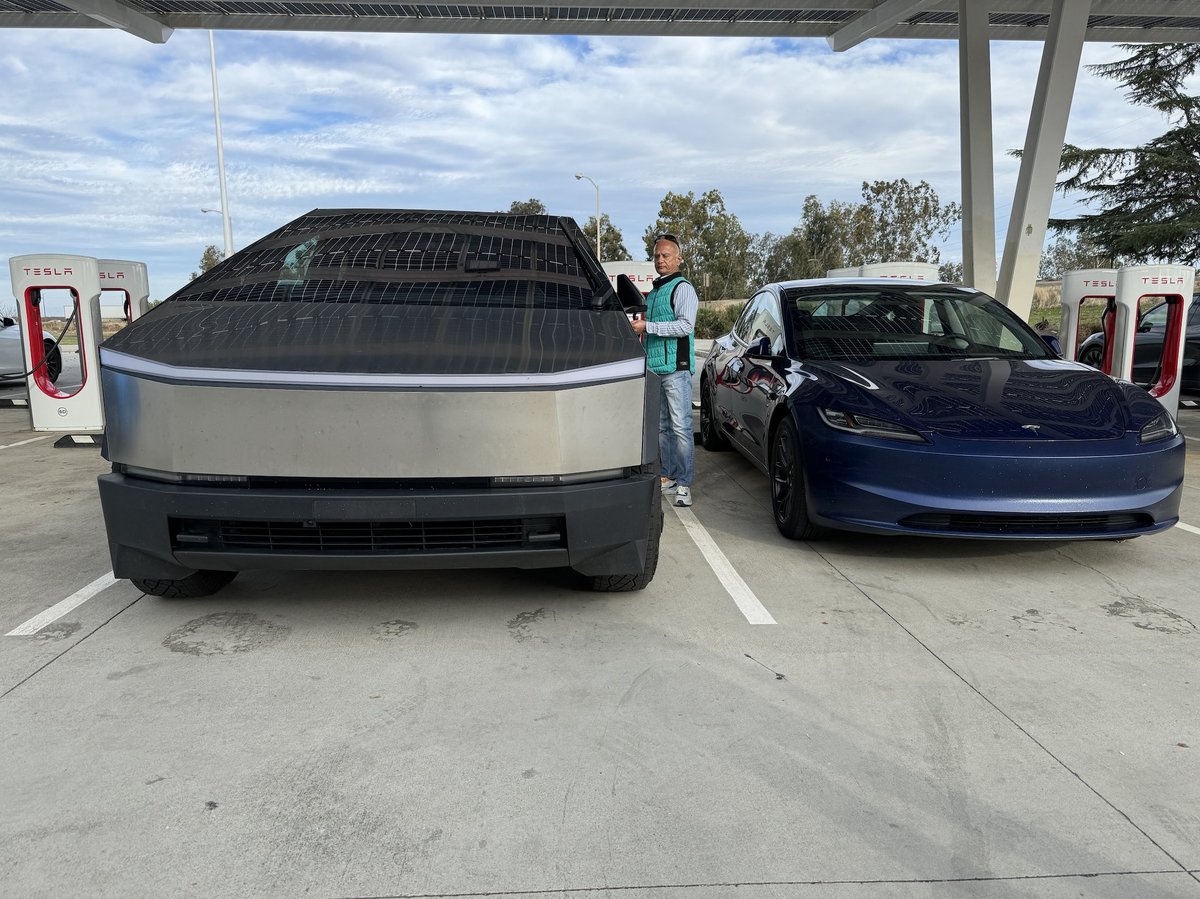
Tesla has officially launched its next-generation Full Self Driving platform, designated Hardware 5, featuring a revolutionary high-definition radar sensor suite. According to official company disclosures, this hardware iteration represents a major evolution in the vehicle maker's approach to fully autonomous driving. The new deployment aims to achieve unprecedented safety levels across all driving conditions while significantly expanding operational capabilities worldwide.
The introduction of Hardware 5 marks a critical milestone in the EV industry's quest for unsupervised autonomy in 2026. Industry analysts note that integrating advanced perception hardware alongside neural processing units allows for faster decision-making. By combining high-resolution spatial awareness with pure vision AI, the company is positioning its fleet to meet stringent global safety benchmarks without compromising scalability.
Engineering Innovations in High-Definition Perception
Engineering data reveals that the Hardware 5 radar operates on a millimetric wave spectrum designed to deliver ultra-high spatial resolution. Unlike early radar units phased out in previous vehicle builds, this custom sensor captures dense 4D point clouds resembling lidar outputs. The system provides instantaneous velocity measurements for hundreds of independent objects, allowing the central computer to construct highly detailed environmental maps.
The sensor unit directly interfaces with Tesla’s proprietary AI chip, which boasts a tenfold increase in processing power over previous iterations. Official company disclosures highlight that this direct neural bridge eliminates latency when processing raw sensor data. Consequently, the autonomous driving model synthesizes visual signals and radar reflections concurrently, ensuring instantaneous path planning even during rapid highway maneuvers.
Further engineering data underscores the radar unit's exceptional detection envelope, extending beyond three hundred meters in standard operational environments. The sensor utilizes advanced digital beamforming to resolve small obstacles hidden behind larger vehicles. This capability provides the driving stack with critical foresight during dense traffic scenarios, effectively mitigating collision risks before human drivers could even react.
Regulatory Filings and System Capabilities
Regulatory filings submitted to international transport authorities confirm that Hardware 5 meets strict functional safety protocols required for Level 4 autonomous operations. The documentation indicates that dual-redundant power and data lines have been embedded within the radar assembly to prevent system failures. This hardware redundancy reassures transportation regulators prioritizing passenger safety in driverless ride-hailing applications.
The regulatory filings also detail significant performance gains in extreme weather conditions that typically impair traditional optical camera systems. Heavy fog, torrential rain, blowing snow, and direct sun glare no longer degrade environmental perception to dangerous levels. Industry analysts emphasize that robust performance in adverse climates is essential for regulatory approval in northern markets and global commercial operations.
Production Rollout and Fleet Integration
Manufacturing updates confirm that Hardware 5 assembly lines are now operational across major production sites in North America, Europe, and Asia. Official company disclosures indicate that all premium electric vehicle models leaving factory floors will feature the updated sensor package as standard equipment. Mass-market vehicle lines are scheduled to transition to the new hardware architecture by the end of the second quarter.
Industry analysts point out that retrofitting older vehicles with the new high-definition radar will not be feasible due to altered wiring harnesses and thermal demands. While earlier platforms will continue receiving dedicated software optimizations, Hardware 5 will serve as the baseline for all upcoming fully autonomous software features. Existing owners will need to upgrade to newer vehicle builds to access maximum performance benefits.
Market Impact and Supply Chain Strategy
Financial and market evaluations provided by industry analysts indicate that in-house radar design significantly lowers production costs compared to off-the-shelf lidar alternatives. By manufacturing proprietary sensors, the company maintains control over component supply chains while preserving vehicle profit margins. This vertical integration strategy provides a distinct competitive advantage over rival automakers relying on expensive third-party sensor suites.
Competing EV manufacturers are closely watching the deployment of Hardware 5 as autonomous market pressures intensify throughout 2026. Industry analysts predict that the successful integration of high-definition radar will force traditional automotive suppliers to accelerate their own sensor development timelines. Consequently, the commercial viability of low-cost, high-resolution perception systems will likely redefine industry-wide standards for advanced driver assistance suites.
Strategic Vision for Unsupervised Autonomous Driving
Official company disclosures emphasize that the combined neural network trained on Hardware 5 data accelerates the timeline toward unsupervised self-driving validation. The continuous stream of high-fidelity radar data helps train end-to-end neural networks to interpret complex urban environments accurately. This data advantage enables autonomous vehicles to handle unpredictable human behavior, tricky construction zones, and non-standard traffic intersections effortlessly.
Engineering data demonstrates that software builds tailored for Hardware 5 show a dramatic reduction in safety-critical interventions during real-world testing. Fleet telemetry shows smoother acceleration, refined lane positioning, and more confident navigational choices in challenging environments. Software teams are leveraging synthetic data generation paired with real-world radar logs to refine edge-case scenarios rapidly across global operational design domains.
As autonomous vehicle deployments accelerate worldwide, Hardware 5 positions the company at the forefront of safe, scalable intelligent transportation. Industry analysts concur that combining custom high-definition radar with massive compute power sets a new benchmark for automated driving technology in 2026. Drivers and fleet operators alike now stand on the threshold of a truly driverless mobility ecosystem.