
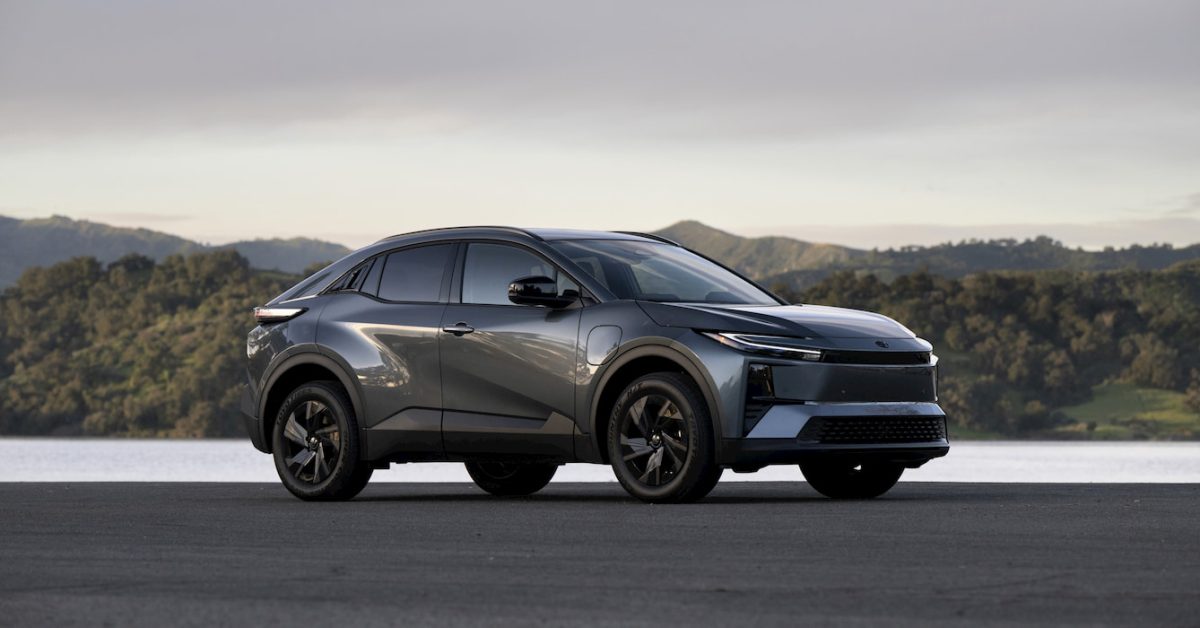
Toyota Recalls 10,000 C-HR EVs Over Sudden Power Loss Risk
Software Glitch Prompts Recall of Toyota C-HR Electric SUV
Toyota has issued a safety recall for approximately 10,000 units of its all-electric C-HR crossover in North America. According to recent regulatory filings, the vehicle faces a software vulnerability that could cause a sudden loss of propulsion while driving. This safety action marks the first major recall for the newly introduced model, affecting specific 2026 model-year vehicles across the region.
The affected C-HR EV arrived in showrooms earlier this year with a starting price of roughly $37,000. Positioned as a smaller, sportier entry within Toyota's growing lineup of zero-emission vehicles, the crossover sits alongside the larger bZ and rugged bZ Woodland models. Despite initial positive market reception, this technical flaw requires immediate dealer intervention to prevent potential hazard on public roads.
Automotive safety analysts emphasize that a sudden loss of drive power at high speeds poses serious safety risks to vehicle occupants and surrounding traffic. While no collisions or injuries have been officially tied to the defect in preliminary safety filings, the potential for unexpected deceleration forced manufacturer engineers to submit formal notifications to transportation safety authorities nationwide.
Understanding the Regenerative Braking System Defect
Technical documentation reveals that the underlying issue stems directly from a flaw within the software governing the vehicle's regenerative braking system. Under normal operations, regenerative braking captures kinetic energy during deceleration and feeds electricity back into the high-voltage traction battery. However, when the battery is already fully charged or near maximum capacity, the control logic mismanages incoming energy flow.
When a high state of charge coincides with heavy regenerative braking, the software allows the system to accidentally overcharge the battery pack. To protect hardware integrity against severe electrical overload, the vehicle's internal fail-safe protocols trigger an immediate shutdown of the electric drive assembly. This emergency system reaction isolates the primary battery, resulting in an abrupt loss of motive power while driving.
Unlike mechanical engine failures, software-driven shutdowns in modern electric vehicles can occur without traditional warning signs like unusual mechanical noise or dashboard smoke. Drivers experiencing the fault may suddenly find themselves coasting without accelerator response. Steering and mechanical braking remain functional through auxiliary low-voltage systems, though loss of main drive power presents an obvious collision hazard in fast-flowing highway traffic.
Market Position and Impact on Toyota EV Strategy
Industry filings confirm that this specific safety campaign applies exclusively to the 2026 model year C-HR EV. Production changes implemented for subsequent 2027 model year vehicles, which are already available in North American showrooms, feature updated control code that prevents the battery overcharge condition. Consequently, newer units currently sitting on dealer lots or in customer hands remain completely unaffected by this issue.
The C-HR EV represents a critical component of Toyota's broader strategy to expand its battery electric vehicle presence globally. By offering an accessible entry point below $40,000, the manufacturer aimed to capture urban commuters seeking efficiency without sacrificing crossover styling. Navigating software bugs in early production runs is a common hurdle for legacy automakers rapidly expanding their electrified vehicle portfolios.
Early reports indicate the potential for this safety recall to expand beyond North American borders in the coming weeks. The electric C-HR+ sold across European, British, and Asian markets shares identical powertrain architecture and control electronics with the North American variant. International regulatory bodies are currently evaluating technical data to determine whether regional service campaigns will be mandated overseas as well.
International Implications and Remedy Process
Fortunately for current owners, resolving the issue does not require physical hardware replacement or complex mechanical repairs. Authorized dealerships will perform a comprehensive software flash of the vehicle's battery Electronic Control Unit (ECU). This update adjusts the management parameters governing energy intake during regenerative braking, ensuring the system safely dissipates excess energy when battery capacity is topped off.
Service technicians will execute the ECU reprogramming free of charge to vehicle owners under standard warranty and safety compliance guidelines. Because this particular vehicle platform lacks comprehensive over-the-air software updating capabilities for critical powertrain modules, owners must physically bring their vehicles into an authorized service facility to receive the essential software patch and clear the recall status.
What Affected Vehicle Owners Should Do Next
Official owner notification letters are scheduled to be dispatched by early November 2026. Because regulatory database listings are still updating, vehicle identification numbers (VINs) may take several days to appear on public recall lookups. Automaker representatives recommend that owners keep their battery charge levels slightly below maximum capacity as an extra precautionary measure until software patches are applied.
Vehicle owners seeking immediate clarification can contact customer engagement centers directly or access designated online recall portals. Entering a 17-digit vehicle identification number into official lookup tools allows drivers to verify if their specific chassis is included in the campaign. Dealership service departments will begin scheduling appointments once updated software packages are officially distributed to local technicians.
As electric vehicle adoption accelerates worldwide, software integrity remains paramount for consumer confidence and road safety. Toyota's quick identification of the C-HR EV logic error reflects the increasing complexity of modern electric drive management. Stakeholders across the automotive sector will monitor the execution of this recall closely as the manufacturer continues expanding its zero-emission product lineup.
