
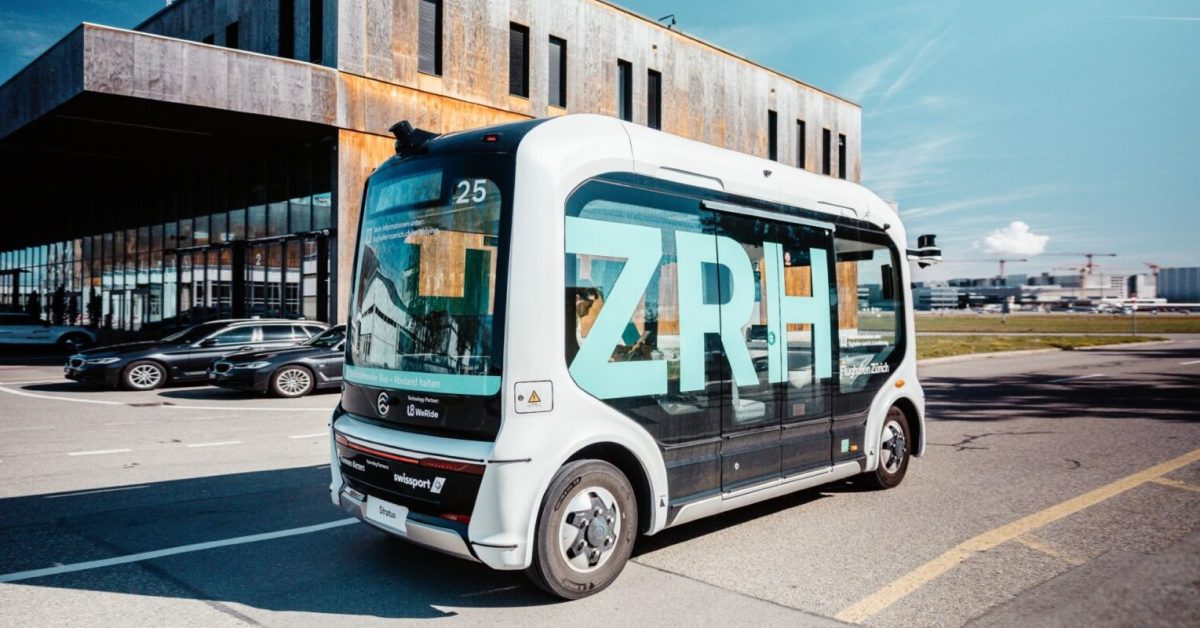
Zurich Airport Deploys Driverless Level 4 Electric Shuttles
A Major Milestone for European Autonomous Transport
Zürich Airport has taken a monumental step forward in autonomous mobility by deploying two fully automated electric shuttle buses across its operational grounds. Crucially, these high-tech vehicles operate without a human safety monitor on board. This historic achievement positions the Swiss hub among the first European airports to test true Level 4 autonomy within an active commercial environment.
Level 4 autonomy signifies that the vehicle can handle all driving functions under specific operational conditions without requiring human intervention. While previous automated transit trials across the continent relied heavily on onboard safety drivers to take control during emergencies, this pilot marks a major shift toward complete operational independence for self-driving vehicles in commercial transport environments.
Regulatory disclosures reveal that the self-driving shuttles were co-developed in close partnership with autonomous vehicle technology company WeRide. The ongoing initiative aims to evaluate how cutting-edge sensor suites, artificial intelligence, and centralized control systems perform in real-world airport infrastructure, establishing a crucial technical framework for future commercial deployments across European transit networks.
Rigorous Testing and Phased Rollout Protocols
The pioneering autonomous transit project has been in continuous development since March 2025. Over the course of several months, engineering teams put the shuttles through an extensive, multi-phased testing methodology. This structured process ensured that the platform met stringent safety benchmarks, operational conditions, and European regulatory standards required for full Level 4 autonomous deployment.
To guarantee maximum operational security, airport administrators are taking a cautious, phased approach during the initial deployment phase. The shuttles are currently running along designated routes without passengers onboard. This controlled setup allows technicians to continuously evaluate system behavior, sensor fidelity, and vehicle telemetry under live environmental conditions before opening services to human passengers.
“Safety was and remains our top priority at all times,” explained Raphaël Glaesener, Senior Innovation Manager at Zurich Airport Ltd. “That is why the first Level 4 trips will once again be carried out without passengers. However, we expect that after around four weeks of test operation, employees will be able to use the now fully automated shuttle.”
Technical Partnerships and Operations Management
While human safety drivers are no longer present inside the vehicle cabin, the operation maintains a robust safety net through advanced teleoperation technology. External supervisors continuously track the vehicles via high-speed communication links. These remote operators can step in and command the shuttles if unexpected obstructions, adverse weather, or technical anomalies occur along the route.
The deployment relies on close collaboration between the airport operator and key ground service stakeholders. Major logistics partners Swissport and Krummen Kerzers are actively participating in the program. Each entity supplies dedicated remote operations personnel trained to monitor vehicle streams and ensure seamless integration with broader ground traffic workflows throughout the extensive airfield complex.
The defined operating route has been engineered specifically to minimize conflict with critical aviation operations. The autonomous shuttles navigate designated perimeter roads to transport airport staff, strictly avoiding active runway taxiways and aircraft movement areas. This localized operational design significantly reduces safety risks while maximizing everyday utility for ground service and logistics crews.
Tackling Labor Shortages and Fleet Decarbonization
Beyond testing technological limits, the pilot project targets two pressing challenges facing modern aviation infrastructure: systemic labor shortages and fleet carbon emissions. Automated ground transport offers a viable long-term solution toward maintaining consistent service frequency while reducing reliance on scarce commercial driver resources across rapidly expanding commercial aviation hub operations worldwide.
“We are very pleased with this achievement,” explained Coralie Klaus Boecker, Head of the ZRH Innovation Hub at Flughafen Zürich AG. “The gradual automation of vehicles can make an important contribution for airports given the emerging shortage of skilled workers. For us, it was therefore essential to lay the necessary groundwork early on.”
Boecker further emphasized that establishing early regulatory and operational standards creates immense value across the broader aviation ecosystem. By pioneering these protocols today, the airport operator enables third-party service providers, airline partners, and ground handling crews to adopt scalable autonomous vehicle platforms safely and efficiently in the coming years.
The Future of Automated Airport Logistics
The introduction of all-electric autonomous shuttles also aligns directly with broader environmental sustainability initiatives across the European transport sector. By replacing traditional combustion engine maintenance vans and employee transport buses with zero-emission electric platforms, the airport furthers its long-term strategy to decarbonize ground support equipment and reduce localized carbon footprints.
Analyst reports suggest that successful completion of the initial four-week unmanned trial will trigger broader integration of automated vehicles across global transport hubs. As Zürich Airport demonstrates the viability of Level 4 autonomy without safety drivers, major air hubs worldwide will likely accelerate their own transitions toward driverless operational support systems.
As field testing continues in Switzerland, industry observers are keeping a close watch on performance data, operational reliability, and passenger feedback. If the pilot succeeds as anticipated, Zürich Airport will not only set a new standard for European aviation logistics but also provide a proven blueprint for driverless public transit in complex infrastructure environments.
