
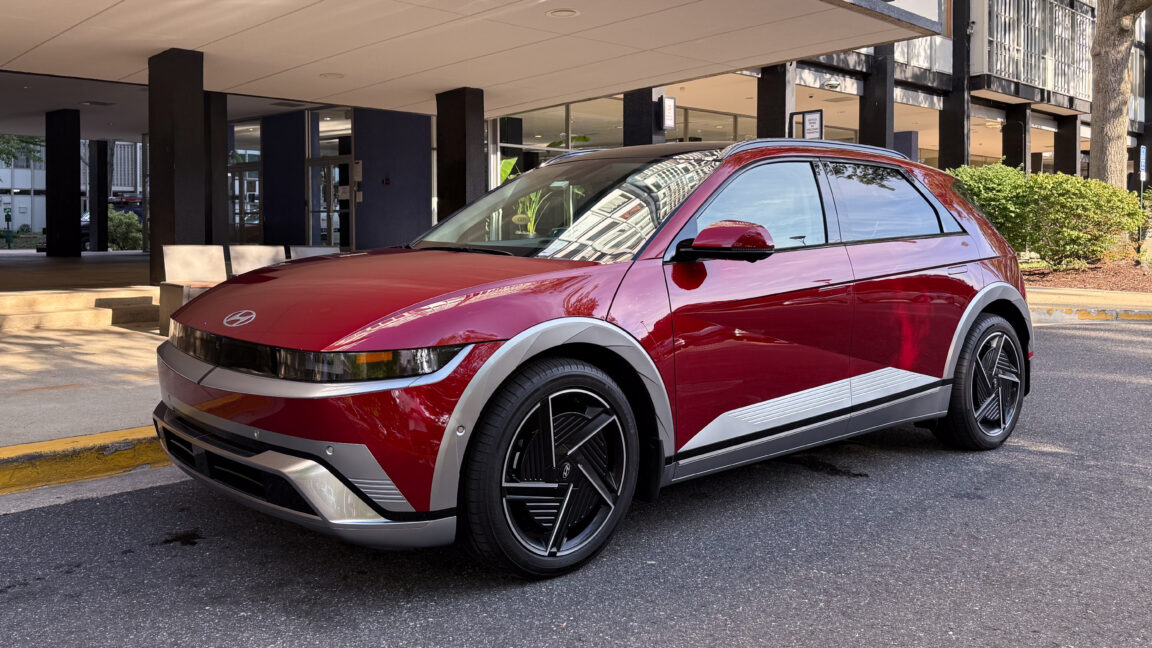
2026 Hyundai Ioniq 5 Review: What Works and What Frustrates
When the Hyundai Ioniq 5 launched in late 2021, it immediately disrupted the mainstream electric vehicle market. Bringing an ultra-fast 800-volt charging architecture—previously reserved for high-end sports cars—to an affordable crossover was a massive leap forward. Combined with boxy retro styling reminiscent of Giorgetto Giugiaro designs, the initial model set a high benchmark for rival manufacturers.
However, five years in the rapidly evolving EV sector is a lifetime. To maintain its edge, the 2026 Hyundai Ioniq 5 benefits from a key mid-cycle update. While the base standard-range model starts at $35,000, higher testing trims showcase revisions including a long-overdue rear windshield wiper and an upgraded 84 kWh battery pack.
Upgrading to the range-topping Limited trim elevates the price to $45,075. Adding dual-motor all-wheel drive requires a $3,900 premium, boosting output to 320 horsepower and 446 lb-ft of torque. While the extra motor provides confident traction and swift acceleration across all conditions, it introduces an unavoidable tradeoff in overall driving efficiency.
EV Performance, Efficiency, and Range Dynamics
Industry filings and testing data highlight the efficiency gap between drivetrains. The single-motor, rear-wheel-drive Ioniq 5 achieves an EPA-estimated range of 318 miles, averaging over 4 miles per kilowatt-hour. In contrast, the dual-motor all-wheel-drive variant drops to 269 miles, yielding a lower efficiency figure of roughly 3.4 miles per kilowatt-hour in Eco mode.
Losing 49 miles of range may seem minor daily, but it becomes noticeable during long-distance highway travel. Drivers relying on public infrastructure must plan for slightly more frequent stops with the dual-motor model. However, the updated 84 kWh pack ensures that when stops occur, high-speed energy transfer keeps overall downtime to a minimum.
The headline technical change for the 2026 model is the native inclusion of the NACS (J3400) charge port, replacing the older CCS1 standard. This hardware update grants direct access to Tesla’s vast Supercharger network alongside non-Tesla networks like IONNA and Electrify America. Drivers no longer require adapters to plug into North America’s top fast-charging stations.
Navigating Public and Home Charging Networks
While Tesla Supercharger access offers convenience, actual charging speeds vary depending on station architecture. Older V3 Superchargers peak at 250 kW and feature shorter cables. Native 800-volt stations from IONNA or Electrify America allow the Ioniq 5 to pull up to 265 kW, replenishing the battery from 10 to 80 percent in just 18 minutes.
Despite fast DC speeds, public stations represent only a fraction of typical EV charging habits. Most drivers rely primarily on residential AC charging for daily operation. Connected to a standard 240-volt Level 2 home charger, the Ioniq 5’s 84 kWh battery replenishes fully from a 10 percent state of charge in roughly seven hours and 20 minutes overnight.
This versatility makes the 2026 Ioniq 5 one of the most adaptable electric crossovers available. Whether relying on high-speed 800-volt highway chargers or steady overnight home charging, the vehicle suits diverse driving routines. However, real-world living reveals that a few minor cabin design details still hamper the overall daily user experience.
Interior Ergonomics and Tech Highlights
On the technology front, the Limited trim continues to showcase thoughtfully integrated driver features. The standout inclusion remains the Blind Spot View Monitor. By projecting a real-time video feed from side-mirror cameras directly into the digital cluster whenever a turn signal is activated, the system provides vital visibility in dense traffic environments.
This visual aid proves especially valuable when navigating city intersections with protected bike lanes or merging on crowded highways. It reinforces Hyundai’s reputation for practical driver-assist technology that actively enhances safety without feeling intrusive. Unfortunately, the ergonomic layout of the central dashboard controls fails to live up to those same standards.
The climate control panel remains a key source of driver frustration. Located below the air vents, the touch-sensitive interface lacks physical buttons or tactile feedback, making adjustments difficult while driving. Furthermore, weak backlighting makes the screen hard to read in bright sunlight, and the glossy surface quickly attracts dust and fingerprints.
Reliability Concerns and Overall Verdict
Beyond cabin ergonomics, prospective buyers must consider long-term mechanical reliability. Engineering evaluations and regulatory disclosures continue to monitor Hyundai’s Integrated Charging Control Unit (ICCU). This component governs power distribution between the high-voltage 800-volt traction battery and the 12-volt auxiliary system, which powers essential electronic accessories and primary vehicle systems.
Intermittent ICCU failures on earlier model years prompted technical service updates and recall campaigns across the platform. While Hyundai implemented software tweaks and hardware revisions for 2026, the underlying complexity of dual-voltage power management means ICCU reliability remains a focal point for buyers tracking long-term vehicle ownership reports.
Ultimately, the 2026 Hyundai Ioniq 5 remains a strong contender in the competitive compact electric crossover segment. Its striking design, rapid 800-volt charging, native NACS port, and useful safety tech offset minor interior flaws and AWD efficiency penalties. For drivers seeking innovation, Hyundai’s refreshed crossover continues to set a high benchmark.
