
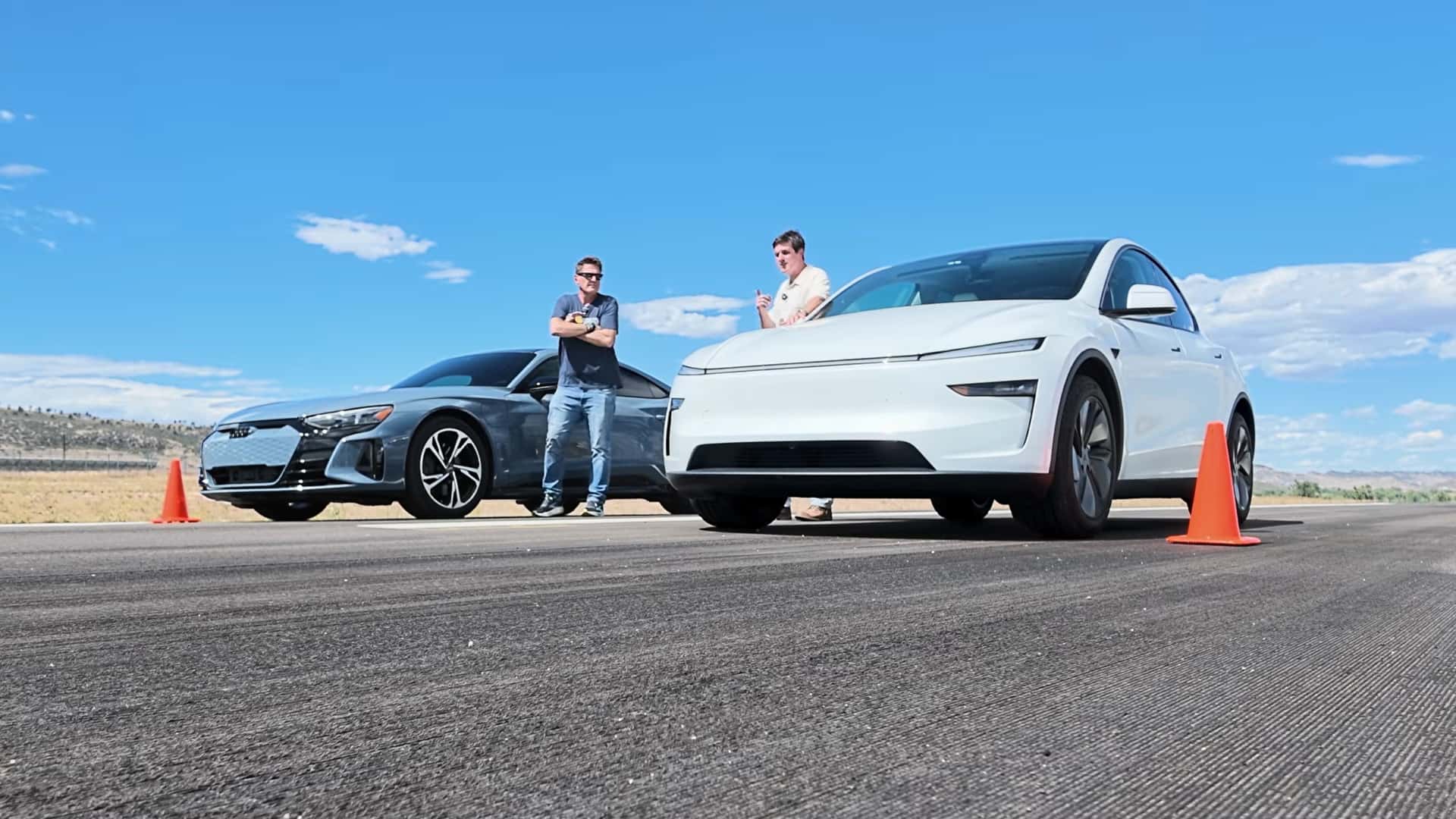
Tesla Model Y Faces Audi E-Tron GT And BMW i8 In Drag Race
The rapid evolution of electric vehicle technology over the past decade has fundamentally reshaped automotive performance metrics. In the early days of modern electrification, mass-market electric vehicles prioritized localized zero-emissions commuter transport over straight-line velocity. Vehicles like early entry-level electric hatchbacks delivered modest output figures around 110 horsepower and required nearly 12 seconds to accelerate from zero to 60 miles per hour.
Today, high-performance battery-electric power has transitioned from an expensive novelty into an accessible industry standard. Instantaneous electric torque allows mainstream midsize crossovers to deliver acceleration figures that were once reserved exclusively for exotic supercars. A recent series of straight-line performance evaluations highlighted this dramatic shift, pitting a brand-new electric crossover against two high-end performance models from previous product generations.
The benchmark comparison brought together three distinct engineering approaches spanning pure electrification and hybrid performance: a brand-new Tesla Model Y, a pre-owned Audi E-Tron GT, and a pre-owned BMW i8 sports car. While these vehicles originated from vastly different market segments and launch price points, depreciation and market alignment have brought their current transactional values remarkably close, creating an intriguing real-world evaluation.
Straight-Line Acceleration and Track Times
In initial standing quarter-mile evaluations, the pure electric models demonstrated immediate dominance out of the starting gate. The pre-owned Audi E-Tron GT leveraged its dual-motor all-wheel-drive architecture and dual-speed rear transmission to post an initial quarter-mile time of 12.24 seconds. Subsequent launch runs saw the German grand tourer refine its power delivery, dropping its standing quarter-mile benchmark to a swift 11.85 seconds.
The newly built Tesla Model Y held its ground surprisingly well against the sleeker, lower-slung Audi sedan. The mass-market crossover completed the quarter-mile sprint in 12.52 seconds during its primary standing start run. When evaluated during rolling-start acceleration tests—which minimize initial traction limitations—the gap between the family utility vehicle and the high-end electric tourer narrowed even further, demonstrating impressive drivetrain efficiency.
The BMW i8, featuring a plug-in hybrid architecture powered by a turbocharged three-cylinder engine paired with an electric motor, struggled to match the pure electric contenders. Its initial quarter-mile pass logged a time of 13.04 seconds. After thermal systems optimized and launch parameters adjusted, independent testers coaxed a best run of 12.54 seconds from the futuristic hybrid coupe.
Economic Parity and Value Dynamics
Beyond raw acceleration numbers, the financial context of this comparison reveals how rapidly automotive technology depreciates and democratizes. At launch, both the Audi E-Tron GT and the BMW i8 commanded six-figure original sticker prices, easily exceeding $100,000 when equipped with performance options. However, secondary market valuations indicate that well-maintained pre-owned examples of both models can now be acquired for roughly $45,000 to $47,000.
In contrast, the new Tesla Model Y sits at a retail price point of approximately $48,000 directly from the showroom floor. This price parity means buyers today face a choice between a brand-new mass-produced utility vehicle with full warranty coverage or heavily depreciated luxury performance models that once represented the absolute peak of modern automotive design and high-tech propulsion.
The close performance results demonstrate how quickly pure battery-electric drivetrains have outpaced complex hybrid configurations. The BMW i8 was hailed as a technological marvel upon its release, but its intricate mechanical layout cannot match the seamless torque delivery of modern high-capacity electric motors. Pure EVs eliminate gear shifting delays and mechanical parasitic losses, delivering immediate power directly to the pavement.
The Democratization of Supercar Performance
The fact that a high-volume family crossover can comfortably rival or beat six-figure sports cars from recent years underscores a major industry shift. Supercar levels of straight-line acceleration are no longer locked behind high paywalls or restricted to low-slung, impractical two-seaters. Everyday drivers can now experience instantaneous acceleration in vehicles designed primarily to haul groceries, luggage, and family members.
This accessibility changes how consumer utility and vehicle dynamics are evaluated in the modern auto industry. High-performance electric motors provide flat torque curves that make pass-through acceleration effortless at highway speeds. As battery cell densities improve and inverter efficiencies rise, entry-level and mid-range electric vehicles continue to close the gap on specialized track vehicles across standard acceleration parameters.
Thermal management systems have also evolved significantly over the past decade. While early electric and hybrid systems suffered from severe thermal throttling after repeated high-load launches, current EV architectures maintain peak output across multiple consecutive runs. This thermal stability allows modern electric vehicles to deliver consistent, repeatable zero-to-60 and quarter-mile acceleration times without performance degradation.
Market Implications and Future Outlook
The secondary market for early-generation high-end electric and hybrid vehicles presents both opportunities and challenges for performance enthusiasts. While depreciated luxury models offer striking styling and premium cabin appointments at a fraction of their original cost, newer mass-market EVs offer superior software integration, enhanced battery longevity, updated charging infrastructure compatibility, and competitive straight-line speed.
As global automakers continue expanding their electrified lineups, the performance baseline across all vehicle classes will inevitably keep rising. The close competition between brand-new crossovers and flagship sports cars demonstrates that performance parity has arrived. Electric drive technology has permanently altered expectations, ensuring that straight-line capability remains accessible, consistent, and broadly available across modern car segments.
