
Another Tesla Driver Caught Sleeping On Autopilot In B.C.
Novice Driver Intercepted Operating Model Y While Asleep
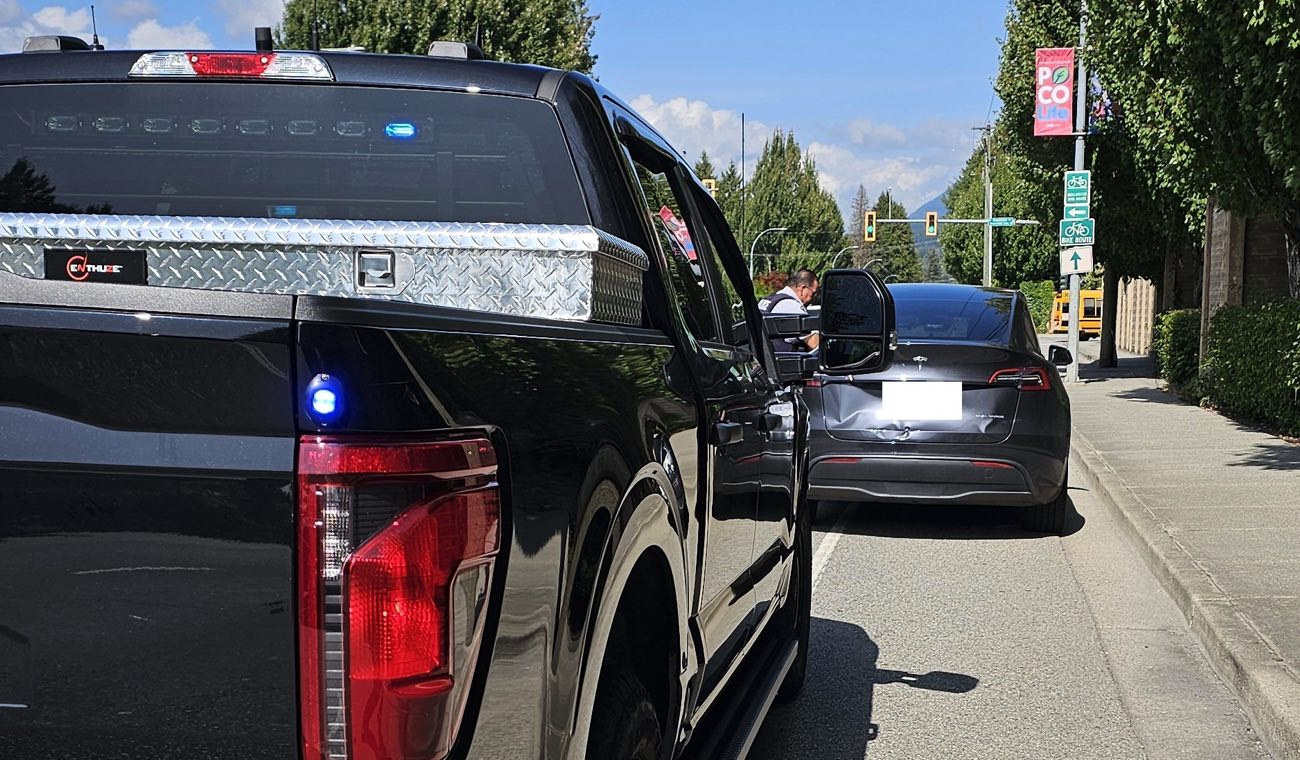
Law enforcement officers in British Columbia have intercepted another Tesla driver allegedly asleep at the wheel while utilizing advanced driver-assistance software. The latest incident unfolded in Port Coquitlam when regional police received urgent reports regarding a Tesla Model Y traveling along public roadways while its operator appeared completely unconscious behind the steering wheel.
Members of the Integrated Road Safety Unit were dispatched immediately to track down the vehicle. Upon locating the electric crossover, officers confirmed that the driver was sound asleep while the vehicle navigated traffic. The vehicle was operating under automated driving features, which require continuous driver monitoring and active supervision under provincial traffic regulations.
Police successfully halted the Model Y and cited the driver for operating a motor vehicle without due care and attention. Upon further inspection, officers discovered the individual held a Class 7 Novice license under the province’s graduated licensing program. The driver received an additional infraction ticket for failing to display the mandatory novice sign on the vehicle.
A Growing Pattern Of Automated Driving Abuse In Canada
Local authorities emphasized that automated driving suites do not replace human vigilance on public roads. Regional police statements reiterated that drivers must remain in full physical control of their motor vehicles at all times, regardless of whether semi-autonomous features are active. Operating a motor vehicle while asleep constitutes a severe safety risk to all road users.
This recent event marks the latest entry in an alarming sequence of similar occurrences recorded across British Columbia over the past year. Earlier incidents include a driver ticketed on Highway 1 in Coquitlam after observers reported seeing the individual asleep. Additional cases have been documented in North Vancouver, Langley, and along the transit corridor between Golden and Revelstoke.
Distracted driving infractions involving automated systems have expanded beyond sleeping drivers in the region. Police in West Kelowna recently ticketed another electric vehicle operator who was caught reading paperwork while navigating traffic with autonomous software active. These repeated infractions highlight a widespread public misunderstanding regarding the actual technical capabilities and legal boundaries of driver-assist technologies.
Regulatory Scrutiny Intensifies Across North America
The persistent pattern of driver negligence involving automated features in Canada mirrors growing safety concerns across North America. Federal lawmakers in the United States have increasingly pressured regulatory bodies to launch comprehensive investigations into the effectiveness of driver monitoring safeguards. Public safety advocates argue that existing driver attentiveness mechanisms fail to prevent dangerous misuse by drivers.
Legislative inquiries have pointed to dozens of publicly shared videos depicting drivers sleeping inside moving vehicles while automated steering systems remain engaged. Parliamentary and Congressional representatives have questioned whether driver-assist features are marketed in ways that inadvertently encourage over-reliance. Regulatory disclosures indicate that safety agencies are currently evaluating driver monitoring system requirements to prevent predictable misuse.
Industry analysts note that enforcement agencies face mounting challenges when patrolling roads populated by increasingly automated vehicles. While modern electric vehicles incorporate interior cabin cameras and steering wheel torque sensors to monitor engagement, motorists continue to discover workarounds or ignore safety warnings, creating hazardous conditions on high-speed thoroughfares.
The Limitations Of Hands-Free Driving Technology
Automakers consistently classify current consumer self-driving technologies as Level 2 driver-assist systems under international engineering standards. These systems require the human driver to remain fully attentive, keep their hands on the wheel, and maintain complete readiness to take immediate manual control. Despite names like Autopilot or Full Self-Driving, these systems cannot operate fully autonomously without human supervision.
Technical evaluations indicate that optical camera systems and torque sensors can sometimes fail to detect a sleeping or completely incapacitated driver in real time. If a system relies primarily on periodic steering wheel pressure, drivers can improperly bypass attentiveness checks. Engine manufacturers and software developers remain under pressure to implement strict eye-tracking and infrared occupant monitoring tools.
Government safety agencies are weighing standardized protocols that would require vehicles to safely pull over and activate hazard lights if driver engagement drops below acceptable parameters. European and North American vehicle safety rating programs are progressively incorporating stringent driver monitoring requirements as prerequisites for achieving top safety ratings.
Legal Enforcement And Driver Responsibility Standards
Transportation safety authorities reiterate that driver accountability remains unchanged under current highway legislation regardless of vehicle technology. In North America, motor vehicle regulations mandate that licensed operators accept full legal responsibility for vehicle navigation, speed control, and collision avoidance. Claiming that automated software was driving does not shield operators from criminal or civil liability.
For novice drivers operating under graduated licensing restrictions, penalties for distracted driving or driving without due care can lead to severe license suspensions. Traffic enforcement units have signaled plans to increase patrols and strict enforcement regarding automated feature abuse, aiming to curb dangerous driving habits before advanced driver-assist options become ubiquitous across passenger fleets.
