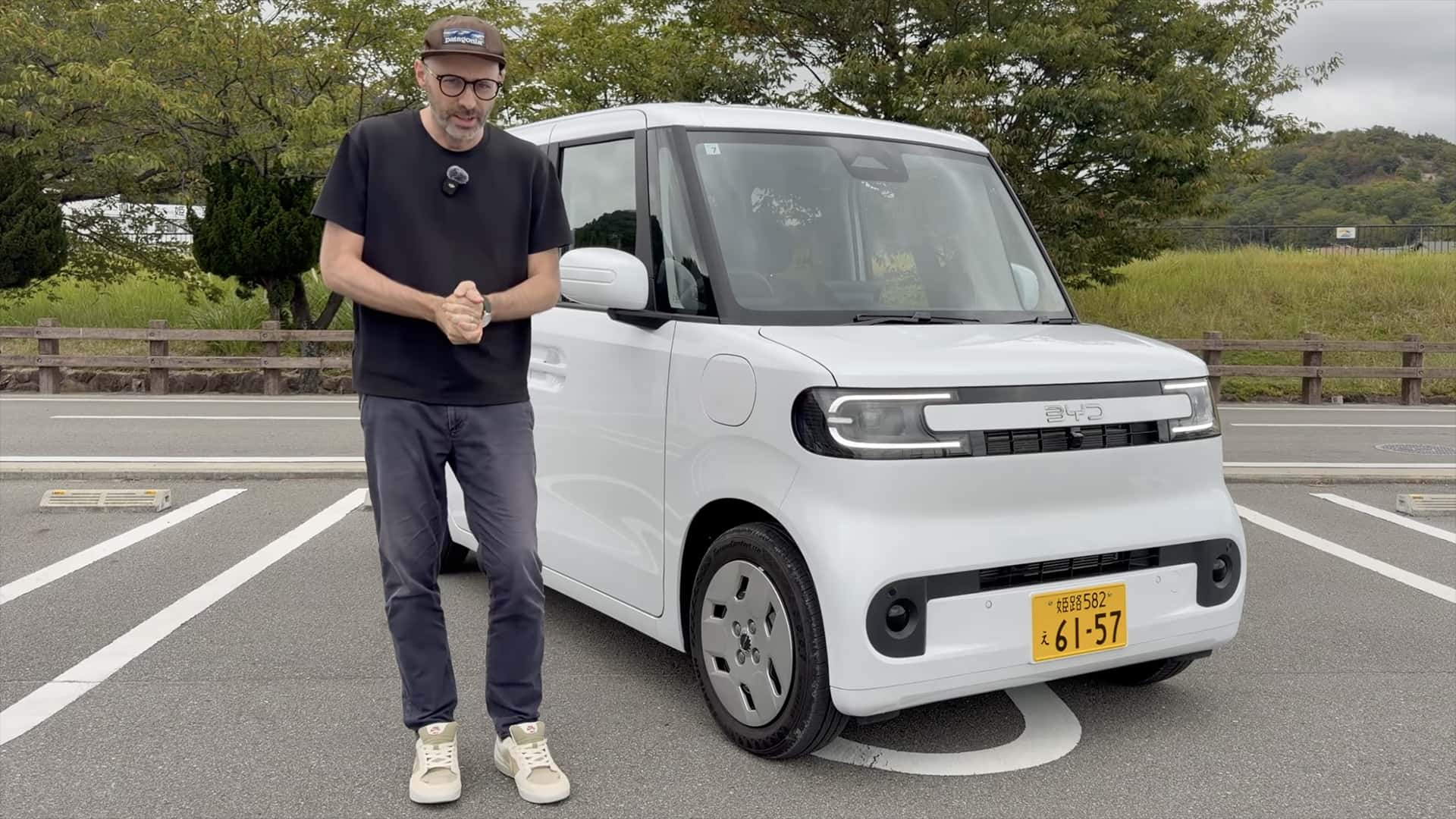
BYD's New Electric Kei Car Racco Proves Its Worth In Japan
Chinese automakers expanding into international markets frequently rely on a familiar strategy: outspecifying domestic competitors with sheer horsepower, cutting-edge software features, and extended driving range. However, entering Japan's highly specialized automotive market requires a fundamentally different approach. The strict physical and performance limitations governing the country's famous kei car segment mean established market playbooks must be completely rewritten.
To capture Japanese urban commuters, BYD developed the Racco, a fully electric micro-vehicle designed specifically around local regulatory constraints. Rather than attempting to overpower local vehicles, the automaker focused on intelligent interior packaging, practical ergonomics, and subtle usability. Recent independent test drives in Himeji reveal that BYD's tailor-made strategy has paid off handsomely, creating an electric vehicle that fits seamlessly into Japanese roads.
Tailoring Design to Japan's Kei Car Regulations
Early hands-on evaluations conducted by independent reviewers underscore how effectively BYD has mastered the micro-car brief. Taking the Racco out on Japanese streets without the curated constraints of a standard factory press trip allowed testers to evaluate the vehicle under authentic daily driving conditions. Their findings suggest the vehicle provides a refined, comfortable, and surprisingly spacious experience that stands shoulder-to-shoulder with established domestic options.
Smart Interior Packaging Maximizes Space Efficiency
The exterior design of the Racco embraces classic micro-van proportions, featuring a tall, boxy silhouette engineered to maximize every millimeter of allowable floor space. Power-sliding rear doors provide effortless entry and exit, making the vehicle exceptionally functional in tight urban parking spaces. Drivers benefit from a commanding, high seating position that provides excellent outward visibility, crucial for navigating narrow Japanese residential streets and busy urban intersections.
Despite its miniature footprint, the interior layout achieves astonishing passenger comfort. On-ground evaluations note that rear legroom inside the Racco rivals, and in some cases exceeds, the spatial accommodations found in substantially larger crossover vehicles. The rear seats themselves are designed for extended comfort, offering generous padding and ergonomic support rarely seen in vehicles operating within this price bracket and physical footprint.
Flexibility is another key selling point of the vehicle's interior layout. The modular seating system allows the rear seats to fold flat, recline, or flip forward to accommodate awkwardly shaped or exceptionally tall cargo. When completely folded down, the Racco transforms into a miniature cargo van, featuring a flat floor and a square cargo area that caters perfectly to both urban deliveries and weekend errands.
Practicality Over Gimmicks in the Cabin
Inside the front cabin, BYD deliberately departed from its habit of installing massive rotating screens and flashy digital features. Instead, automotive analysts highlight how the company embraced a minimalist, functional aesthetic that prioritizes daily usability over digital gimmicks. The dashboard layout remains clean and intuitive, placing essential controls within easy reach without overwhelming the driver with overly complex digital menus.
Physical climate control buttons are retained alongside a modest central infotainment display equipped with Apple CarPlay integration. Front-seat comfort is described as top-tier for the segment, providing supportive seating designed for effortless daily commuting. By focusing on essential ergonomics rather than unnecessary tech gadgets, BYD created a cabin environment that feels instantly familiar, practical, and well suited to the preferences of Japanese buyers.
Driving Dynamics Built for Urban Environments
On the road, the driving experience closely aligns with the expectations of traditional micro-car drivers. Independent road tests indicate that steering is light and reasonably direct, ideal for squeezing through dense urban traffic, though slightly soft around center. The braking system delivers immediate stopping power, though some testers noted the pedal feel is somewhat sharper than anticipated during low-speed municipal driving.
Acceleration from the compact electric powertrain is modest, matching the strict output limits enforced by local regulations. However, given Japan's low city speed limits and congested thoroughfares, road testers concluded that the performance is more than adequate. The electric powertrain delivers smooth, quiet, and instant torque from a standstill, ensuring stress-free acceleration away from traffic lights and seamless merging into city traffic.
How the BYD Racco Compares to Domestic Rivals
The primary benchmark for any new entrant in this segment is the Nissan Sakura, which has dominated Japan's EV sales charts as the top-selling electric car for four consecutive years. Both models share identical overall length and width dimensions dictated by government rules, along with identical peak power outputs. However, the Racco stands 5.7 inches taller than its domestic rival, granting it noticeable advantages in headroom and cargo volume.
Battery specs further set the two models apart. While the Sakura utilizes a 20-kilowatt-hour battery pack offering 112 miles of range under WLTC testing, BYD provides buyers with expanded options. The entry Racco comes with a 22.4-kWh pack delivering 130 miles of range, while a larger 35.8-kWh battery option expands total range to an impressive 199 miles. Nissan counters with higher motor torque, producing 144 lb-ft compared to BYD's 118 lb-ft.
Pricing places the Racco squarely in competition with established players. Starting at approximately $13,000 before accounting for national subsidies, the BYD offers substantial value given its battery capacity. However, Japan's local incentive structure gives domestic vehicles like the Sakura a slight pricing edge after full tax credits are applied. Nevertheless, BYD's thoughtful engineering demonstrates that foreign automakers can successfully adapt to one of the world's most unique auto markets.