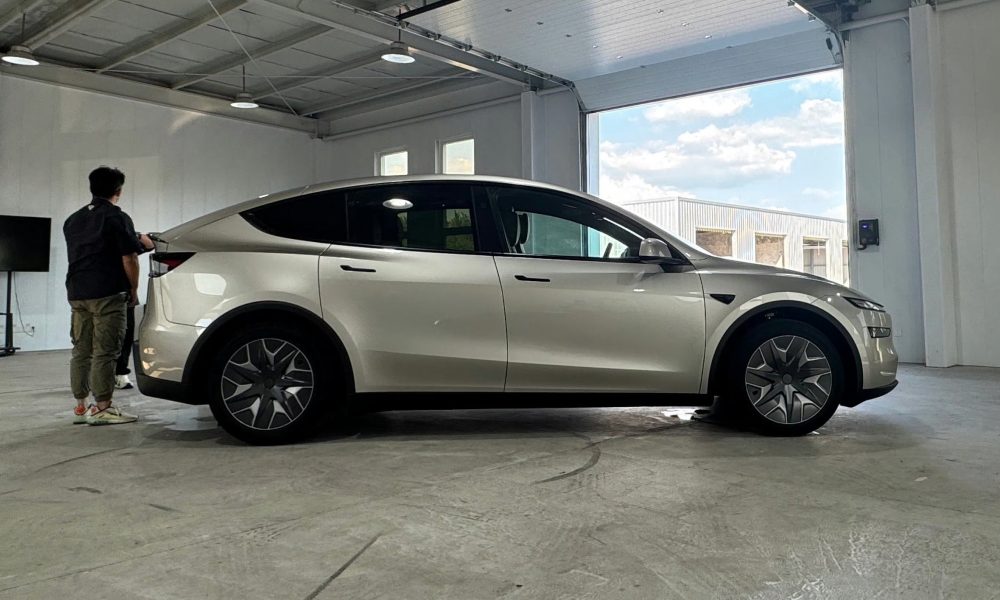
Tesla Model Y L Faces Suspension Sag Concerns in China
The Tesla Model Y L, a long-wheelbase variant engineered specifically to capture China’s lucrative family crossover market, is facing unexpected mechanical scrutiny. Since its debut from Gigafactory Shanghai, the six-seat EV has generated significant enthusiasm due to its expanded cabin space and upgraded luxury amenities. However, early owner reports indicate that the stretched crossover may be suffering from structural suspension issues under real-world operating conditions.
Drivers in major Chinese metropolitan areas have begun reporting a pronounced sagging effect in the vehicle's rear suspension assembly. In severe instances, owners describe the visual phenomenon as a partial collapse of the rear wheels into the bodywork. The issue appears to impair ride comfort, ground clearance, and vehicle geometry, raising serious questions regarding the suspension calibration chosen for the expanded vehicle platform.
While the standard Model Y built its reputation on handling agility and rigid architecture, the added length and mass of the Model Y L present distinct engineering challenges. As consumer complaints accumulate across regional automotive forums, industry analysts are closely evaluating whether the long-wheelbase modifications have introduced unintended chassis weaknesses during extended driving routines or under high payload scenarios.
Reports of Rear Suspension Collapse Emerge in China
Local consumer complaint logs reveal that the gap between the rear tire and the wheel arch shrinks drastically over time. On factory-fresh models, standard ride height allows a four-finger clearance between the tire tread and the body panel. On affected vehicles, however, this gap reportedly narrows to two fingers or even less than a single finger, indicating substantial damper compression or coil failure.
Fascinatingly, the mechanical degradation does not adhere to a uniform timeline or mileage threshold. One registered owner reported severe suspension sag after driving roughly 9,000 kilometers while carrying a full load of passengers and cargo. Another driver documented a noticeable drop in ride height after reaching 30,000 kilometers under routine daily commuting, suggesting both load-induced fatigue and long-term mechanical wear.
To assess vehicle health, Chinese owners have established an informal diagnostic benchmark known as the finger test. Enthusiasts recommend placing four fingers vertically between the rear tire and wheel arch. If the space accommodates fewer than two fingers, drivers are advised to seek mechanical inspection, as the reduced clearance jeopardizes suspension travel and increases the likelihood of bottoming out over roadway imperfections.
Mechanical Stressors and Premature Tire Wear
Beyond cosmetic misalignment and reduced ride clearance, sagging suspension introduces dangerous operational risks for electric vehicle owners. Drivers experiencing rear suspension collapse report severe uneven tire wear, specifically concentrated on the inner shoulders of the rear tires. This premature degradation stems from negative camber alignment shifts caused when the rear suspension compresses past its intended geometry range.
Electric crossovers inherently exert immense stress on chassis components due to low-slung traction battery packs and instantaneous electric motor torque. The extended wheelbase of the Model Y L amplifies leverage on the rear axle springs and control arms. When combined with full passenger loads, these forces can exceed the dampening tolerances of unreinforced suspension hardware, causing permanent sag.
Uneven tire wear combined with altered suspension geometry can compromise high-speed stability, wet-weather traction, and overall braking efficiency. Replacement EV tires represent a substantial ongoing expense, and owners are expressing frustration over having to replace costly rubber prematurely due to underlying suspension defects rather than normal driving wear and tear.
Premium Segment Stakes for Giga Shanghai
The Model Y L represents a strategic pillar for Tesla in the world’s largest electric vehicle market, where premium buyers heavily prioritize second-row legroom and utility. Manufactured exclusively at Giga Shanghai, the long-wheelbase variant was developed to defend Tesla’s market share against aggressive domestic competitors. Persistent structural complaints threaten to diminish consumer confidence in this high-margin vehicle segment.
Despite growing chatter across owner groups and consumer rights platforms, Tesla has not officially issued a safety recall or released a formal public statement addressing the suspension sag issue. Local service center responses have reportedly varied, with some technicians treating the issue as normal component settling while others assess suspension hardware on a case-by-case basis.
Automotive regulatory disclosures show that Chinese safety watchdogs frequently track recurring chassis complaints to determine if formal technical inquiries are warranted. If independent engineering tests verify that the long-wheelbase suspension suffers from premature material fatigue or component failure under normal operating loads, regulatory authorities could potentially mandate field service actions or component redesigns.
What Model Y L Owners Should Watch For
Automotive technicians advise current Model Y L owners to regularly measure rear wheel arch clearance and monitor tire tread depth across the entire contact patch. Maintaining proper tire pressure and avoiding exceeding maximum gross vehicle weight ratings are essential steps, though structural spring fatigue may still occur if hardware components are fundamentally undersized for the extended platform.
As Tesla continues scaling its global manufacturing footprint, component durability under localized market preferences remains critical. The rear suspension concerns in China highlight the complex balance between altering vehicle dimensions for interior comfort and preserving long-term structural integrity. How Tesla resolves these suspension complaints will play a vital role in preserving its premium market reputation.