
Electric Heavy Trucks Lead The Way At IAA Transportation
The global commercial vehicle market is reaching a pivotal turning point as the biennial IAA Transportation show kicks off in Hannover, Germany. With more than 700 exhibitors filling the convention halls, zero-emission technology has taken center stage. The exposition highlights a comprehensive transition across heavy-duty tractors, medium-duty work trucks, and urban delivery vehicles.
A Divergence In Global Fleets
This rapid European momentum contrasts sharply with recent developments in North America. In the United States, commercial electric vehicle adoption remains sluggish, with major truck manufacturers actively pushing back against stringent state and federal exhaust emissions regulations. However, recent economic pressures, including diesel prices climbing past six dollars per gallon, may soon force American fleet operators to reconsider zero-emission alternatives.
Conversely, Europe benefits from a clear regulatory environment that explicitly bakes decarbonization mandates into commercial fleet operations. Backed by strong public support for sustainability, European logistics companies are aggressively adopting battery-electric fleets. The Hannover exposition serves as a clear benchmark for how fast regional transport networks can transition away from conventional diesel engines.
European Titans Charge Ahead
Industry stalwarts including Daimler, MAN, Volvo, and Renault are showcasing their latest heavy-duty electric tractors in Hannover. These established manufacturers are presenting refined chassis platforms designed to optimize battery placement and maximize payload capacity. Fleet managers are paying close attention to these production-ready models, which promise lower total operational costs over long-haul routes.
Joining the traditional European lineup is Ford Otosan, the heavy commercial vehicle manufacturer based in Turkey. Making a major statement, the company is bringing its massive F-Line E electric truck to Hannover for the first time. The display builds on initial previews from Lyon, introducing heavy-duty 19-ton and 26-ton variants directly aimed at European logistics fleets.
Chinese Manufacturers Expand Footprint
Chinese manufacturers are also mounting an aggressive expansion into the European commercial market. Sany eTrucks is highlighting its e263 electric tractor, which is scheduled to hit German dealerships next summer. Regulatory disclosures confirm Sany is expanding its portfolio to list three-axle and four-axle electric heavy vehicles specifically engineered to meet demanding European transport specifications.
Other prominent Asian brands, such as Sinotruk and SuperPanther, are cementing their regional presence through localized manufacturing. Both companies have established assembly agreements with Steyr Automotive in Austria to build their electric models locally. Meanwhile, Skyworth Auto is revealing its heavy-duty Skyworth Z9, featuring advanced Level 4 autonomous driving hardware designed for automated freight corridors.
The lineup of Chinese exhibitors extends further to encompass FAW Trucks, Dongfeng, Foton, Farizon, Wisdom Motor, and DeepWay. Supporting this massive technological influx, battery manufacturer CATL is introducing specialized commercial vehicle battery solutions. These specialized energy packs focus on high energy density, extended cycle life, and ultra-fast charging capabilities engineered for rigorous commercial duty cycles.
Tesla Semi Makes Its European Debut
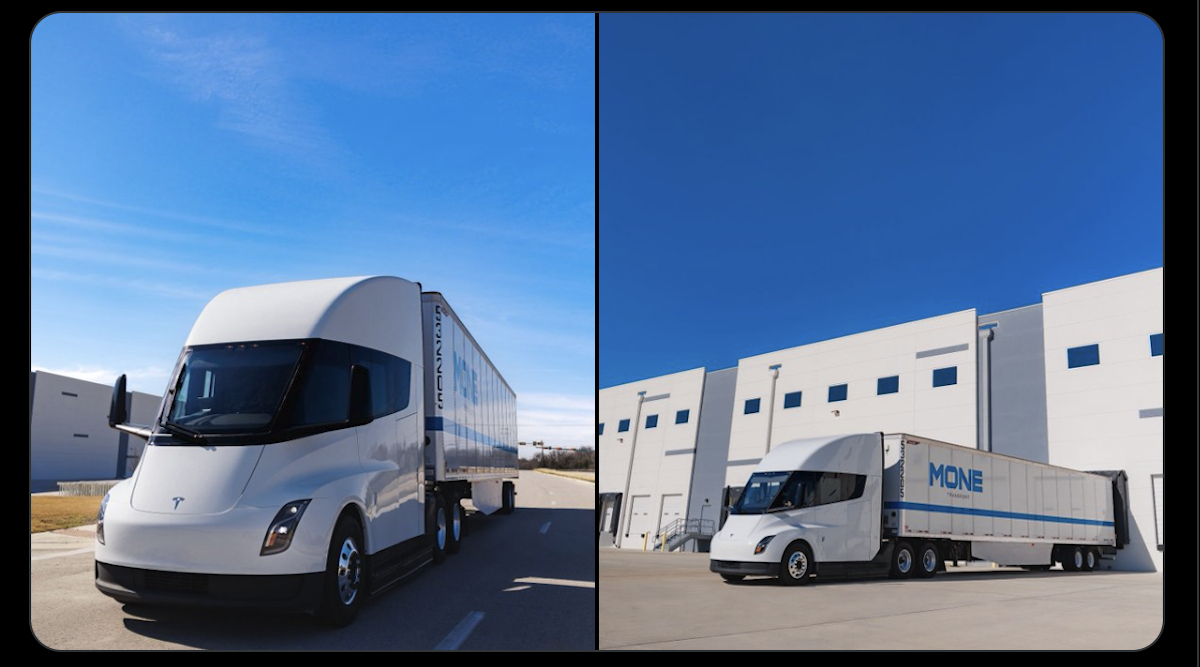
Despite the wide array of legacy and emerging brands, much of the industry focus in Hannover is directed toward Tesla. The company is showcasing its production-ready Semi to European fleet operators for the first time. While official details remain guarded, industry filings suggest the European specification closely mirrors the Standard Range variant currently operating in North America.
Under the skin, the European Tesla Semi utilizes a tri-motor propulsion system driving the two rear axles, delivering a total power output of up to 800 kilowatts. Built on an advanced 800-volt electrical architecture, the truck supports megawatt-level charging speeds up to 800 kilowatts. Power is supplied by a 548 kilowatt-hour battery pack composed of NCMA battery cells.
Tesla claims an estimated range of 550 kilometers for the European edition, slightly exceeding the 523-kilometer rating of the US model. Energy consumption is listed at 1.0 kilowatt-hour per kilometer in Europe compared to 1.1 kilowatt-hours per kilometer in North America. These discrepancies stem from regional transport rules, lower European highway speeds, and differing gross vehicle weight limits.
Policy Challenges And Industry Demands
Industry leaders used pre-show events to highlight policy challenges accompanying this technological transition. Hildegard Müller, President of the German Association of the Automotive Industry, stressed that domestic manufacturers possess immense innovative strength, but require legislative support. She called on policymakers in Brussels and Berlin to accelerate infrastructure deployment to enable a seamless commercial vehicle ramp-up.
Emphasizing the role of freight transportation, Müller noted that logistics operators and vehicle manufacturers remain the backbone of the economy. She noted that while the industry is delivering cutting-edge zero-emission trucks, government agencies must match this progress by upgrading power grids and expanding high-capacity charging networks along major European transport routes.
As commercial fleets face intensifying pressure to eliminate carbon emissions, the gathering in Hannover signals a decisive shift toward electrification. The influx of innovative battery designs, autonomous systems, and international competition promises to reshape freight transport across the continent. Over coming years, the battle between legacy brands and new entrants will determine the future of global logistics.
