
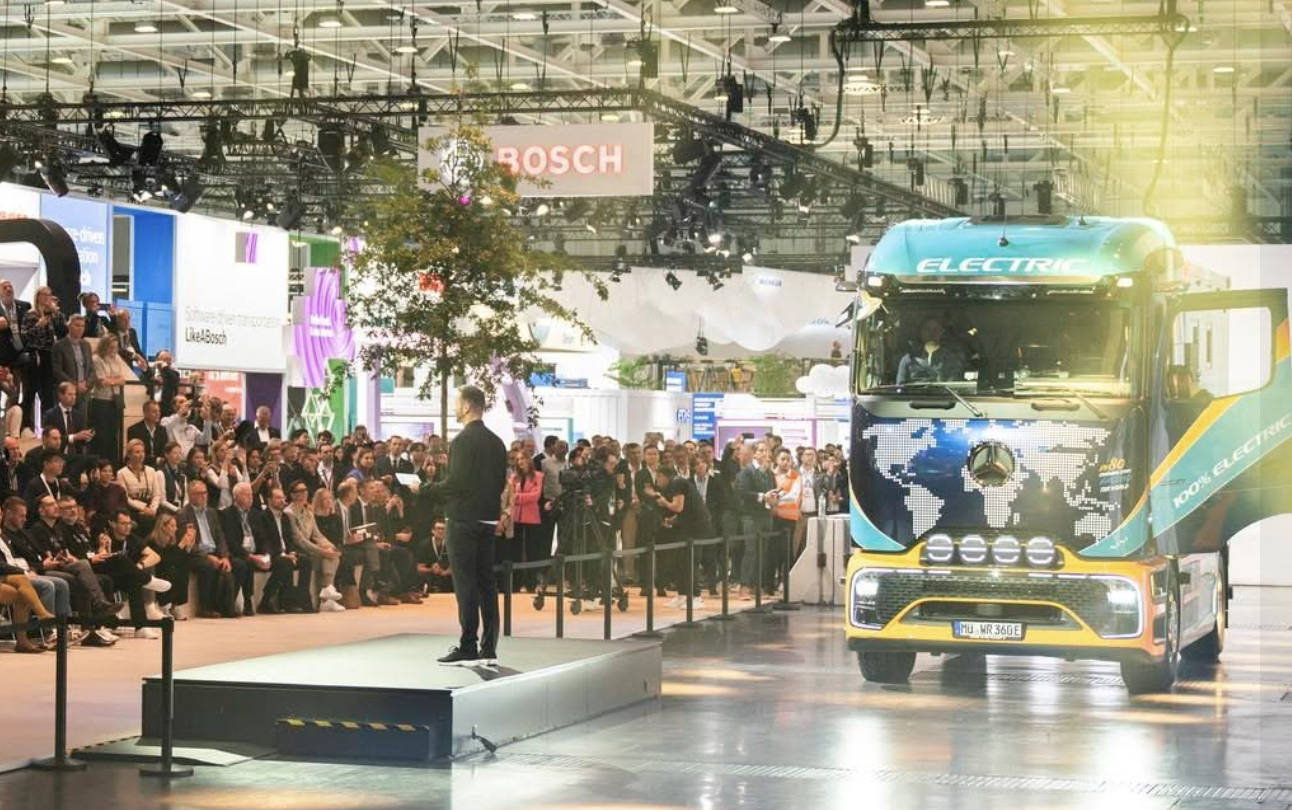
Electric Heavy Freight Dominates Global Logistics at IAA 2026
Global Freight Transition Reaches Record Scale in Hanover
Commercial freight decarbonization reached an unprecedented milestone at IAA Transportation 2026 in Hanover, Germany. The prestigious event welcomed 1,589 exhibitors from 46 nations, setting a new benchmark for global participation. Industry leaders emphasized that zero-emission propulsion technology has matured beyond prototypes, transforming sustainable logistics from visionary ambition into market-ready fleet solutions across international freight corridors.
High-ranking government and industry officials inaugurated the six-day exhibition, highlighting the crucial alignment between political regulatory frameworks and technological readiness. Trade association leadership asserted that commercial vehicle manufacturers have fulfilled their commitment to develop zero-emission powertrains. The primary challenge now shifts toward building out robust charging infrastructure and grid connectivity to support mass market adoption.
European Manufacturers Push Heavy-Duty Battery Electric Range
Volvo Trucks made a powerful statement by presenting its upgraded electric heavy-duty lineup, including the FH, FH Aero, FM, and FMX models. Demonstrating significant advances in energy density and operational versatility, the expanded lineup received the coveted International Truck of the Year 2027 award. Industry juries praised the platform for delivering uncompromising hauling capabilities alongside exceptional energy efficiency.
Similarly, German manufacturer MAN showcased a comprehensive battery-electric portfolio spanning medium to heavy applications. Its lineup ranges from the 12-ton eTGL urban distribution truck to the massive 50-ton eTGX long-haul tractor. The eTGX delivers up to 660 kilometers of range in a standard four-by-two configuration, while an extended six-by-two variant achieves 720 kilometers per charge.
French commercial builder Renault Trucks unveiled the E-Tech T 780, reinforcing the rapid electrification of heavy regional transport. Featuring an integrated electric axle and high-density battery arrays, the long-haul tractor provides up to 660 kilometers of single-charge autonomy. The architectural design prioritizes usable payload capacity, ensuring logistics operators maintain profitability without sacrificing operational capabilities.
Real-World Telematics Validate Commercial Electric Performance
Daimler Truck arrived in Hanover with extensive operational metrics validating its flagship Mercedes-Benz eActros 600. Industry filings reveal that customer fleets have accumulated over 160 million real-world kilometers since the vehicle launched in late 2024. This extensive telemetry provides concrete evidence of battery reliability, system efficiency, and thermal management stability across diverse European climates and topography.
Rated for up to 560 kilometers under optimal conditions at a 40-ton gross combination weight, the eActros 600 addresses core long-distance transport routes. Expanding on this architecture, Daimler unveiled the eActros Lowliner. This specialized low-bed variant optimizes interior loading height and volume for high-capacity freight operators navigating strict height regulations across transcontinental freight networks.
Strategic Dual-Path Development Fuels Liquid Hydrogen Shift
While battery electrification dominates distribution transport, hydrogen propulsion is carving out a complementary role for ultra-long-haul routes. Major original equipment manufacturers are actively pursuing a dual-track strategy. Daimler Truck, Volvo Trucks, and Toyota are investing heavily in fuel-cell stack developments and hydrogen internal combustion engines to overcome existing grid constraints and demanding operational cycles.
Daimler reported that its fuel-cell test fleet has already surpassed 600,000 kilometers in active customer evaluation trials. Building on these fleet metrics, the company announced plans to deploy 100 next-generation fuel-cell vehicles by late 2026. This initiative focuses on evaluating liquid hydrogen storage solutions under intensive operational conditions.
The upcoming NextGenH2 Truck relies on cryogenic liquid hydrogen storage rather than gaseous systems. By utilizing supercooled liquid fuel, the truck achieves an operating range exceeding 1,000 kilometers while offering rapid refueling times comparable to conventional diesel rigs. This range capability makes fuel-cell technology ideal for heavy loads and unpredictable international routes.
Concurrently, Volvo and Toyota are expanding their alternative hydrogen architectures. Volvo is aggressively pursuing both fuel-cell integration and direct hydrogen combustion engines, which utilize modified internal combustion designs. Industry reports indicate that hydrogen combustion provides a cost-effective bridge for heavy-duty applications, leveraging existing manufacturing facilities while eliminating tailpipe carbon emissions completely.
Software Platforms and Autonomous Systems Redefine Fleets
Beyond hardware powertrains, digital ecosystem integration took center stage in Hanover. Stellantis Pro One demonstrated its unified commercial strategy, showcasing 13 vehicles across its iconic Citroën, Fiat Professional, Opel, and Peugeot brands. Central to its display was the NEXT fleet management platform, designed to optimize energy usage, predictive maintenance, and vehicle connectivity across complex commercial fleets.
Stellantis also pushed logistics boundaries with the debut of its radical BOW concept vehicle. Representing an evolution toward fully automated freight ecosystems, the platform redefines commercial transportation by treating the vehicle as a modular component within autonomous logistics systems, replacing traditional driver-centric vehicle architecture with computer-controlled dispatch operations.
The comprehensive vehicle debuts and technical data presented at Hanover confirm a permanent shift in global freight operations. As battery technologies expand into regional freight and hydrogen solutions address long-distance corridors, commercial transportation is entering an era defined by zero-emission powertrains, connected software infrastructure, and autonomous logistics integration.
