
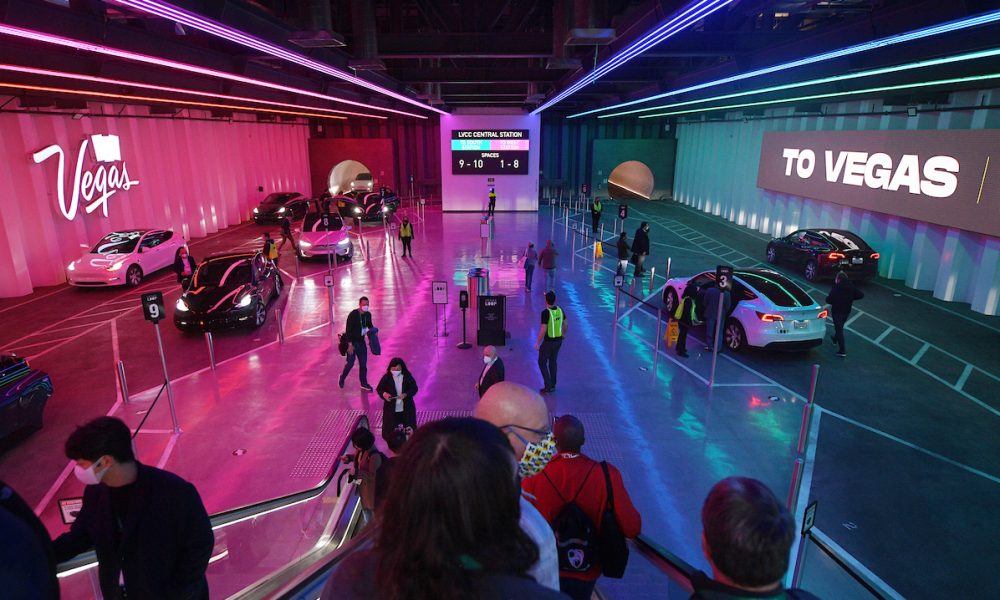
Boring Company Plans To Double Active Las Vegas Loop Stations
The Boring Company is preparing for an aggressive expansion of its underground transit system in Southern Nevada, promising to double its active station count by the end of the year. Elon Musk’s infrastructure firm confirmed the accelerated operational timeline alongside a fresh recruitment push for system operators. This shift signals a major transition from initial tunneling efforts toward a fully functional commercial transit ecosystem in Las Vegas.
Currently operating 14 functional stations across key commercial and convention sectors, the network will scale to 28 active boarding points before the year concludes. This physical expansion aims to relieve persistent surface congestion along major tourist corridors. Unlike past announcements that focused heavily on municipal approvals, this update targets immediate operational infrastructure that riders can access in the coming months.
Rapid Expansion of the Underground Transit Network
Much of the upcoming expansion relies on subterranean infrastructure that has already been excavated and is undergoing final readiness checks. A dual-tunnel system stretching roughly two miles beneath Paradise Road will anchor the new operational phase. This corridor connects Westgate directly to a new terminal location at 4744 Paradise Road, establishing a critical north-south arterial beneath one of the city's busiest roadways.
Local tourism officials confirm that the Paradise Road extension will open in strategic phases over the next several weeks. Key additions to the network include dedicated subterranean stops serving Virgin Hotels Las Vegas and the former site of Gordon Biersch. These strategically placed stops will capture heavy foot traffic from nearby hospitality hubs, dining districts, and major entertainment venues.
A major catalyst for this rapid deployment is the fast-approaching Formula 1 Las Vegas Grand Prix. Project planners designed these specific station nodes to streamline transit to and from Harry Reid International Airport. By bypassing dense surface traffic during high-profile sporting events, the system aims to demonstrate the viability of underground point-to-point shuttle services for massive global crowds.
Operational Milestones Versus Paper Approvals
This operational surge marks a distinct pivot from administrative planning to concrete physical deployment. Regional regulators in Clark County recently approved 19 additional station entitlements, bringing the overall permitted blueprint to 123 stations across the metropolitan area. However, municipal entitlements move on a completely different timetable than subterranean construction and station fitting, making actual active openings the critical benchmark.
The system's grand design has expanded dramatically since county officials first approved an 18-station network extension in 2023. That initial expansion established a framework for 69 stations across 65 miles of underground tunnels. Subsequent regulatory filings iteratively increased the planned layout to 93 stations, then 104, before reaching the current 123-station master plan approved by local government commissions.
Industry analysts note that this latest announcement is significant because it ties doubling metrics to active passenger portals rather than municipal map approvals. Bringing 14 new stations online within a tight end-of-year window represents the company’s most aggressive operational deployment to date. It transitions the Vegas Loop from an isolated convention center connector into an interconnected citywide transport grid.
Impressive Convention Ridership and Airport Connectors
Despite operating on a fraction of its total planned tunnel mileage, the Vegas Loop has already demonstrated significant passenger throughput. Internal operations disclosures reveal that the system handles upwards of 40,000 passengers during peak convention dates. This volume matches or exceeds the daily ridership of several established municipal light rail networks across major North American urban centers.
Executive projections indicate that daily passenger numbers could triple or even quadruple once airport connector tunnels achieve full operational status. Direct subterranean access to airport terminals will allow travelers to move between flight gates, resort hotels, and convention halls without stepping onto crowded surface streets, fundamentally altering tourist transit habits in the resort corridor.
The high throughput achieved during large trade shows highlights the efficiency of dedicated electric vehicle transport in enclosed subterranean corridors. By eliminating traffic lights, pedestrian crossings, and surface intersections, the system maintains consistent travel times even when surface streets experience severe congestion during major citywide conventions and global entertainment gatherings.
Fleet Expansion and Job Growth in Southern Nevada
To support the dramatic increase in operational stations, the infrastructure firm has initiated an urgent regional hiring initiative. Official job postings highlight immediate openings for shuttle drivers and senior operations managers tasked with handling daily fleet logistics. Managing 28 active stations requires a synchronized operational workforce capable of managing real-time vehicle dispatching and rider queue control.
While official announcements have not confirmed exact vehicle fleet numbers, the recruitment push strongly points to a simultaneous scaling of the active transport fleet. The system currently relies on custom-operated Tesla electric vehicles navigating dedicated tunnels. Scaling station capacity without expanding vehicle numbers would lead to long wait times, making fleet expansion a logical parallel step.
As construction crews finalize station infrastructure and human resources teams onboard new personnel, all eyes remain on the final quarter performance. Successfully opening 14 new stations by year-end will establish a major precedent for private underground transit. It demonstrates that hyper-local subterranean networks can move from concept to high-volume reality far faster than traditional public transit infrastructure projects.
