Glencore Achieves Key Milestone At Underground Electric Mine
Glencore Canada has reached a critical operational breakthrough at its Onaping Depth project, located within the historic Craig Mine complex in Sudbury, Ontario. Local political figures and industrial leaders recently gathered thousands of feet below the surface to celebrate shaft development achievements. The project establishes direct access to a valuable, previously untapped underground orebody rich in nickel and copper.
This achievement marks a significant step forward for sustainable heavy industry, as the operation relies on an all-electric equipment fleet. Resting nearly 8,500 feet below the town’s surface, the Onaping Depth development represents a transformative approach to extracting essential energy transition minerals. By phasing out traditional internal combustion machinery, the facility sets a new standard for subterranean mining operations globally.
A Major Shaft Milestone Deep Below Sudbury
According to official project disclosures, reaching the newly targeted deposit required extensive underground infrastructure development. Political officials, including Ontario Premier Doug Ford, joined Indigenous community leaders and mining executives to inspect the site. The visit highlighted the completion of key shaft sinking phases, allowing workers to reach high-grade deposits that will power future technologies.
The Onaping Depth project sits inside the mineral-rich Sudbury Basin, an area renowned for its dense concentration of nickel and copper reserves. Extracting metals at extreme depths has historically presented severe economic and environmental challenges. However, modern engineering and zero-emission equipment have unlocked economic viability while dramatically reducing the site’s overall carbon footprint.
Industry filings confirm that accessing this new deposit guarantees a reliable supply of critical minerals needed for battery manufacturing. As global demand for clean energy inputs accelerates, securing domestically sourced raw materials remains a top priority. The Sudbury operation demonstrates how advanced technology can revitalize mature mining districts and ensure steady output for decades to come.
Eliminating Diesel and Lowering Energy Demands
One of the primary benefits of transitioning to an electric mining fleet is the immediate elimination of underground diesel exhaust. Executive statements from company management emphasize that removing diesel engines fundamentally changes mine economics. Without toxic fumes, operators can significantly lower the complex air filtration requirements that usually dominate deep underground utility budgets.
In traditional deep-shaft facilities, ventilation and cooling systems account for a massive portion of total energy consumption. Air must be cooled and forced thousands of feet down to clear diesel particulate matter and heat. Replacing internal combustion equipment with battery-electric platforms drastically reduces heat output and eliminates hazardous tailpipe emissions entirely.
Consequently, the reduced demand for high-powered ventilation fans generates substantial ongoing operational savings. This decreased energy burden aligns directly with broader corporate sustainability targets and national net-zero commitments. Lower power usage combined with cleaner working conditions showcases how environmental stewardship directly enhances operational efficiency in heavy industry.
High-Tech Battery Fleets Driving Modern Operations
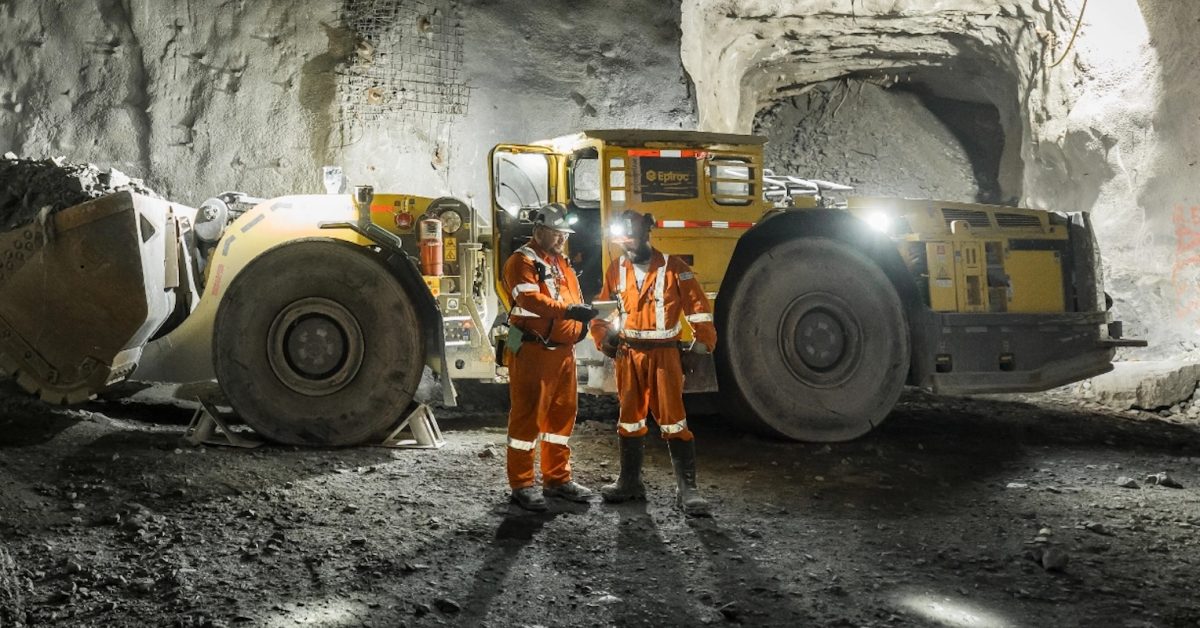
To power the subterranean operation, project managers deployed a sophisticated 23-machine fleet of battery-electric vehicles supplied by heavy equipment manufacturer Epiroc. This comprehensive equipment suite covers virtually every phase of the extraction process. From initial drilling to material haulage, battery power drives the entire mining lifecycle thousands of feet beneath the surface.
The fleet features specialized machinery tailored for deep-underground environments, including Scooptram ST14 SG loaders designed to clear broken ore efficiently. Heavy transport duties are managed by Minetruck MT42 battery-electric haulers, which carry up to 42 tonnes of payload per trip. These high-capacity units ensure continuous material flow without adding emissions to the mine shaft.
Underground construction and reinforcement rely on dedicated electric drill rigs and bolting systems. The site utilizes Boomer E2 battery development drills for precision blasting preparation, along with specialized Boltec and Cabletec units for mechanized rock reinforcement. Long-hole extraction relies on Simba production drills, providing a fully integrated zero-emission workflow from wall to surface.
Economic Impact and Long-Term Resource Security
The Onaping Depth project represents a total investment exceeding $2 billion, reinforcing long-term industrial commitment to the Sudbury region. Financial reports indicate that the project will sustain more than 400 permanent high-skilled jobs once fully operational. This continuous investment provides economic stability for local communities while retaining highly specialized technical expertise in Northern Ontario.
Furthermore, access to this deep orebody extends active nickel and copper production in the Sudbury Basin well beyond 2040. Securing long-term mineral extraction supports regional supply chains and feeds crucial raw materials into the expanding electric vehicle ecosystem. The project demonstrates how legacy mining hubs can transform into modern, sustainable centers of resource development.
The Broader Trend of Underground Electrification
Analyst reports suggest that the success at Onaping Depth will accelerate battery adoption across the global mining sector. As battery density improves and heavy-duty electric power systems mature, mine operators worldwide are re-evaluating conventional equipment fleets. The operational benefits observed in Sudbury provide a compelling business case for underground electrification projects globally.
By proving that full-scale extraction is feasible thousands of feet underground without diesel power, the project establishes a scalable blueprint for the industry. Future mining developments are increasingly expected to design infrastructure around electric fleets from day one. This ongoing shift marks a critical transition in how critical minerals are harvested to support the clean energy economy.