
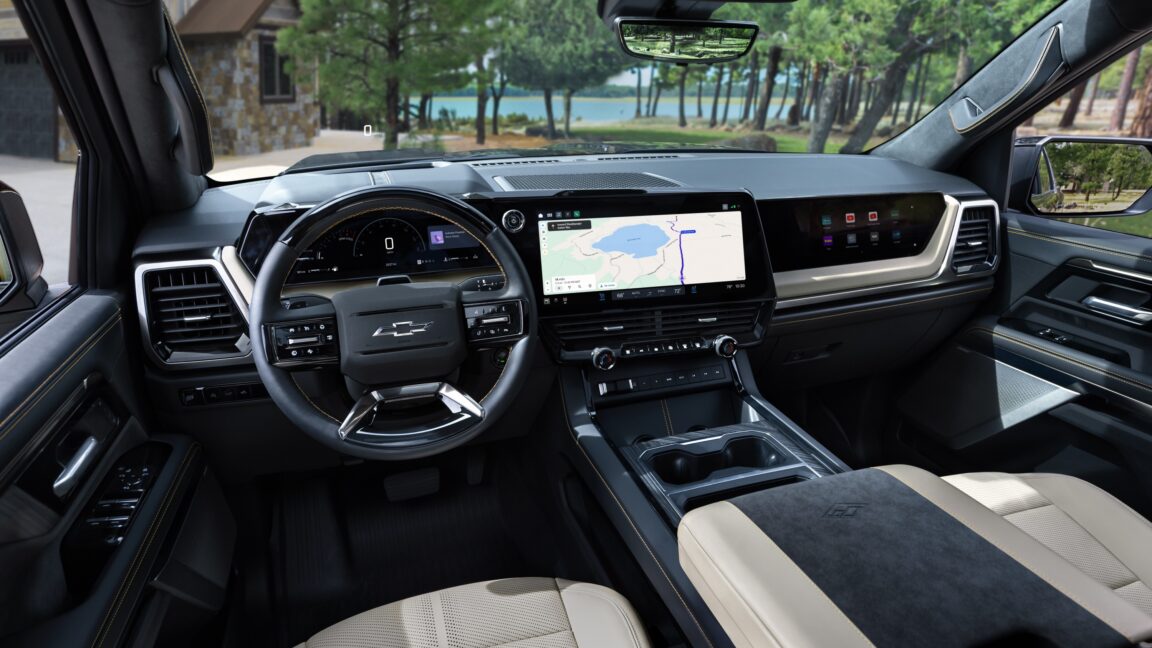
GM Unveils Redesigned 2027 Truck UI With Apple CarPlay
General Motors is preparing a comprehensive digital overhaul for its flagship full-size pickup trucks, the 2027 Chevrolet Silverado and GMC Sierra. Recent product demonstrations highlight a redesigned user interface aimed at reducing driver distraction while improving functionality. These updates represent a significant shift toward restraint and usability, incorporating refined visual themes alongside enhanced software capabilities for the automaker’s most profitable vehicle lines.
Perhaps the most notable revelation for truck buyers is the continued support for smartphone casting software. Unlike the company’s recent electric vehicle rollouts, which phased out smartphone mirroring in favor of built-in software suites, the upcoming combustion-powered truck line preserves both Apple CarPlay and Android Auto. This dual approach ensures buyers retain familiar smartphone connectivity options alongside native digital features.
Clean Instrument Clusters Focus on Driver Clarity
The main instrument cluster presented in engineering demonstrations features a refined digital layout designed to minimize visual noise. The digital display relies on a true black background, aided by local dimming hardware that maintains high contrast without shedding excessive cabin light during night driving. This design philosophy eliminates unnecessary graphical distractions, prioritizing essential driving data for better night visibility.
Drivers can select from several tailored cluster layouts depending on their operating needs. A balanced classic view presents simplified half-moon dials for vehicle speed and engine revolutions per minute. The right side of this layout houses a user-configurable zone, allowing drivers to monitor audio streams, review trip parameters, or follow step-by-step turn-by-turn navigation prompts without obscuring primary driving gauges.
Specialized display profiles cater to distinct driving environments and advanced vehicle features. A driver-assist screen highlights active Super Cruise operation with distinct green accents, displaying real-time sensor perceptions of surrounding traffic. Additionally, dedicated views for off-roading provide pitch, roll, and differential lock indicators, while a custom trailering mode presents critical engine temperatures and brake controller outputs during heavy hauling tasks.
For maximum simplicity during long highway trips, GM included an ultra-minimalist viewing mode. Echoing classic black-panel night modes found in historic European automobiles, this setting silences non-essential graphics to display only vehicle speed in sharp white numerals. Regardless of the chosen profile, a permanent bottom status bar continuously displays crucial metrics like fuel level, active drive mode, and safety warnings.
Enhanced Split-Screen Functionality for Android Automotive OS
The primary central infotainment screen continues to run on Google’s Android Automotive operating system, but receives structural refinements to improve daily workflow. The main home screen now utilizes a dynamic split-view design, simultaneously presenting audio media and navigation without forcing users to cycle between screens. This change streamlines routine operations during urban commuting and highway hauling.
Unlike previous iterations where tapping a map card pushed users into a full-screen view, the updated layout allows full map interaction directly inside the split-screen window. Drivers can search destinations, input route modifications, or submit road condition alerts without losing visibility of their active media playback. Product engineering teams designed this change specifically to reduce menu depth and keep core controls accessible.
Software developers also overhauled system notifications and multitasking logic. The updated interface introduces smartphone-style push notifications and customizable quick-action shortcuts. Furthermore, system behaviors were altered to prevent incoming phone calls from abruptly overriding active applications. Receiving a call no longer forces the system to drop the current screen in favor of a dedicated dialer window.
Preserving Tactile Controls Alongside Digital Interfaces
Despite expanding screen real estate and modernizing graphic layouts, GM elected to maintain physical switchgear for essential cabin functions. Dedicated rotary dials remain for driver and passenger climate temperature selection. Likewise, tactile hard buttons control fan speeds, front and rear window demisting, and recirculation settings, ensuring users can adjust environmental controls without looking away from the road.
This hybrid ergonomic strategy addresses consistent customer feedback regarding touch-sensitive HVAC controls. By keeping high-frequency HVAC operations assigned to physical hardware, the system balances advanced digital capabilities with functional safety. Inside demonstrations, product planners emphasized that key comfort settings must remain accessible through intuitive muscle memory during adverse weather or towing conditions.
Seamless Integration of Phone Casting Features
The decision to retain Apple CarPlay and Android Auto on 2027 full-size trucks contrasts with GM’s controversial strategy of excluding phone mirroring from its newest battery-electric platforms. While the company cited deeper vehicle-battery integration as the driver for its EV policy, customer preference in the truck segment dictated preserving third-party smartphone casting alongside built-in software solutions.
Furthermore, engineering teams improved how smartphone screen projection operates within the overall cabin UI. Rather than consuming the entire display area, smartphone casting now populates a large primary dashboard tile. An adjacent side card remains visible, granting immediate access to native truck controls, towing apps, or native media sources without disrupting the active projection session.
This refined integration mirrors recent user-interface trends across the premium auto industry, where software frameworks seek to co-exist with user devices rather than replace them. As General Motors prepares these updated trucks for market introduction, the blend of minimalist instrumentation, tactile climate controls, and flexible phone mirroring sets a clear direction for its future vehicle lineup.
