
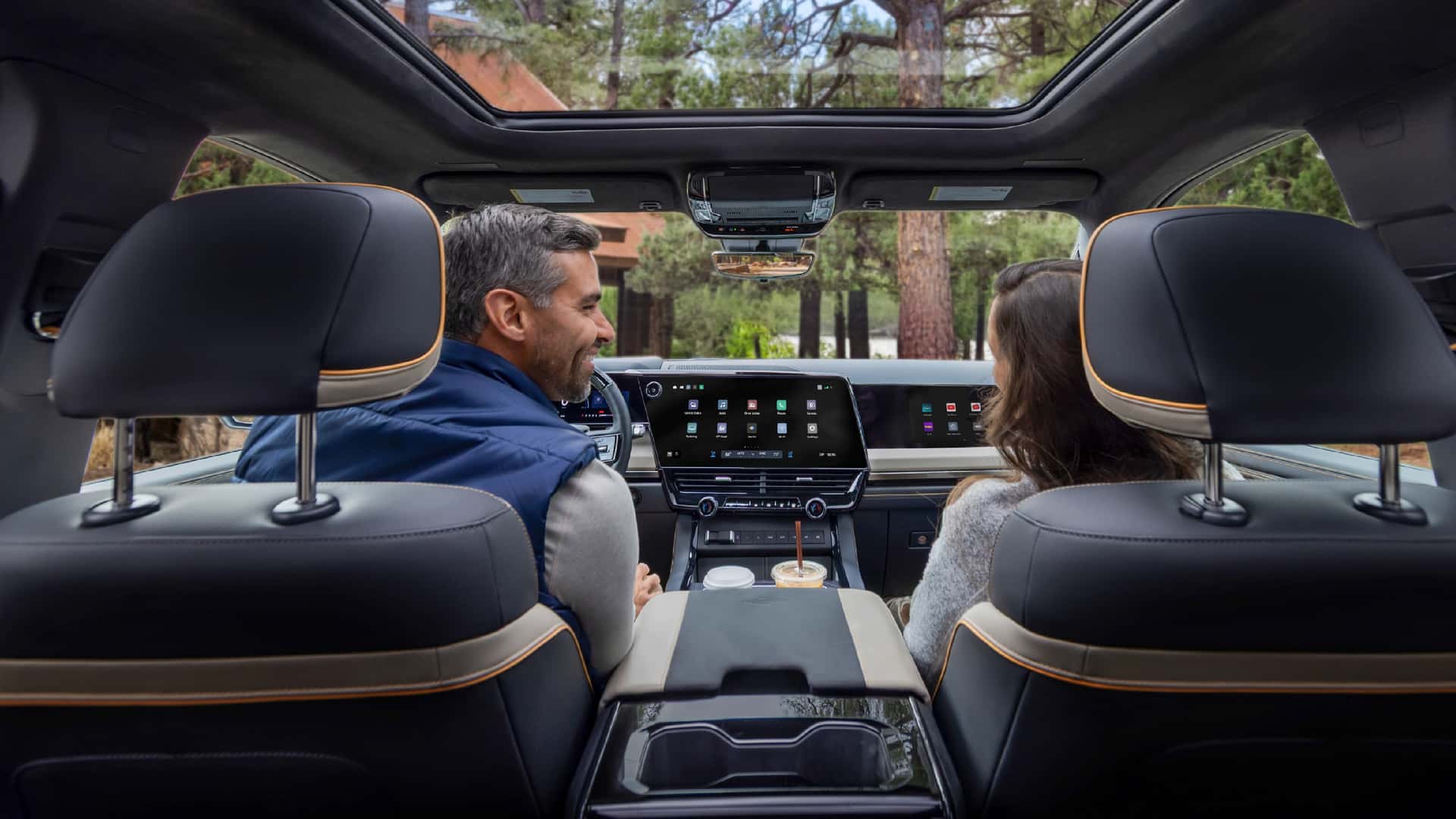
GM Unveils New Truck User Interface With Integrated CarPlay
General Motors has announced a major overhaul of its vehicle infotainment software, delivering a redesigned user experience tailored to reduce driver distraction and elevate modern connectivity. Launching first on the automaker's flagship full-size pickup trucks, the updated digital architecture focuses on cleaner visual presentation and intuitive layout design. The shift addresses longstanding feedback regarding menu complexity and visual clarity during high-speed driving conditions.
The newly revealed software ecosystem represents a refined design philosophy aimed at unifying native vehicle functions with external smartphone connectivity. Rather than forcing drivers to navigate rigid submenus, the updated platform relies on a persistent split-screen layout. This layout allows vital driving data, media controls, and navigation pathways to remain visible simultaneously without overwhelming the driver with redundant visual elements.
Next-Generation Interface Redefines In-Cabin Displays
A primary highlight of the redesigned cockpit software is its striking visual refresh. The automaker has discarded the outgoing setup’s light blue backgrounds and uniform icon schemes in favor of a deep jet-black theme paired with high-contrast graphic elements. This shift significantly improves legibility under varying cabin lighting conditions, allowing drivers to scan screen options quickly without taking eyes off the road.
The visual redesign is built around a default split-view display format. Drivers can view multiple applications concurrently, arranging primary tasks such as turn-by-turn navigation alongside audio controls or secondary vehicle settings. By eliminating full-screen shifts when changing basic settings, the interface reduces the mental workload required to monitor essential vehicle features while operating large light-duty and heavy-duty trucks.
Automotive software executives emphasized that human-centric usability drove every design choice throughout development. Company filings highlight that early consumer feedback pointed to inconsistent interaction models and excessive screen taps for basic commands. The revised architecture streamlines common operational pathways, pairing simplified visual icons with tuned auditory and haptic feedback to confirm inputs instantly and reliably.
Deeper Integration of Apple CarPlay and Android Auto
The most noteworthy technological update comes in how the platform manages phone projection software. Following previous strategic decisions to phase out standalone projection systems in select models, this new interface integrates Apple CarPlay and Android Auto directly alongside native applications. Instead of consuming the entire display area, smartphone mirroring now resides within a dedicated, resizable screen window.
This side-by-side implementation ensures drivers never lose access to core vehicle functions while utilizing phone-based mapping or media streaming. Users can interact with Apple CarPlay or Android Auto software on one portion of the display screen while monitoring climate settings, towing parameters, or native vehicle diagnostic applications on the adjacent panel without toggling between disconnected sub-menus.
Software leadership noted that customers value smartphone mirroring for its familiar user experience, but still require immediate access to built-in vehicle capability features. By housing smartphone projection inside a unified window system, the cabin operating system feels like a single cohesive interface rather than two separate digital environments operating on top of each other inside the dashboard.
Practical Ergonomics and Physical Control Retention
In addition to the central infotainment upgrade, GM has restructured the primary quick-access menu system to support extensive driver customization. Vehicle operators can pin their most frequently used secondary functions to a persistent shortcuts bar, arranging features based on individual driving habits. Crucially, the design team retained dedicated physical buttons for essential hardline controls like exterior headlights.
The driver’s primary digital gauge cluster has also undergone a comprehensive visual redesign. The instrument display matches the high-contrast aesthetic of the main display screen, offering streamlined graphics for vehicle speed, driver-assistance status, and engine telemetry. The updated cluster ensures essential driving metrics remain easy to decipher at a glance across different ambient light conditions.
For drivers who prefer not to rely on phone-mirroring solutions, the underlying platform retains robust standalone capability. The infotainment platform supports native application downloads directly to the vehicle hardware, enabling built-in navigation, music streaming services, and video platforms to run independently without requiring an active smartphone connection or external device tethering during operation.
Broader Rollout and Future Lineup Strategy
The upgraded user interface is scheduled to debut on the 2027 Chevrolet Silverado and GMC Sierra pickup truck lineups. These full-size truck platforms serve as the ideal launchpad for the technology, given the complex operational demands of truck buyers who frequently balance towing, off-road management, and daily commute tasks simultaneously from behind the wheel.
Company announcements indicate that the revised digital experience will gradually expand across the automaker's broader vehicle portfolio in subsequent model years. While initial availability focuses on internal combustion truck models, industry observers anticipate that the improved side-by-side smartphone integration could eventually inform future updates across electrified utility vehicles and crossover lineups.
As modern vehicles become increasingly defined by software performance, GM's redesigned interface highlights a broader industry movement toward flexible, user-friendly digital cockpits. By combining crisp visual high contrast, customizable display windows, and hybrid smartphone integration, the automaker establishes a practical benchmark for modern truck displays that prioritizes clarity, control, and functional safety.
