
Tesla To Build 100 Plus European Megachargers For Semi Truck
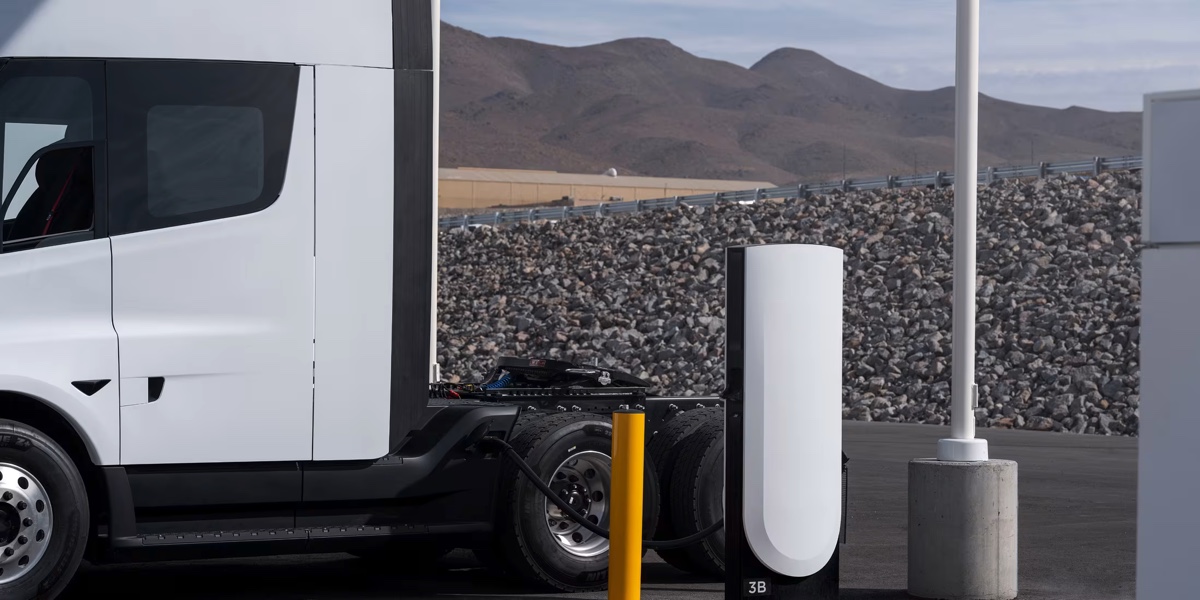
Tesla is initiating a sweeping infrastructure expansion across Europe, laying the groundwork for its all-electric Class 8 vehicle by installing over 100 dedicated Megacharger stalls. Revealed during the European debut of the regional-spec Semi at the IAA Transportation expo in Hannover, Germany, this initiative marks the electric vehicle manufacturer’s first major commitment to dedicated heavy-duty commercial charging stations on European soil.
The initial network footprint spans critical logistics corridors across several major markets, including Germany, France, the United Kingdom, Sweden, the Netherlands, and Belgium. Additional countries are slated to join the network map as production scales up. This coordinated rollout ensures that transport operators will have high-powered charging access across key European freight routes ahead of fleet deliveries.
Infrastructure Strategy for Commercial Freight
Commercial haulage relies heavily on reliable energy access along established transit arteries, making strategic network placement vital for electric truck adoption. By positioning high-capacity chargers along primary trade routes, Tesla aims to alleviate range anxiety for logistics companies considering a transition from diesel fleets. The strategy mirrors the early consumer Supercharger expansion that established the company’s competitive edge.
Company announcements emphasize that these planned stalls will form a dedicated, publicly accessible charging network owned and operated directly by the manufacturer. This public network will operate independently from private installations purchased by individual logistics companies. By creating a dual-track ecosystem of public corridor power and private depot hubs, operators can execute long-distance intercity shipping routes without disruption.
Strict European Union fleet emission mandates and expanding low-emission zones in major urban centers are accelerating the demand for zero-emission heavy transport. Industry filings suggest that logistics providers are increasingly seeking turnkey charging solutions to comply with upcoming regulatory penalties on internal combustion trucks. Tesla's proactive network construction serves as a critical enabler for early commercial fleet adoption.
Megawatt Charging Infrastructure Specs and Standards
The European charging stalls will utilize the standardized Megawatt Charging System (MCS) architecture, capable of delivering peak power outputs up to 1.2 megawatts. This extreme power delivery represents a massive leap forward compared to existing passenger vehicle chargers, requiring specialized liquid-cooled cabling and robust grid connections to handle the high electrical current needed for heavy commercial transport.
At maximum output, the charging hardware can replenish more than 60 percent of the vehicle's massive battery capacity in roughly 30 minutes. This charging window aligns precisely with mandatory European driver rest periods, allowing logistics operators to integrate charging stops seamlessly into standard driver shifts without compromising route schedules or reducing overall fleet productivity.
While the stall hardware supports up to 1.2 megawatts, official technical disclosures indicate that the European-specification Semi currently features a maximum vehicle charge rate of 800 kilowatts. This hardware overhead indicates that the network is future-proofed, ensuring that subsequent vehicle battery revisions or software updates can unlock faster charging rates without requiring expensive site retrofits or power cabinet upgrades.
Depot Solutions and Private Charging Models
Complementing the public corridor rollout, the company recently launched its specialized commercial vehicle charging enterprise program across European markets. This business initiative allows enterprise fleet operators to purchase and install proprietary charging equipment directly within their own logistical hubs, distribution centers, and maintenance depots, securing localized power management for fleet operations.
Under this commercial program, logistics firms can select between ultra-fast Megachargers for rapid turnaround times and lower-powered Basechargers designed for overnight depot dwell times. By offering a modular suite of charging hardware, commercial operators can balance peak electrical demand, optimize local grid connection costs, and maintain predictable charging routines across diverse operational profiles.
Global Scaling and Giga Nevada Manufacturing Ramp
The rapid deployment of charging hardware coincides with aggressive manufacturing expansion efforts centered near the Giga Nevada complex. Construction of a dedicated high-volume production facility is underway, designed specifically to manufacture the heavy-duty electric truck at scale. Executive presentations at the Hannover transport event confirmed that this facility will supply both North American and European markets.
Once fully operational, the specialized Nevada factory will possess a designed production capacity of approximately 1,000 trucks per week, translating to an annual output of roughly 52,000 units. Program leadership emphasized that this unified manufacturing hub will serve as the primary supply engine to meet projected regional demand across both transatlantic freight sectors during the initial expansion phase.
Regional Rollout Timeline and Market Impact
Commercial deliveries for the European-spec electric truck are targeted to begin on regional roads by 2027, following extensive real-world fleet testing and localized homologation. Building out the charging infrastructure well in advance allows utility providers and site hosts sufficient lead time to secure grid connection approvals and complete required electrical upgrades before volume fleet arrivals.
Tesla's aggressive move into European commercial transport presents a direct challenge to established regional truck manufacturers such as Volvo, Daimler Truck, and Traton Group. By pairing high-volume manufacturing capabilities with a dedicated megawatt charging network, the company aims to overcome the primary infrastructure bottlenecks that have historically limited enterprise adoption of battery-electric heavy transport.
