
How Hard Is It to Swap a Ford F-150 Lightning Battery Pack?
Demystifying High-Mileage Electric Truck Maintenance
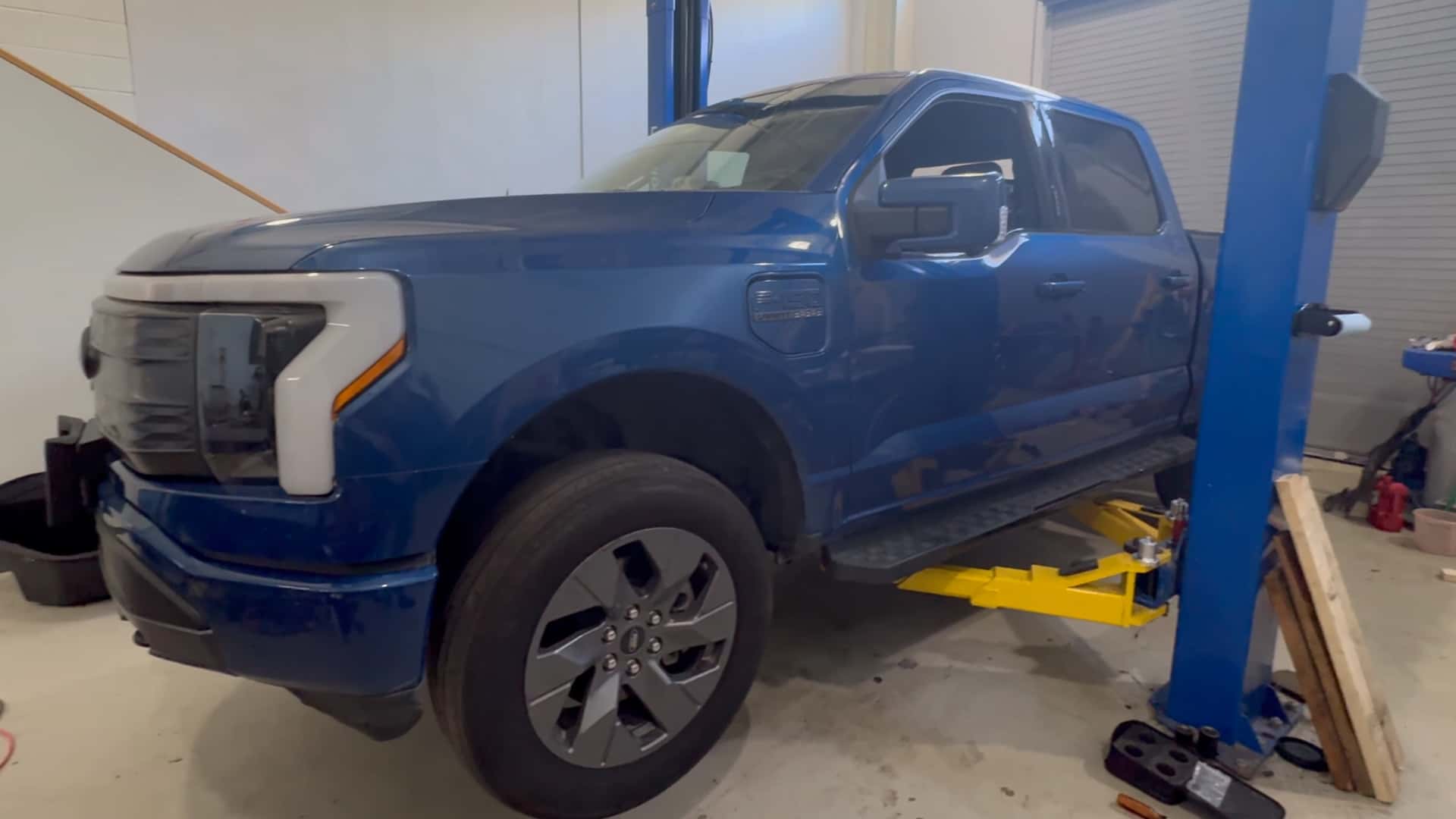
High-mileage workhorses are beginning to enter independent service bays, offering critical real-world insights into long-term electric vehicle durability. A recent high-voltage teardown and replacement on a Ford F-150 Lightning with 234,000 miles logged in just three years highlights the realities of EV maintenance. This level of extreme commercial usage represents an aggressive real-world endurance test for battery systems.
Operating an average of over 200 miles every single calendar day, this electric pickup endured extensive fast-charging cycles alongside heavy highway usage. Despite the immense thermal stress, the vehicle suffered only a single degraded battery module rather than catastrophic pack failure. Field reports confirm this testament to modern battery management system design proves remarkable structural integrity over extreme distances.
Replacing an isolated cell module within a tightly sealed enclosure can be labor-intensive and technically challenging for independent mechanics. Consequently, swapping the complete high-voltage assembly with a healthy secondary donor unit emerged as the most efficient repair path. This procedure provides a clear blueprint for how future second-hand EV buyers and independent garages will handle major repairs.
The Mechanics of Removing an 1,800-Pound Battery Pack
Dropping a massive traction battery requires specialized physical equipment and strict electrical safety protocols to handle direct current safely. The standard-range Ford F-150 Lightning utilizes a 98-kilowatt-hour battery pack that weighs roughly 1,800 pounds by itself. Safely supporting that massive footprint requires heavy-duty hydraulic scissor lifts rather than standard automotive floor jacks or engine hoists.
Mechanics begin the physical removal process by isolating the high-voltage system and thoroughly draining the liquid cooling circuits. Once high-voltage safety interlocks are verified and power cables are detached, technicians disconnect the primary thermal management lines. The massive structural fasteners securing the outer battery frame to the truck's steel chassis are then systematically removed.
Lowering the 1,800-pound battery pack demands precise physical balance, as even smaller EV packs like the Hyundai Ioniq 5's 63 kWh unit weigh over 800 pounds. Any sudden shift in weight during removal can cause severe chassis damage or physical injury. The physical drop itself, however, proceeds quickly once the vehicle is elevated on a commercial hoist.
Comparing EV Battery Swaps to Traditional Engine Swaps
Comparing a battery swap to a traditional internal combustion engine replacement reveals surprising trade-offs in labor complexity. Removing a gasoline engine involves unhooking dozens of intricate vacuum lines, complex wiring harnesses, exhaust manifolds, power steering pumps, and transmission bellhousing bolts. Engine pulls require hours of tedious maneuvering and angled lifting within tight, cramped engine bays.
By contrast, an electric vehicle battery pack presents far fewer individual quick-disconnect points and mechanical control attachments. There are no stubborn exhaust flanges, mechanical throttle linkages, or complex torque converter alignments to wrestle with. The mechanical separation of an EV pack is remarkably straightforward, provided the workshop possesses adequate lifting capacity and fluid management systems.
However, the extreme weight and potential electrical hazards invert the overall difficulty scale compared to gas vehicles. While a standard automotive engine rarely exceeds 500 pounds and can be manipulated using a basic crane, an EV battery pack demands specialized platform lifts. High-voltage safety compliance adds procedural overhead that traditional mechanical work simply does not require.
Challenges Inside the Pack and Hardware Preparation
Once the depleted pack is fully removed from beneath the frame, bench repairs and component transfers begin. In this documented swap, mechanics identified physical damage on the donor replacement battery pack, including a broken high-voltage connector and a cracked coolant hose union. Resolving these minor hardware defects required swapping intact original components from the outgoing pack.
Accessing internal components requires removing the protective top enclosure lid, a process defined by sheer volume rather than mechanical complexity. Technicians must remove dozens of perimeter bolts securing the weatherproof lid seal using cordless ratchets. Once opened, component swaps proceed logically, allowing straightforward mechanical transfers of internal wiring harnesses, sensors, and liquid coolant manifolds.
Reassembly mirrors the disassembly process, requiring meticulous bolt torque verification and fresh gasket sealants to preserve environmental ingress protection. After positioning the donor battery beneath the chassis using the hydraulic lift table, technicians torque structural chassis bolts to factory specifications, reconnect high-voltage electrical pathways, and thoroughly bleed the vehicle's liquid cooling loops.
The Future of Independent EV Repairs and Second Life
Following the hardware reinstallation, technicians resolved minor auxiliary 12-volt battery system codes to fully restore the truck to operational status. The successfully repaired F-150 Lightning returned to the road, demonstrating that high-mileage EV battery replacement is entirely manageable outside of factory dealership networks. This successful overhaul highlights the impressive long-term serviceability of electric pickups.
As electric vehicles age and enter the second-hand market, independent repair facilities will play a vital role in keeping high-mileage EVs functional. While high-voltage safety training and heavy lifting gear are mandatory prerequisites, swapping battery packs is ultimately less mechanically chaotic than rebuilding internal combustion powertrains. The era of accessible independent EV repairs is rapidly arriving.
