
How Hankook Built Long-Lasting Tires for Electric Vehicles
The Unique Mechanics of Electric Powertrains
As the global vehicle fleet transitions to electric propulsion, consumer attention typically centers on battery capacity, charging speeds, and motor horsepower. However, one vital component often remains overlooked: the tires connecting these advanced machines to the road. Electric vehicles present an entirely distinct set of physical demands that conventional tires, originally engineered for internal combustion engines, were never designed to manage efficiently.
Unlike gas-powered cars that build torque gradually through an engine's rev range, electric motors deliver instant maximum torque from a complete standstill. This immediate force exerts extreme shear stress on the tread rubber the moment the accelerator is pressed. Additionally, heavy lithium-ion battery packs add substantial curb weight, placing extra vertical load on all four corners of the chassis.
Technical disclosures and tire engineering reports reveal that standard tires wear down significantly faster when installed on heavy electric vehicles. Drivers frequently report premature tread erosion, reduced wet grip, and elevated cabin noise well before the expected mileage lifespan. Resolving these conflicting performance requirements has forced rubber manufacturers to rethink tire compounds, internal belting structural integrity, and tread pattern geometry.
Engineering the Hankook iON Architecture
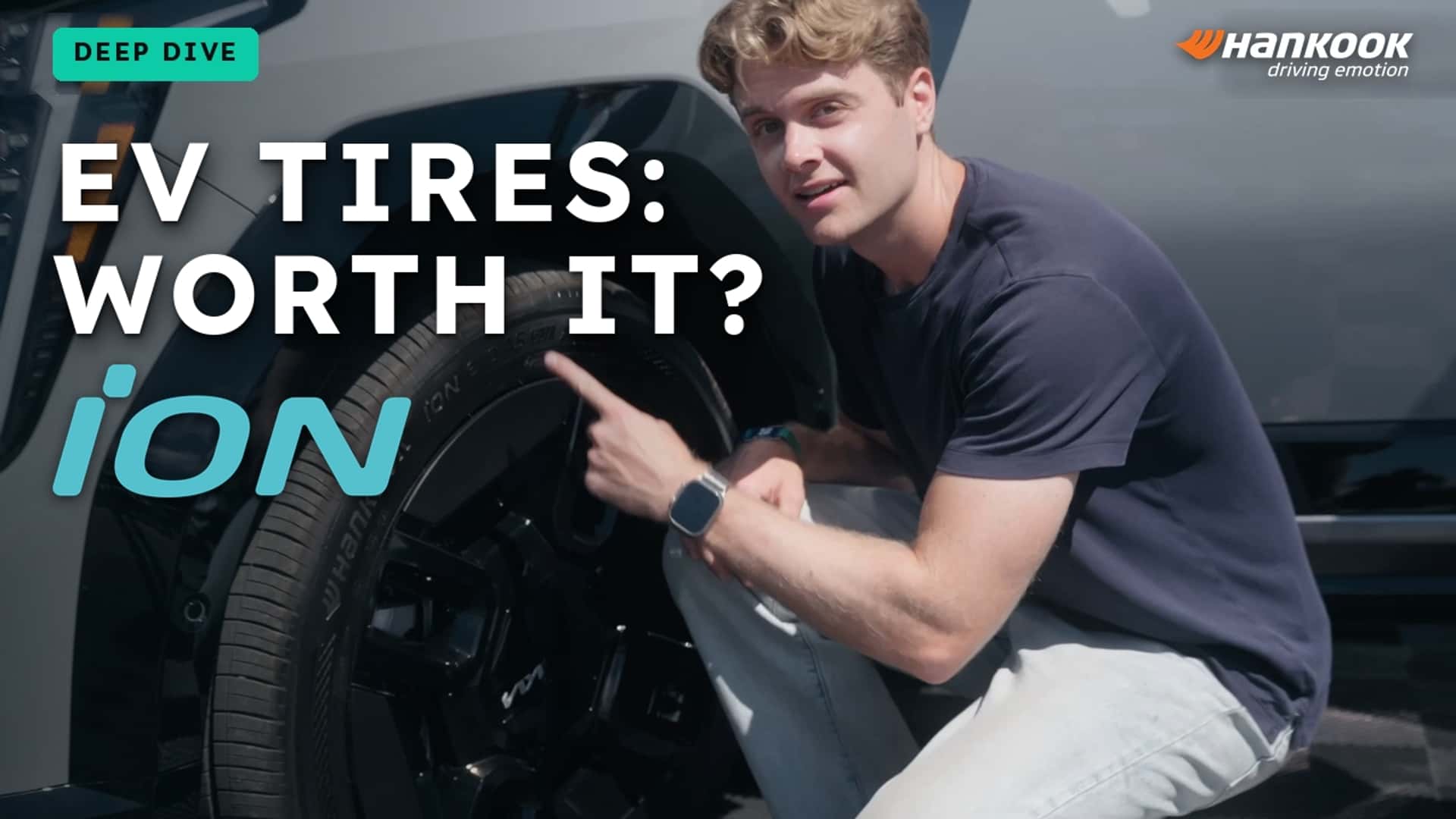
To solve these persistent technical hurdles, Hankook developed its specialized iON tire family, engineered from the ground up specifically for battery electric vehicles. Rather than adapting an existing internal combustion tire mold, engineers implemented high-stiffness synthetic fibers and reinforced aramid belts. This robust internal architecture prevents structural deformation under high vehicle weights while maintaining precise steering response during heavy cornering maneuvers.
Material science plays a pivotal role in the iON line's durability. The tire compound utilizes advanced natural resins alongside high-concentration silica mixtures, creating a dense molecular bond that resists aggressive scuffing caused by instant torque. This specialized formulation balances extended tread life with strong wet and dry traction, ensuring high-weight luxury crossovers and heavy sedans remain balanced across variable road surfaces.
Beyond structural integrity, reducing energy loss was a primary design imperative for the engineering team. Lowering rolling resistance directly translates into improved efficiency, enabling electric cars to travel further on a single charge. By optimizing tread block rigidity and minimizing energy dissipation within the rubber matrix, Hankook achieved low rolling resistance characteristics without sacrificing overall tire longevity or high-speed stability.
Acoustic Engineering and Efficiency Improvements
Electric powertrains operate almost silently, eliminating the background combustion engine rumble that historically masked tire and wind noise. Consequently, tire cavity resonance and road surface vibration become far more noticeable inside an electric vehicle's cabin. Drivers accustomed to quiet electric propulsion expect their tires to maintain an equally serene interior environment across smooth asphalt and textured concrete highways.
To counteract intrusive road noise, Hankook incorporated Sound Absorber technology into the iON family. This design combines specialized sipes on the inner tread pattern with an acoustic foam layer attached inside the tire's inner liner. The foam absorbs airborne sound waves trapped inside the tire cavity, drastically cutting cabin noise levels and creating a quieter driving experience at highway speeds.
Efficiency gains from optimized tire design offer measurable benefits for range-conscious drivers. Comparative testing and engineering calculations demonstrate that lowering rolling resistance across the iON lineup can boost total driving range on a full charge by up to six percent. For modern long-range electric cars, that efficiency increase can add over twenty miles of usable driving distance between charging stops.
Real-World Stress Testing and Field Performance
To demonstrate how these design innovations translate to real-world performance, Hankook put its iON tire line through intensive field evaluations at public track and test drive events. These dynamic testing grounds provided an ideal setting to evaluate how dedicated electric vehicle rubber handles aggressive acceleration, sudden directional changes, and high-mass braking under controlled conditions.
Field tests featured extreme performance vehicles, including the Lucid Gravity luxury electric SUV. Weighing approximately 6,000 pounds and producing 909 pound-feet of instant torque, the massive utility vehicle represents a tough stress test for vehicle dynamics. Mounted with Hankook’s iON evo AS all-season tires, the vehicle pushed the rubber's structural limits across demanding acceleration runs and sharp slalom courses.
During track runs, the specialized tires displayed exceptional stability and grip under heavy acceleration loads. The reinforced sidewalls prevented excessive tire rollover during hard cornering, keeping the heavy SUV composed and responsive. Furthermore, the noise-damping interior foam kept cabin rumble minimal, proving that high-torque capacity and refined comfort can coexist without compromising tread longevity.
Consumer Options and Industry Outlook
As electric vehicle adoption expands globally, tire replacement choices are becoming a fundamental decision for vehicle maintenance and owner satisfaction. Automotive analysts project that demand for EV-specific tire fitments will grow rapidly over the coming decade as millions of early-generation electric cars reach their first tire replacement interval. Drivers increasingly prioritize long tread life and quiet comfort over standard replacements.
To help consumers transition to EV-specific rubber, Hankook offers trial programs like its SureTire Plan, allowing drivers to evaluate the performance of iON tires on their own vehicles with a 100-day return policy. As tire technology continues to evolve alongside battery chemistry, specialized rubber compounds will play an increasingly vital role in maximizing electric vehicle performance, efficiency, and range.
