
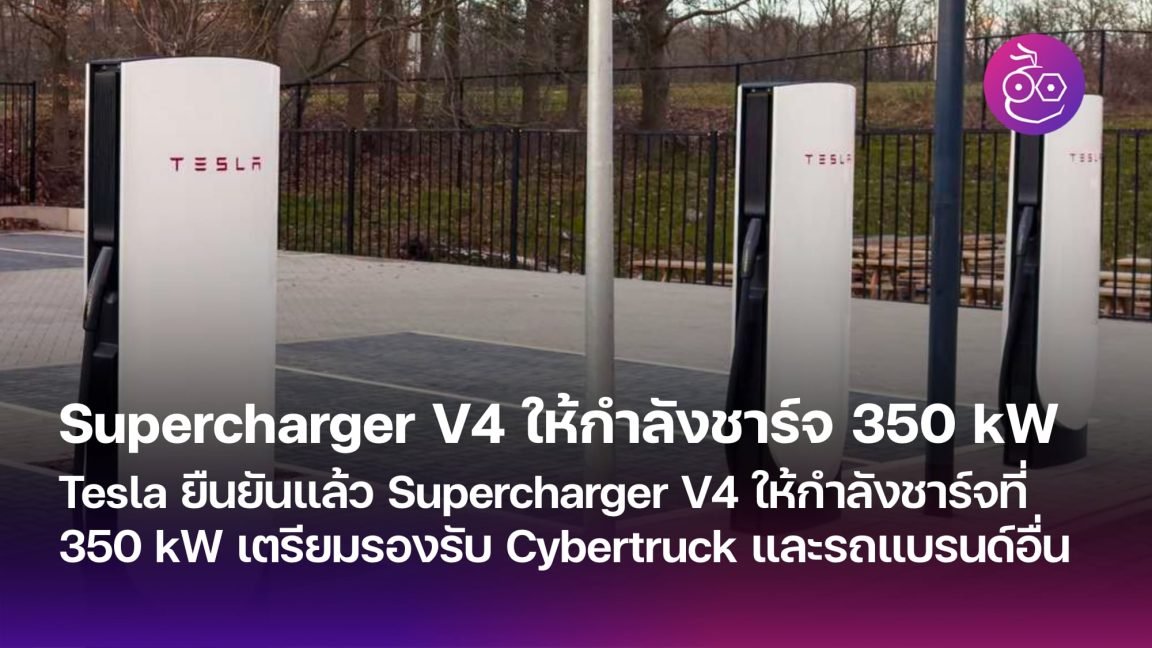
Tesla has initiated a sweeping infrastructure upgrade across European highway corridors, deploying its full-capacity Generation 4 Supercharger cabinets. According to official company disclosures, the latest charging stations are now delivering true 350-kilowatt peak charging rates to compatible electric vehicles. This strategic deployment marks a decisive transition from early V4 stall deployments, which were previously constrained by legacy V3 power electronics, to a fully upgraded high-voltage power distribution architecture.
Engineering data indicates that the upgraded infrastructure leverages dynamic power sharing and liquid-cooled busbars to maintain peak transfer rates without overheating. By transitioning European sites to native 800-volt charging capabilities, charging times for next-generation electric vehicles are dramatically reduced. European drivers navigating primary trans-continental routes will now experience significantly shorter dwell times at stations, accelerating the broader transition toward long-distance electric mobility across the continent.
Technical Architecture and Power Delivery Capabilities
The new V4 cabinet design represents a complete overhaul of internal power electronics, moving beyond legacy 400-volt limitations. According to engineering data, the system utilizes advanced silicon carbide inverters to achieve high operational efficiency under sustained high-ampere loads. The longer, lighter charging cables feature integrated immersion cooling, allowing the hardware to deliver up to 615 amperes continuously without adding unwieldy physical weight for consumers.
Vehicle compatibility has expanded significantly with the native 800-volt system architecture. Official company disclosures highlight that non-Tesla models equipped with high-voltage battery packs can now utilize the maximum 350-kilowatt output without requiring step-up converters. This technical parity ensures that high-power EVs from competing manufacturers receive maximum charging speeds, turning Tesla stations into primary charging hubs for all European EV drivers regardless of vehicle brand.
User interface enhancements accompany the internal electrical upgrades. Each V4 dispenser now features an integrated contact-less payment terminal alongside a high-resolution digital display displaying real-time charging metrics. Regulatory filings confirm these additions fulfill strict European Union metering directives, ensuring full price transparency for spontaneous sessions while eliminating the requirement for proprietary mobile applications or complex RFID subscription cards.
Grid Integration and Sustainable Power Management
Deploying high-power charging hubs across rural and semi-urban corridors presents significant challenges to localized regional electricity grids. Industry analysts note that Tesla is mitigating transformer overload risks by co-locating Megapack industrial energy storage systems at a majority of new V4 locations. These stationary batteries buffer power from the grid during off-peak hours and discharge rapidly during high-demand periods to support simultaneous multi-vehicle charging sessions.
Regulatory filings reveal an increasing reliance on onsite solar canopy installations to supplement grid draws during peak daytime hours. By combining localized renewable generation with megawatt-scale battery buffering, site operators can maintain maximum 350-kilowatt output across all stalls simultaneously. This integrated microgrid approach reduces grid interconnect fees while ensuring high operational reliability even during periods of peak summer vacation traffic.
Advanced software algorithms optimize grid interaction by dynamically matching local storage state-of-charge with incoming vehicle traffic predictions. Engineering data suggests that this predictive energy management reduces demand charges from utility companies by up to forty percent. Consequently, the lower operational cost structure enables competitive kilowatt-hour pricing for consumers while preserving network profitability across high-throughput European charging corridors.
Regulatory Alignment and Open Network Access
The aggressive rollout coincides directly with the enforcement of the European Union Alternative Fuels Infrastructure Regulation mandates. Official company disclosures show that all newly constructed V4 locations feature extended cable reaches and universal CCS Combo 2 connectors. This design accommodates diverse charge-port locations across various manufacturer models, eliminating the parking space alignment issues that plagued earlier generation installations.
Industry analysts emphasize that opening the Supercharger network to third-party vehicles has transformed charging operations into a substantial independent revenue center. By fulfilling public funding requirements across Germany, France, and the Nordic regions, Tesla secured substantial infrastructure grants. These subsidies directly subsidize capital expenditure requirements while accelerating civil construction timelines for massive hub locations housing thirty or more charging stalls.
Standardized billing mechanisms are critical for regulatory compliance under unified European energy guidelines. Regulatory filings confirm that V4 dispensers incorporate direct kilowatt-hour certified hardware, ensuring precise billing calibration audited by independent European standards bodies. This transparency builds consumer confidence among non-Tesla drivers, leading to higher station utilization rates and faster return on capital investments across regional networks.
Market Impact and Future Infrastructure Roadmap
The deployment of 350-kilowatt chargers puts significant pressure on competing European charging operators to upgrade their legacy hardware. Industry analysts project a wave of consolidation or accelerated hardware replacement among third-party networks unable to match Tesla's operational uptime and low unit deployment costs. Tesla’s vertically integrated manufacturing model gives it a structural cost advantage in producing power electronics at scale.
Looking ahead, engineering data points to future software revisions capable of unlocking even higher peak power outputs for commercial transport fleets. The modular design of V4 cabinets allows seamless power scaling as next-generation passenger vehicles and light commercial vans adopt higher-capacity battery chemistries. This forward-looking architecture ensures long-term viability without requiring expensive physical site overhauls over the next decade.
European EV adoption continues to rely heavily on reliable, high-speed charging infrastructure along key transit arteries. Official company disclosures indicate that over two thousand V4 stalls with 350-kilowatt capabilities will be operational across western and central Europe by year-end. This unprecedented expansion solidifies the company’s position as a dominant energy provider driving sustainable transportation across the European continent.
