
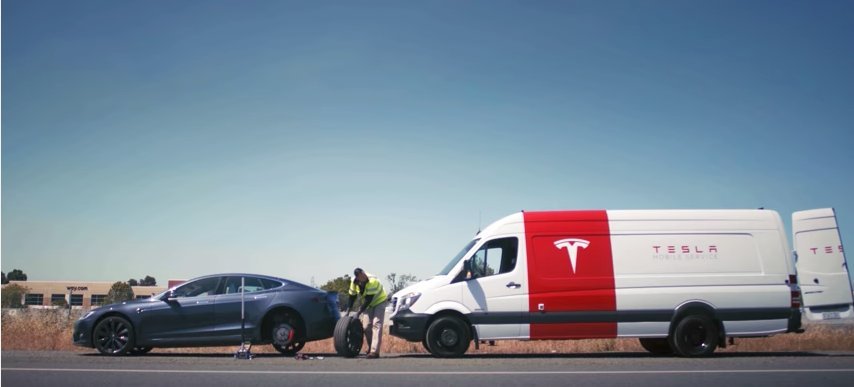
Tesla is officially transitioning its global mobile service operations to a fully electrified fleet of custom-designed service vans throughout 2026. The move addresses long-standing critiques regarding the automaker's reliance on internal combustion service vehicles to maintain its zero-emission customer cars. According to official company disclosures, the new mobile service units will completely replace legacy gasoline support vehicles across North America, Europe, and Asia-Pacific markets by the end of the year.
For years, mobile service technicians relied heavily on modified combustion vans to perform on-site repairs, tire replacements, and hardware upgrades. While converted passenger vehicles served limited roles, heavy tools and equipment required traditional commercial vans. Industry analysts note that replacing these fossil-fuel platforms with purpose-built electric work vans represents a pivotal step in closing the remaining sustainability gaps within the EV manufacturer’s global supply chain and service infrastructure.
The strategic fleet overhaul aligns with broader commercial vehicle trends as logistics and field service operators transition toward zero-emission solutions. Engineering data indicates that localized mobile service accounts for over seventy percent of routine vehicle maintenance requests across the brand's global network. By deploying an all-electric fleet, the vehicle manufacturer aims to demonstrate the viability of commercial electrification while simultaneously reducing operational expenses across its service sector.
Custom Architecture and Technical Specifications
The new service vehicle utilizes a modified commercial platform engineered specifically for high-payload duty cycles and mobile workshop configurations. Regulatory filings reveal that the electric van incorporates structural battery packaging combined with heavy-duty air suspension to manage specialized repair tools and spare component inventory. The architecture delivers an estimated operating range of two hundred fifty miles under full payload conditions, ensuring technicians complete multi-stop daily routes without intermediate charging stops.
Powering the onboard repair suite is an integrated high-voltage auxiliary power system derived directly from the main traction battery pack. Engineering data highlights that this bidirectional system eliminates the need for noisy, polluting gas generators previously required to operate pneumatic tools, tire balancers, and heavy jacks. Technicians can execute complex mechanical repairs directly from the vehicle’s high-power onboard outlets while maintaining precise climate control within the workspace.
Interior layouts have been streamlined to maximize ergonomic efficiency and automated inventory tracking. Built-in digital shelving modules communicate directly with the technician’s fleet management software, automatically logging parts pulled for specific repair jobs. Official company disclosures indicate that this automated tracking system significantly reduces administrative overhead, allowing service technicians to complete more service appointments per shift while minimizing spare part discrepancies across regional distribution hubs.
Charging Network Integration and Fleet Logistics
Operational efficiency depends heavily on seamlessly integrating the mobile fleet into the existing high-speed charging network. Fleet management systems utilize predictive routing software that automatically plans charging sessions during scheduled lunch breaks or low-demand intervals. Industry analysts emphasize that access to V4 Supercharger locations equipped with dedicated commercial vehicle stalls will minimize downtime, ensuring service vans remain deployed in field operations throughout peak business hours.
In emergency roadside scenarios, the electric service vans can function as mobile energy power banks for stranded customer vehicles. The high-capacity bidirectional charging apparatus allows technicians to transfer emergency range to depleted customer batteries at high transfer speeds. Official company disclosures confirm that this capability provides a critical safety buffer, enabling disabled vehicles to reach nearby fast-charging hubs without relying on traditional flatbed tow trucks.
Centralized fleet software actively monitors component wear, battery health, and energy consumption metrics across the entire service fleet in real time. Telematic data streams directly to regional hub maintenance teams, scheduling preventive service for the vans before mechanical failures occur. According to engineering data, this predictive maintenance framework is projected to maintain a fleet availability rate exceeding ninety-eight percent, far outperforming legacy internal combustion service fleets.
Financial Impact and Operational Cost Reductions
Transitioning from internal combustion service vehicles to custom electric work vans is projected to deliver substantial total cost of ownership savings. Industry analysts calculate that electricity costs per mile represent a sixty-five percent reduction compared to conventional gasoline expenses for commercial vans. When combined with reduced brake wear and the elimination of oil changes, total fleet operating costs are expected to fall dramatically over five-year operational lifecycles.
Lower operating expenses allow the automaker to scale its mobile service fleet rapidly without proportionally increasing service fees for vehicle owners. Official company disclosures report that mobile service remains significantly more cost-effective than building traditional brick-and-mortar service centers. By expanding the mobile fleet, the company can expand its service footprint in rapidly growing suburban and rural territories where physical service facilities are currently unavailable.
Global Rollout and Market Implications
The initial deployment phase focuses on high-density electric vehicle markets in California, Texas, and Western Europe, where mobile service demand is highest. Regulatory filings indicate that initial production of the custom service van platform is scaling rapidly at key manufacturing facilities. Secondary rollout phases planned for late 2026 will introduce the electrified service fleet into expanding Asian markets and northern climates equipped with winterized battery conditioning packages.
Industry analysts view this comprehensive fleet electrification strategy as a crucial benchmark for the commercial vehicle sector. Competitors in both field service and logistics are closely monitoring the operational deployment to evaluate the real-world performance of purpose-built service EVs. By fully electrifying its own support operations, the automaker reinforces its core environmental mission while establishing a practical operational model for zero-emission commercial fleet management.
