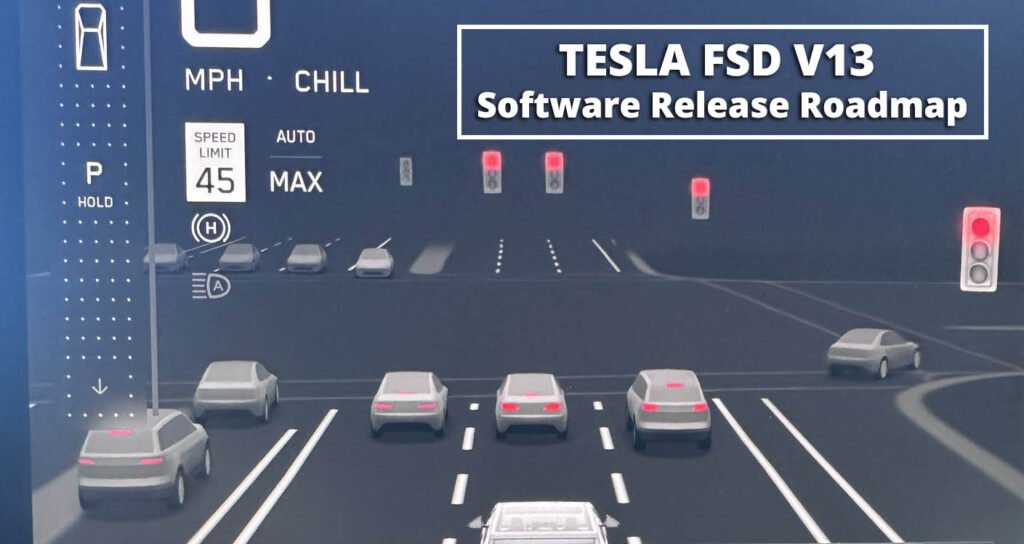
As Tesla prepares to deploy its Full Self-Driving Version 13 software across North America in early 2026, the automaker faces unprecedented regulatory friction. The latest update promises complete unsupervised autonomous capabilities for consumer vehicles without driver intervention. However, official company disclosures reveal that state and federal agencies are imposing stringent validation hurdles before driverless operations can legally commence.
Engineering data indicates that Tesla has rewritten core neural network architectures to handle edge cases with higher precision. Despite these technological leaps, federal regulators are demanding extensive real-world safety proof before allowing human drivers to disengage entirely. The divergence between technological readiness and legal authorization has created a complex operational landscape for the electric vehicle manufacturer.
Industry analysts note that while the hardware suite on current production vehicles is theoretically capable of supporting unsupervised autonomy, state-level approval processes remain fragmented. Different jurisdictions are instituting conflicting safety metrics, requiring Tesla to tailor its rollout strategy region by region. This regulatory patchwork presents an immediate challenge to the company's timeline for nationwide robotaxi and consumer autonomous deployments.
Federal Scrutiny and Safety Mandates
Regulatory filings show that the National Highway Traffic Safety Administration has expanded its oversight of end-to-end neural network driving systems. Transportation officials are insisting on transparent data regarding system disengagements and adverse weather performance. Without standardized testing protocols for artificial intelligence drivers, federal oversight bodies are hesitant to grant blanket exemptions for fully autonomous consumer vehicles.
Official company disclosures highlight that Tesla is actively submitting millions of miles of simulated and real-world telemetry to address federal safety inquiries. The automotive company asserts that Version 13 demonstrates statistical safety metrics superior to human driving performance. Nevertheless, federal agencies demand longer observation windows to evaluate how the system handles unpredictable road construction and emergency vehicle interactions.
Industry analysts emphasize that federal regulators are establishing new benchmarks for remote fleet management and fail-safe redundancy systems. If an autonomous vehicle encounters a systemic hardware or software anomaly, legal frameworks require immediate human-in-the-loop intervention capabilities. Meeting these strict operational requirements will necessitate substantial capital investments in roadside support and cloud network infrastructure throughout 2026.
Technical Milestones Versus State Laws
Engineering data reveals that Full Self-Driving Version 13 features significant processing efficiency gains and reduced latency during complex city driving maneuvers. The software architecture successfully merges perception, planning, and control into unified vision-based neural networks. However, individual state laws regarding driverless vehicle operation were drafted around legacy lidar-based mapping systems, creating legal friction for Tesla's vision-only approach.
Regulatory filings from key markets like California and Texas demonstrate vastly different approval trajectories for autonomous operations. While some states permit commercial driverless testing with minimal red tape, others demand extensive operational permits and public reporting. Consequently, vehicle owners in strict regulatory regions may see software features constrained despite possessing fully capable vehicle hardware.
Official company disclosures indicate that localized software geofencing will be implemented to prevent drivers from engaging unsupervised modes in non-compliant jurisdictions. This software-defined approach ensures compliance with regional legislation while enabling rapid feature activation where permits are secured. Industry analysts suggest that this fragmented release strategy could confuse consumers who expect uniform capabilities across state borders.
Liability Allocation and Insurance Friction
The transition from supervised assistance to unsupervised autonomy shifts legal liability from the human operator directly to the vehicle manufacturer. Industry analysts point out that insurance underwriters are struggling to price liability models for consumer-owned autonomous vehicles. Without clear statutory protections or precedent, insurance providers are demanding higher premium structures, which could decelerate consumer adoption rates during 2026.
Regulatory filings reveal that Tesla intends to launch its own expanded underwriting program to absorb autonomy-related liability risk directly. By leveraging real-time telemetry and proprietary safety scores, the company aims to offer competitive rates to customers using Version 13. However, state insurance commissions must approve these novel risk-assessment frameworks, adding another layer of administrative delay.
Engineering data demonstrates that detailed event data recorders inside the vehicles can precisely reconstruct vehicle decisions prior to any potential collision. This granular transparency is designed to streamline claims handling and prove system reliability to state regulators. Despite these engineering solutions, legal experts warn that litigation frameworks remain ill-prepared for software-determined traffic accidents.
Market Impact and Delivery Targets
Financial projections and official company disclosures signal that full commercialization of unsupervised driving is critical to Tesla's mid-decade valuation targets. Investors have priced in significant software margin expansion from autonomous fleet operations and subscription services. Delayed regulatory approvals could force executive leadership to revise delivery forecasts and push widespread robotaxi monetization deeper into the late decade.
Industry analysts conclude that while technological barriers are falling rapidly, political and regulatory compliance will dictate the real pace of deployment. Tesla must successfully navigate multi-agency reviews, legal liability reform, and municipal permitting processes to unlock true autonomy. The coming year will test whether regulatory frameworks can adapt quickly enough to match the speed of artificial intelligence innovation.
