
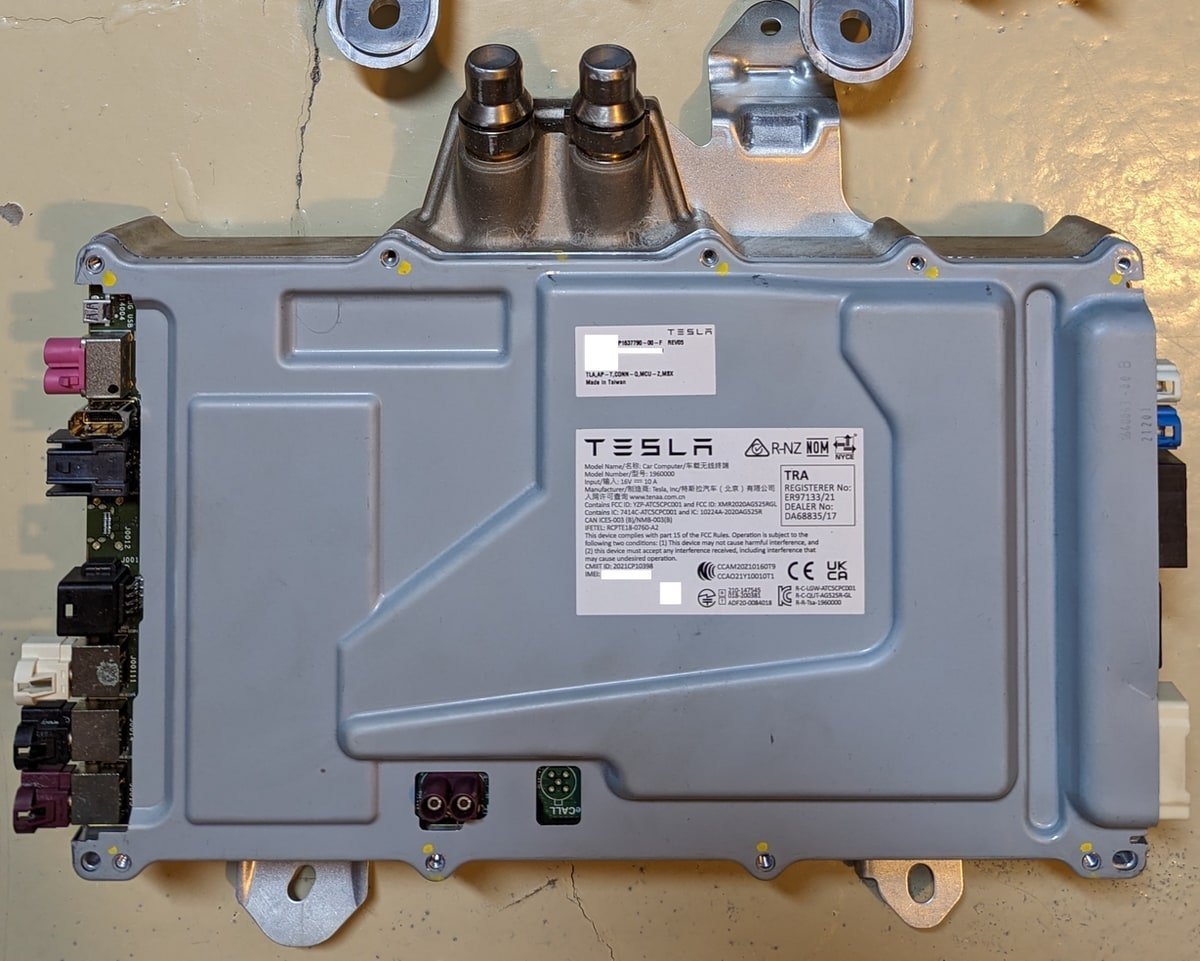
Tesla has officially begun deploying its fifth-generation autonomous driving computer, internal documentation confirms, introducing a completely revamped sensor suite centered on next-generation high-definition radar. While early full self-driving iterations relied heavily on pure vision, recent engineering data demonstrates that the upgraded platform blends ultra-high-resolution spatial radar with advanced neural processing. This architectural shift marks a pivotal evolution in the automaker's strategy for achieving unsupervised vehicle autonomy.
The transition to Hardware 5, frequently designated as AI5 in corporate hardware roadmaps, addresses structural processing bottlenecks encountered in prior computer generations. Industry analysts note that operating high-level autonomous fleets across diverse geographic regions demands far higher data throughput and sensor redundancy than previously estimated. By pairing cutting-edge computing nodes with active millimeter-wave sensors, Tesla aims to meet stringent global safety standard benchmarks.
Next-Gen High-Definition Radar Integration
According to technical specifications highlighted in recent regulatory filings, the new 4D imaging radar operates across an expanded frequency band with significantly enhanced angular resolution. Unlike legacy radar hardware phased out in previous production cycles, this next-generation unit generates high-density point clouds that approximate optical clarity. The system accurately discerns stationary objects, small road debris, and pedestrian elevation profiles at distances exceeding three hundred meters.
Engineering data indicates that the primary function of this custom radar unit is eliminating perceptual blind spots caused by environmental degradation. Thick fog, blinding sun glare, heavy rain, and blowing snow frequently compromise camera optics. The high-definition radar acts as an essential sensor fail-safe, penetrating adverse weather while supplying continuous depth velocity vector data directly into the vehicle's central artificial intelligence inference engine.
Furthermore, the physical integration features micro-heater elements embedded within the radome housing to prevent ice accumulation during winter operation. Official company disclosures reveal that the radar operates on a specialized Ethernet bus capability, minimizing latency during complex collision-avoidance maneuvers. This rapid data throughput allows real-time cross-validation between visual camera telemetry and radar point mapping before steering or braking commands execute.
Silicon Performance and AI5 Computing Power
Underpinning this expanded hardware architecture is an in-house designed system-on-chip manufactured on an advanced three-nanometer semiconductor process node. Engineering data points to a raw computational leap, yielding up to ten times the neural network processing capacity of Hardware 4. This massive headroom allows the vehicle board to process raw radar signal data natively without requiring localized pre-processing microcontrollers.
Thermal management for the Hardware 5 computer has undergone a total overhaul to accommodate the increased wattage associated with extreme compute densities. Official company disclosures indicate the assembly features an integrated liquid-cooling loop tied directly into the drive unit coolant system. This thermal framework guarantees stable operating temperatures during prolonged high-speed autonomous navigation across extreme ambient conditions.
The software architecture natively unifies radar and vision inputs using a single transformer-based neural network model. Rather than processing camera feeds and radar signals in separate isolation pipelines, Hardware 5 ingests early-stage sensor data into a shared vector space. Industry analysts highlight this early-fusion method as a breakthrough that eliminates historical discrepancies between vision predictions and radar target detection.
Regulatory Filings and Safety Benchmarks
Regulatory filings submitted across international transportation boards reflect significant safety improvements recorded during internal Hardware 5 test validation cycles. The submission data indicates a marked reduction in disengagement rates during complex urban scenarios and adverse weather testing. Federal regulators have increasingly emphasized the necessity of multimodal sensor setups for commercial driverless operation approval, positioning Tesla favorably for upcoming regulatory reviews.
A critical area of progress highlighted in safety documentation is the complete resolution of phantom braking phenomena. In earlier visual-only systems, unusual shadow patterns or atmospheric distortions occasionally triggered false deceleration events. The high-definition radar acts as a deterministic spatial anchor, preventing unwarranted vehicle deceleration by instantly confirming whether a physical obstacle actually occupies the forward driving path.
The implementation of this next-generation hardware suite directly aligns with the company's aggressive timeline for broad robotaxi fleet operation. Industry analysts observe that fully autonomous ride-hailing networks require fail-operational capabilities to navigate dense urban centers safely without human safety drivers. Hardware 5 provides dual-redundant processing clusters and independent radar sensor paths to ensure continuous vehicle control even during hardware sub-component failures.
Market Impact and Delivery Targets
Production rollout schedule details indicate that Hardware 5 with HD radar integration will first premiere on premium vehicle platforms before expanding across mass-market lines. Premium Cybercab fleets and flagship passenger vehicles are currently receiving initial assembly line allocations. Manufacturing adjustments across major Gigafactory locations demonstrate that production tooling has been retooled to support the physical mounting requirements and wiring harnesses needed for the radar assemblies.
Financial projections from industry analysts suggest that while adding advanced radar hardware increases per-unit manufacturing costs slightly, the commercial benefits far outweigh the incremental expense. Achieving true Level 4 and Level 5 autonomous capabilities opens immense recurring software revenue streams. Moreover, reduced insurance liabilities and higher consumer confidence are anticipated to accelerate mass adoption rates for full self-driving package subscriptions.
As the automotive sector advances through 2026, Tesla's refined hardware strategy establishes a benchmark for high-level autonomous system architecture. Combining massive custom silicon throughput with high-definition radar sensor fusion provides a robust solution to long-standing self-driving engineering hurdles. Official company disclosures reinforce that this integrated approach positions the vehicle lineup at the forefront of safe, scalable, and fully autonomous electric transportation.
