
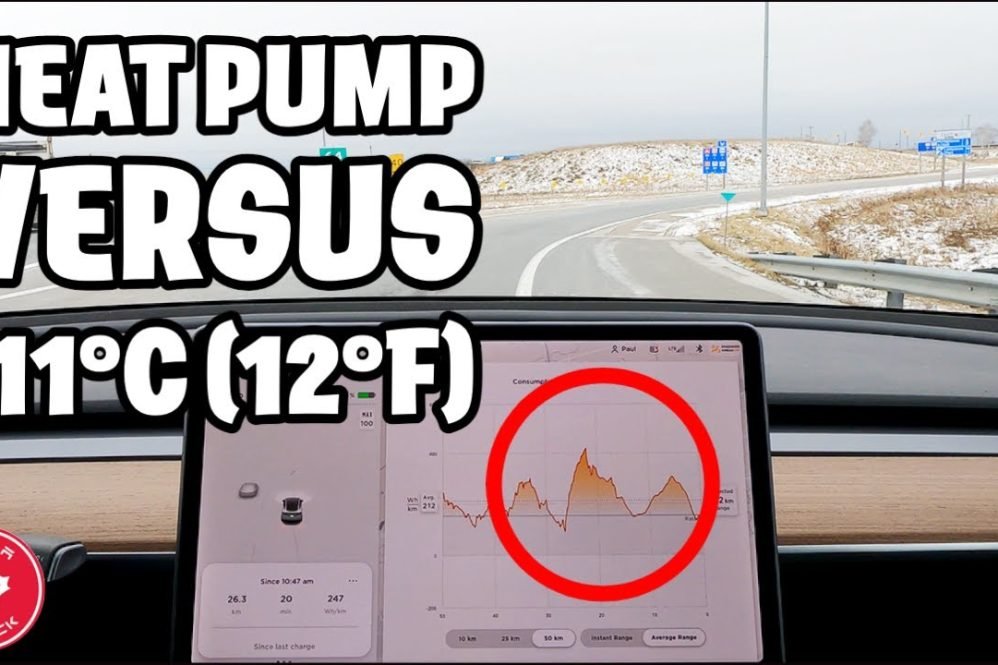
As severe cold waves sweep across North America and Europe in early 2026, electric vehicle cold-weather performance has returned to the forefront of automotive engineering debates. Recent winter field studies have focused heavily on Tesla thermal management systems, evaluating how effectively heat pumps preserve driving range during extended sub-zero weather operations. Engineering data reveals that advanced heat pump integration remains vital for maintaining battery efficiency when ambient temperatures drop below freezing.
Historically, traditional electric vehicle resistive heating systems consumed vast amounts of high-voltage battery power, causing catastrophic range losses of up to forty percent during frigid conditions. Modern heat pump designs mitigate this operational vulnerability by scavenging waste heat from the electric motors, power electronics, and battery pack itself. Official company disclosures indicate that this complex thermodynamic balance significantly minimizes the auxiliary energy draw required to keep passenger cabins comfortably warm.
Thermal Architecture and Octovalve Evolution
The core of Tesla thermal management relies on the proprietary Octovalve, a sophisticated manifold that routes liquid coolant throughout various vehicle subsystems. By dynamic switching between multiple heating loops, the system effectively moves energy to wherever thermal assistance is needed most urgently. Engineering data demonstrates that the software-driven control algorithms constantly adjust fluid flows to optimize thermal distribution across the entire powertrain, even under extreme negative ambient temperatures.
In earlier iterations, extreme sub-zero weather sometimes pushed heat pumps past their physical operating limits, occasionally forcing compressor shutdowns in severe freezes. Subsequent hardware refinements and low-temperature refrigerant formulations introduced in recent model years have resolved those early vulnerabilities. Industry analysts note that updated expansion valve designs and enhanced compressor control logic now allow continuous heat extraction at temperatures as low as minus twenty-five degrees Celsius.
Furthermore, the system utilizes motor-stator heating when environmental conditions fall below ambient heat absorption thresholds. By intentionally running drive unit motors inefficiently while stationary or cruising, the system generates artificial waste heat that is immediately captured by coolant loops. Regulatory filings highlight that this dual-purpose operational strategy eliminates the weight and cost penalties associated with installing dedicated secondary resistive heaters.
Real-World Range Retention in Sub-Zero Weather
Extensive cold-weather field testing conducted across Scandinavia and northern North America confirms substantial range savings over legacy heating systems. Vehicles operating in sub-zero conditions consistently demonstrate up to twenty-five percent greater driving range compared to older non-heat-pump electric vehicles. Industry analysts attribute these tangible gains directly to reduced auxiliary energy expenditure during steady-state highway travel and urban stop-and-go commuting scenarios.
Despite these engineering achievements, energy efficiency inevitably decreases as ambient temperatures drop into severe sub-zero territory. Lithium-ion cell chemistry experiences elevated internal resistance at freezing temperatures, which reduces net usable energy regardless of climate control efficiency. Engineering data shows that while heat pumps drastically curtail cabin climate draw, electrochemical resistance remains an unavoidable physics challenge that affects all battery-electric platforms equally.
To maximize usable winter range, software automation plays a central role in thermal management execution. Automated routines schedule cabin pre-conditioning while the vehicle remains connected to grid power, ensuring the battery pack reaches ideal operating temperatures prior to departure. Official company disclosures indicate that pre-conditioning off grid power preserves critical battery state-of-charge, enabling drivers to achieve optimal real-world mileage during severe winter trips.
Fast Charging Performance and Battery Preconditioning
Cold battery packs accept electrical charge at significantly reduced rates to prevent lithium plating and permanent cell degradation. Consequently, navigation systems automatically initiate rapid battery warming protocols when routing toward high-power fast-charging stations. Engineering data reveals that the heat pump actively transfers heat generated from the powertrain straight into the battery architecture, drastically shortening necessary pre-charging thermal preparation windows.
Once connected to a high-speed charger, the thermal system reverses roles to manage high heat loads generated by fast charging current. The Octovalve dynamically reroutes liquid coolant to dissipate excessive heat, maintaining optimal cell temperatures throughout the charging session. Industry analysts point out that this bi-directional thermal flexibility allows modern electric vehicles to maintain peak charging curves even during prolonged winter road trips.
Without efficient thermal preconditioning, winter fast-charging session times can easily double, causing frustration for long-distance drivers. By utilizing integrated heat pump technology, charging prep times are reduced by up to fifty percent compared to unheated battery management architectures. Regulatory filings confirm that fast-charging throughput during freezing weather has become a major technical differentiator for electric vehicle buyers evaluating cold-climate usability.
Technical Validation and Future Industry Outlook
Automotive research institutions continuously evaluate heat pump reliability across multi-year operational cycles in sub-zero environments. Comparative winter range assessments show that integrated heat pump architectures maintain superior overall efficiency metrics over legacy resistive heaters. Industry analysts note that competitor automakers are rapidly standardizing similar multi-source heat pump configurations across their prospective 2026 and 2027 electric vehicle product portfolios.
Ongoing software updates continue to optimize thermodynamic efficiency, using fleet-wide machine learning models to refine heating algorithms. Real-world telemetry gathered across millions of winter miles enables continuous calibration of coolant flow rates and compressor speeds. Official company disclosures emphasize that over-the-air software capabilities allow existing vehicles to receive thermal performance improvements without requiring hardware retrofits or dealer service visits.
As global electric vehicle adoption accelerates into extreme climates, thermal efficiency remains a central pillar of automotive design. Integrated heat pump technology successfully resolves historic cold-weather range penalties, establishing a robust foundation for year-round electric mobility. Engineering data indicates that future innovations will focus on higher-density refrigerants and advanced heat storage materials, further solidifying cold-weather viability across the global automotive market.
