
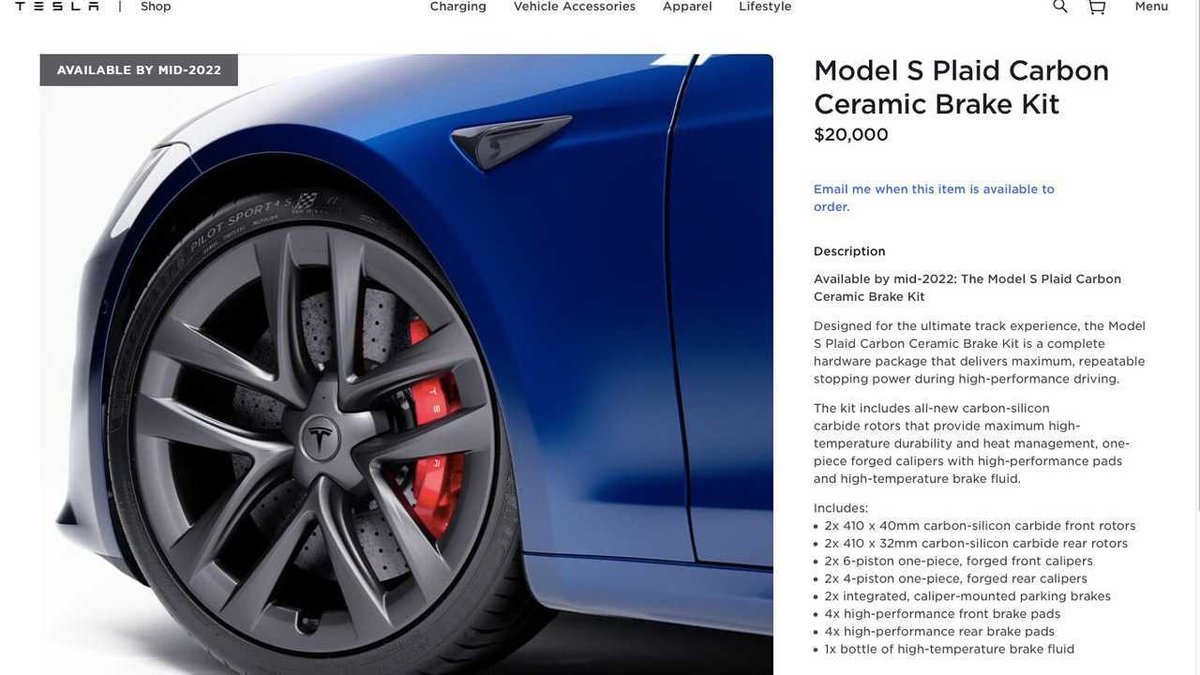
The high-performance electric vehicle sector reached a crucial benchmark with the full-scale deployment of the updated Model S Plaid Track Package. Engineered to address earlier thermal limitations, the hardware suite brings motorsport-grade stopping power to Tesla's flagship sedan. Recent engineering data confirms that the carbon ceramic upgrade drastically transforms the vehicle's dynamics during high-speed circuit driving and sustained lap sessions.
When the Plaid tri-motor powertrain launched with over 1,000 horsepower, traditional iron rotors struggled under intense track conditions. According to official company disclosures, the upgraded carbon-silicon carbide braking system eliminates fade while drastically expanding thermal tolerance. Track testing throughout 2026 demonstrates that this hardware finally aligns the sedan's stopping capability with its hypercar-level acceleration profiles.
Advanced Engineering and Component Breakdown
The hardware architecture features massive 410-millimeter front and 400-millimeter rear carbon-silicon carbide rotors paired with forged monoblock calipers. Regulatory filings indicate these component dimensions represent one of the largest track-ready brake setups ever integrated into a production passenger sedan. High-friction performance pads and high-boiling-point synthetic brake fluid complete the hardware suite to maintain consistent hydraulic pressure.
Unsprung weight reduction plays an equally vital role in dynamic handling improvements across challenging corner entries. Engineering data reveals that the carbon ceramic discs trim roughly 30 pounds of rotating mass compared to standard cast-iron assemblies. This unsprung mass reduction improves turn-in sharpness, enhances suspension compliance over curbs, and allows the active torque-vectoring software to react with unprecedented precision.
Integration with the vehicle's electronic control units requires dedicated firmware adjustments to optimize high-speed control. Official company disclosures highlight that installing the ceramic package unlocks specialized Track Mode telemetry and raises the electronically governed top speed to 200 miles per hour. The digital system re-calibrates regenerative braking blend ratios, ensuring smooth transitions between electrical energy recovery and mechanical friction stopping.
Track Testing and Stopping Dynamics
On technical circuits, the operational difference between iron and ceramic setups proves absolute under hard driving. Industry analysts testing the system recorded consistent deceleration rates exceeding 1.2 Gs without structural flexing or lever travel elongation. Even after multiple consecutive high-speed braking zones, the pedal feel remains rock-solid, giving drivers the confidence required to push late into heavy braking corners.
Standard iron units previously experienced pronounced thermal degradation after just two consecutive hot laps on demanding road courses. In contrast, telemetry logs from engineering data verify zero measurable friction coefficient drop across ten full-pace laps. The high thermal mass of carbon-silicon matrix material absorbs peak heat spikes easily, dispersing thermal energy efficiently through internal directional cooling vanes.
Cold-temperature operation on public roads presented a historic hurdle for early carbon-ceramic implementations across the auto industry. However, updated friction pad compounds ensure immediate biting response even under ambient daily driving conditions. Industry analysts note that ambient dampness and cold morning starts no longer cause the squeal or delayed friction engagement typical of older composite braking systems.
Thermal Management and Longevity
Extreme thermal resistance forms the core advantage of carbon-silicon matrix architecture during continuous track work. Official company disclosures document maximum operating temperatures exceeding 1,800 degrees Fahrenheit without material breakdown or rotor warping. Special protective coatings applied to the rotor hat assemblies prevent galvanic corrosion, ensuring long-term structural integrity under severe environmental exposure and heavy track utilization.
Maintenance schedules and component lifespans improve significantly despite aggressive performance demands placed on the braking hardware. Regulatory filings suggest the carbon ceramic discs are designed to outlast traditional iron rotors by up to four times under combined street and track usage patterns. Reduced dust generation also keeps lightweight forged wheels cleaner, appealing directly to premium EV enthusiasts who demand low-maintenance aesthetics.
Regenerative braking integration further preserves mechanical pad life during standard transit and highway driving conditions. Engineering data shows that under daily commuting conditions, the vehicle relies heavily on motor regeneration for deceleration, saving the friction surface strictly for aggressive inputs. This hybrid stopping approach ensures that expensive ceramic components experience minimal physical wear during non-circuit operation.
Market Impact and Delivery Targets
Priced as a premium post-purchase update or factory option, the package targets a niche segment of performance enthusiasts. Industry analysts report that while the initial financial outlay remains significant, the package effectively resolves the Model S Plaid's primary performance critique. By solving thermal fade completely, the upgrade elevates the EV platform into direct competition with established European track-focused super-sedans.
Supply chain scaling and production throughput for the ceramic package have normalized following initial manufacturing bottlenecks. Official company disclosures confirm that delivery targets for retrofit kits and factory installations are currently meeting global customer demand schedules. High demand in key North American and European markets reflects strong buyer appetite for track-validated hardware packages on high-power EVs.
Ultimately, the carbon ceramic package establishes a new technical benchmark for heavy high-horsepower electric vehicles. Official company disclosures emphasize that lessons learned from this rotor chemistry will inform future performance variants across upcoming vehicle lineups. For owners seeking true lap-after-lap repeatability, the package converts raw straight-line speed into a balanced, circuit-ready performance capability.
