
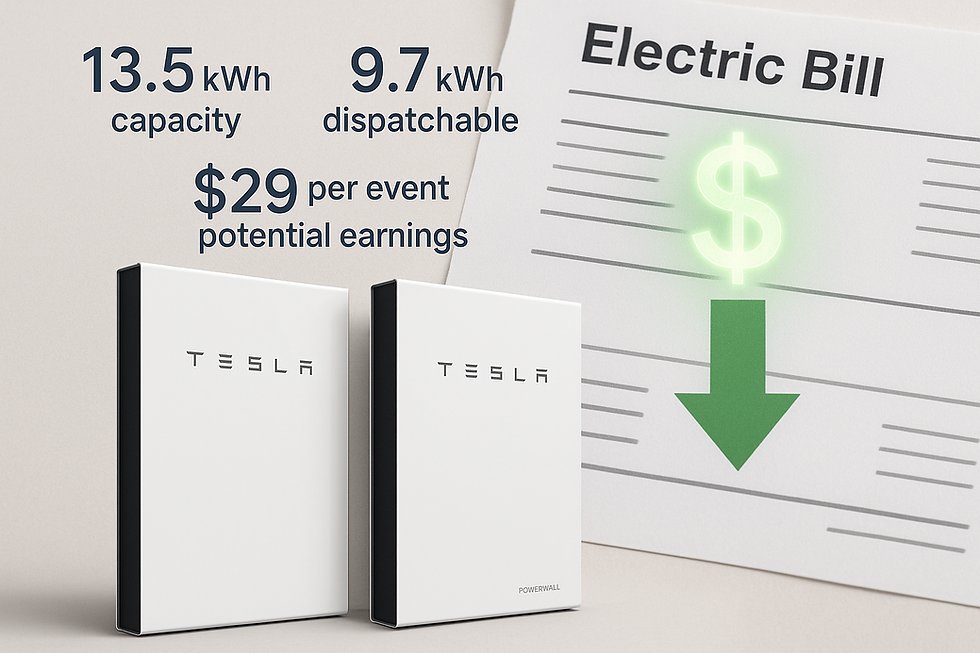
Distributed residential energy storage has reached a significant economic milestone in 2026 as virtual power plant programs scale globally. Household participants deploying the Tesla Powerwall 3 are securing unprecedented financial yields by supplying stored solar energy back to local electrical grids during peak demand events. This shifting paradigm highlights the growing reliance on localized battery networks to stabilize aging infrastructure while providing consistent cash compensation to homeowners.
According to official company disclosures, the expanded dispatch capabilities of the Powerwall 3 have significantly elevated average annual customer earnings. By leveraging automated software algorithms that predict wholesale power price spikes, individual units automatically export stored energy when grid rates reach premium tiers. Consequently, early adopters across key utility territories report record seasonal payouts that exceed original return-on-investment projections.
Escalating Yields in Grid Services
Recent regulatory filings reveal that grid operators are increasingly relying on aggregated battery reserves to prevent localized blackout conditions during extreme thermal anomalies. Virtual power plant programs aggregate thousands of dispersed units, functioning as a single high-capacity peaking power station without the emissions associated with traditional natural gas plants. Utilities offer lucrative monetary incentives to secure these rapid-response reserves during localized supply shortages.
Data from regional dispatch logs shows that participant payouts fluctuate based on geographic wholesale electricity clearing rates and utility program design. In high-demand zones, per-kWh performance credits have risen to multi-year highs during summer grid stress events. Participating homeowners retain full control over their baseline energy reserves, ensuring emergency backup functionality remains prioritized while maximizing their quarterly passive income streams.
Technical Advancements of Powerwall 3
Engineering data confirms that the hardware architecture of the Powerwall 3 plays a critical role in facilitating these superior economic returns. Featuring an integrated solar inverter with high continuous output rating, the unit can discharge power into the home and grid simultaneously at maximum efficiency. This enhanced thermal efficiency permits sustained high-kw exports during brief grid tender windows without overheating internal lithium iron phosphate cells.
Furthermore, refined battery management software updates deployed throughout 2026 have minimized cell degradation during frequent micro-dispatch operations. Industry analysts note that predictive modeling allows systems to cycle energy efficiently without impacting long-term battery health guarantees. Consequently, homeowners can participate in multiple weekly grid events with complete confidence in system longevity and continuous degradation monitoring.
Market Expansion Across Regional Grids
Regulatory filings across North America and Europe demonstrate a rapid increase in utility participation within decentralized grid networks. Regulators are establishing streamlined frameworks that allow consumer battery systems to compete directly alongside traditional energy generation assets in capacity auctions. This regulatory normalization has spurred utilities to offer higher performance-based multipliers for reliable, rapid-discharge energy delivered from residential installations.
In suburban market clusters, high concentrations of connected batteries are forming localized micro-grids capable of islanding entire neighborhoods during distribution network failures. Industry analysts emphasize that such aggregated capacity offers transmission system operators an inexpensive, zero-emission mechanism to handle sudden voltage fluctuations. The success of these regional projects has prompted neighboring jurisdictions to accelerate approval processes for similar customer battery programs.
Economic Mechanics and Owner Returns
Official company disclosures indicate that financial returns are distributed to customers via direct deposit or automatic energy bill credits. The revenue-sharing model allocates a substantial majority of the generated wholesale electricity market value back to the hardware owner, with automated management software processing micro-transactions seamlessly. Homeowners can track real-time grid events and earnings estimates through integrated mobile applications.
For many consumers, these recurring payouts have dramatically shortened the investment payback period for residential solar and battery installations. According to industry analysts, early return metrics show that Powerwall 3 system payback schedules have decreased by up to thirty percent compared to earlier storage iterations. This financial incentive is driving accelerated adoption among homeowners who previously viewed energy storage purely as an emergency backup purchase.
Financial analysts also note that combining virtual power plant returns with electric vehicle charging integration optimizes overall household energy management. Smart home hubs automatically charge vehicle batteries during periods of low tariff rates and export excess power back during grid emergencies. This bidirectional energy ecosystem establishes a self-sustaining financial framework that reduces utility expenses while contributing to grid resilience.
Future Outlook for Distributed Energy
Engineering data indicates that near-future software updates will incorporate machine learning models capable of predicting weather anomalies with enhanced precision. By pre-charging system arrays ahead of forecast severe weather events, systems can ensure maximum power retention before discharging at peak demand rates. These proactive grid responses protect local sub-stations while generating enhanced financial earnings during grid emergency windows.
Looking ahead, official company disclosures project substantial growth in virtual power plant capacity as utility partnerships expand into new international energy markets. As traditional central power infrastructure faces mounting environmental challenges and capital costs, distributed battery networks offer a scalable alternative. The ongoing maturation of Powerwall 3 payout structures establishes residential storage as a vital component of clean energy transition strategies worldwide.
Ultimately, the expansion of home virtual power plants represents a fundamental shift in how electrical power grids operate and distribute revenue. With hardware owners transformed into active energy suppliers, market dynamics are favoring flexible, software-driven asset management across residential sectors. As 2026 unfolds, consumer battery deployment continues to prove that decentralized energy infrastructure delivers both environmental sustainability and compelling financial returns.
