
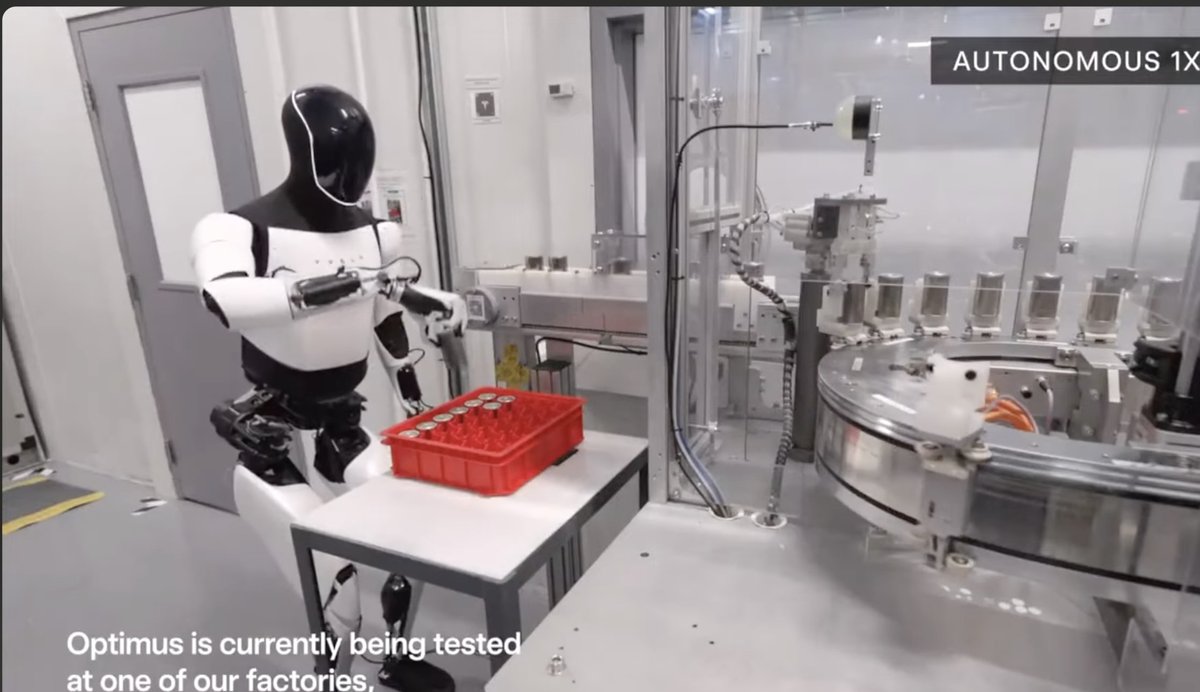
Automotive manufacturing reached a pivotal turning point in early 2026 as autonomous humanoid robotics moved from experimental testing to active assembly line work. Official company disclosures confirm that Tesla has deployed its third-generation Optimus humanoid robot across key production cells. This development marks a major milestone in integrating general-purpose bipedal robotics into high-volume electric vehicle manufacturing facilities.
The initial deployment phase focuses on autonomous logistics, material handling, and precision parts placement within major assembly nodes. According to engineering data, the Optimus Gen 3 platform has demonstrated continuous multi-hour operational shifts without direct human supervision. The pilot program represents the largest real-world validation of bipedal industrial automation ever attempted within the global automotive industry.
Deployment Milestones at Fremont and Gigafactory Texas
Trial operations are currently active at both the Fremont Factory in California and Gigafactory Texas in Austin. Engineering data indicates that units are tasked with transferring battery cells, staging stamped metal components, and managing internal supply totes. These complex environment trials provide essential operational feedback, allowing engineers to refine real-time spatial awareness and movement dynamics under actual factory conditions.
Unlike previous iterations that operated in strictly controlled demonstration zones, the Gen 3 units navigate unmapped floor spaces alongside human technicians and automated guided vehicles. Official company disclosures reveal that the operational downtime attributable to robot navigation errors dropped by over eighty percent during the first quarter of testing. This progress highlights rapid maturity in software execution.
The current trial program aims to validate sustained mechanical reliability over thousands of continuous duty cycles. Industry analysts note that achieving operational endurance in high-vibration, thermally variable factory environments remains the ultimate test for humanoid hardware. Initial durability reports suggest structural wear on key joint bearings has decreased substantially compared to legacy prototypes.
Technical Advancements in Hand Dexterity and Actuators
The technical foundation of the Optimus Gen 3 relies on redesigned rotary and linear actuators engineered specifically for high-frequency industrial motions. Engineering data shows these custom units provide custom torque profiles, allowing the machine to lift heavy vehicle structural parts while retaining delicate touch control. This dual capability eliminates the need for specialized single-purpose end-effectors on production lines.
A critical breakthrough of the new hardware generation lies in its twenty-two degree-of-freedom tactile hands. Regulatory filings detail how integrated tactile sensors on every fingertip provide micro-force feedback, allowing the robot to manipulate flexible wiring harnesses and small fasteners reliably. This level of manual dexterity addresses one of the final barriers to automating full vehicle interior assembly.
Energy management has also seen significant architectural upgrades in the 2026 iteration. According to engineering data, an integrated high-density battery pack housed in the structural torso delivers up to eight hours of continuous operation per charge. Fast-charging interconnects built into floor stations allow the units to recharge autonomously during planned factory shift changes.
Autonomous Neural Net Training and Vision Systems
Software intelligence for Gen 3 relies on end-to-end neural network architectures trained entirely on video data gathered from vehicle vision fleets and real-world robot operations. Industry analysts emphasize that this unified AI stack allows the humanoid system to translate vision inputs directly into smooth motor actions without rigid rule-based programming. Consequently, adaptation to new task assignments occurs rapidly.
The vision suite features custom multi-camera arrays providing full three-hundred-and-sixty-degree spatial coverage paired with low-latency occupancy networks. Engineering data underscores that this sensor system allows Optimus to detect subtle assembly defects, identify misplaced components, and immediately adjust its pathing around moving factory personnel. The enhanced perception system significantly reduces safety risks in mixed human-robot environments.
Synthetic training environments simulated on massive computing clusters have accelerated edge-case handling for complex tasks. Official company disclosures report that thousands of virtual Optimus units run simulated assembly scenarios daily to pre-train neural weights before physical factory deployment. This hybrid simulation-to-reality pipeline dramatically shortens the deployment timeframe for new factory work instructions.
Industry Analysts Evaluate Operational Efficiency
Financial and manufacturing experts view this factory trial as a critical proof point for commercial viability. Industry analysts estimate that successful scaling of humanoid labor could reduce vehicle manufacturing costs by up to fifteen percent over the next decade. However, achieving those projections requires moving beyond pilot testing into thousands of fully integrated units across multiple global plants.
Automotive supply chain managers highlight the flexibility advantages inherent in human-form automation compared to traditional fixed industrial robots. Industry analysts point out that bipedal machines require zero costly modifications to existing factory infrastructure. They can walk through standard doorways, use existing tools, and adapt to shifting assembly line layouts without expensive retooling delays.
Regulatory Filings and Scale Production Roadmap
Safety compliance and workplace integration standards remain central to the ongoing pilot rollout. Regulatory filings reveal ongoing coordination with industrial safety agencies to establish clear operational standards for autonomous humanoid labor in manufacturing environments. These framework documents address emergency stop protocols, force-limiting boundaries, and human proximity safety buffers necessary for broad commercial adoption.
Looking ahead to the remainder of 2026, factory trials will expand to include complex sub-assembly operations like door trim installation and thermal module placement. Official company disclosures indicate that low-volume external commercial deliveries could begin following the completion of internal pilot milestones. If successful, this trial program will establish a new benchmark for automated industrial manufacturing.
