
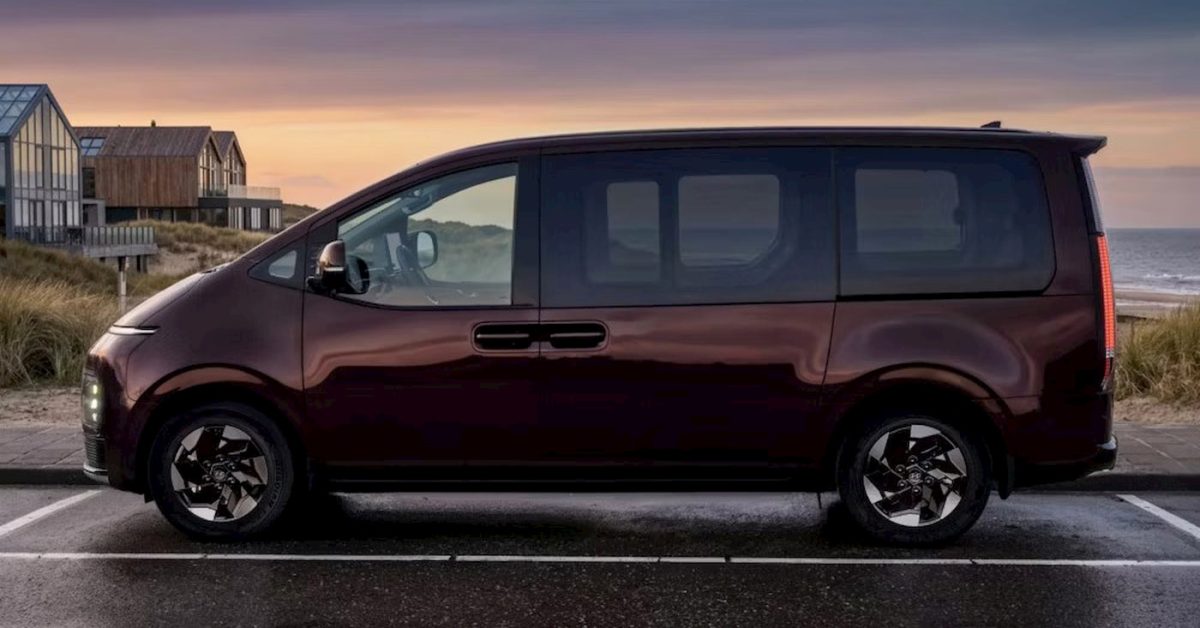
Hyundai Opens Global Orders for Staria Electric Passenger Van
Hyundai has officially opened customer order books for the Staria Electric across European and global markets following its initial domestic rollout. The all-electric passenger van enters the market with a starting price of €57,450 in Germany, equivalent to approximately $66,500. This milestone marks a significant step forward in expanding Hyundai's zero-emission portfolio beyond traditional crossovers and SUVs.
First showcased to global audiences at the Brussels Motor Show earlier this year, the Staria Electric converts the automaker’s iconic multi-purpose vehicle design into a fully electric platform. Built to accommodate large families and shuttle services, the vehicle directly addresses growing demand for multi-seat electric transport across key European and Asian markets.
A Bold Nine-Seater Architecture for Global Markets
The Staria Electric commands a substantial presence on the road, measuring 5,253 mm in length, 1,997 mm in width, and 1,990 mm in height, anchored by a 3,273 mm wheelbase. These dimensions make the vehicle roughly 200 mm longer than Hyundai's three-row IONIQ 9 SUV, providing significantly more interior volume than competitors like the Volkswagen ID. Buzz or Kia PV5.
Visually, the electric model retains the distinctive futuristic silhouette of its internal combustion engine counterpart while integrating distinct EV-specific aesthetic details. The front fascia features a fully closed-off grille structure paired with a sweeping horizontal LED light bar across the bonnet line, creating a clean, high-tech identity that enhances aerodynamic efficiency.
Inside, the van utilizes Hyundai’s signature "Inside-Out" design philosophy to maximize cabin space across both 7-seat and 9-seat configurations. The completely flat floor layout creates an open, versatile cabin environment. In nine-passenger trim, the Staria Electric offers up to 1,303 liters of rear luggage capacity alongside a dedicated 24-liter front trunk storage compartment.
Electric Performance Meets 800V Ultra-Fast Charging
Underneath its expansive sheet metal, the Staria Electric is powered by an advanced 84 kWh battery pack coupled with a front-mounted 160 kW electric motor, producing 218 horsepower. Under the European WLTP testing standard, the electric van delivers a certified driving range of up to 430 kilometers, or roughly 267 miles on a full charge.
A primary technical advantage of the Staria Electric is its integration of Hyundai’s high-voltage 800-volt charging architecture. When connected to a 350 kW DC fast-charging station, the vehicle can replenish its battery from 10 percent to 80 percent in approximately 20 minutes, minimizing downtime for long-distance family travel and commercial shuttle operators alike.
To further boost operational versatility, Hyundai equips the electric van with Vehicle-to-Load bi-directional charging capabilities. This technology allows owners to use the internal battery as a high-capacity power bank. Passengers can run external electronic tools, camping equipment, appliances, or mobile office setups directly from the vehicle’s high-voltage system.
Next-Generation Cabin Technology and Premium Trims
The cockpit centers around Hyundai’s connected car Navigation Cockpit system, featuring a dual-screen array comprised of twin 12.3-inch displays for the digital gauge cluster and central infotainment hub. The system integrates standard wireless Apple CarPlay and Android Auto compatibility, alongside over-the-air software update capability to keep vehicle systems continuously optimized.
Hyundai offers the Staria Electric across three distinct trim tiers to target various price points. The entry-level Trend 9-seater starts at €57,450 ($66,500), supported by monthly leasing rates from €489. Upgrading to the Prime tier at €63,350 ($73,500) adds dual power-sliding side doors, an electric tailgate, rear sunshades, Highway Driving Assist 1.5, and a 230V interior power outlet.
The range-topping Calligraphy 7-seater starts at €66,950 ($77,800), transforming the vehicle into a luxury executive shuttle. This flagship variant introduces premium Nappa leather upholstery, a BOSE audio system, ambient interior lighting, full LED projection headlights, and individual second-row captain's chairs featuring built-in relaxation positions, heating, and active seat ventilation functions.
Commercial Variants and Fleet Expansion Strategies
Alongside the passenger-oriented models, Hyundai is aggressively targeting commercial transport operators. In Australia, regulatory disclosures confirm orders have opened for the Staria Load Electric, a dedicated commercial cargo variant. Pricing starts at 70,990 AUD before on-road costs, positioning it competitively against established fleet rivals in the zero-emission commercial van segment.
By pricing the Staria Load Electric significantly below key competitors such as the Ford E-Transit Custom—which starts at 77,890 AUD—Hyundai aims to capture significant commercial fleet market share. Industry filings indicate that fleet managers are increasingly seeking high-capacity electric vans that combine rapid DC charging speeds with low total cost of ownership.
Regional Strategy and Global Market Footprint
The expansion of the Staria Electric coincides with Hyundai opening European order books for the IONIQ 3, its compact entry-level electric vehicle priced from €28,950 ($33,000). The dual release underlines Hyundai’s comprehensive global strategy to capture both budget-conscious urban commuter segments and high-capacity multi-passenger transport categories simultaneously across international automotive markets.
Despite strong consumer demand for high-capacity people movers, industry analysts report that Hyundai has no immediate plans to bring the Staria Electric or the IONIQ 3 to North America. The brand’s U.S. strategy remains focused on domestically produced crossovers and large three-row SUVs like the IONIQ 9, aligning with local manufacturing investments and consumer preference trends.
