
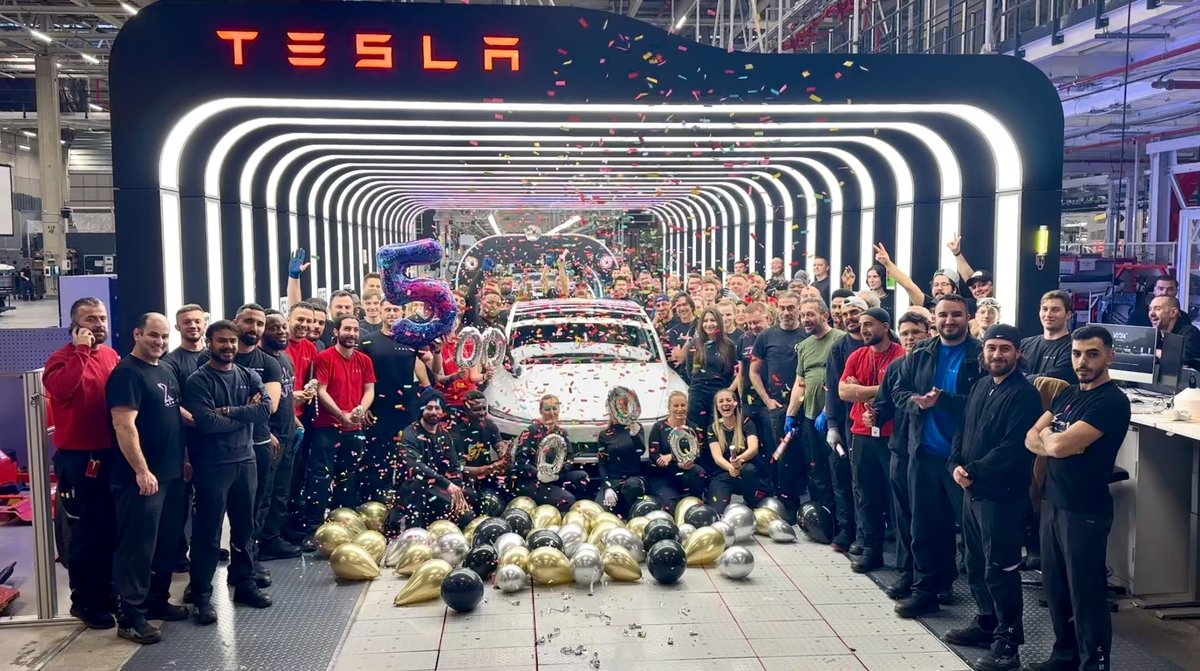
Tesla has officially unlocked a major manufacturing milestone at its Grünheide facility in Brandenburg, reaching an annualized production capacity of one million electric vehicles. Official company disclosures confirm that recent assembly line optimizations enabled the factory to reach this historic threshold. This milestone establishes the German plant as the single largest vehicle manufacturing facility by volume across Europe.
The achievement follows months of extensive technical commissioning across the complex. Regulatory filings reveal that local environmental authorities granted the final operational permits required to scale up operations after thorough resource consumption reviews. The approval marks a decisive transition for the facility, establishing a streamlined blueprint for sustainable high-volume EV manufacturing in Germany.
Infrastructure Expansion and Environmental Approvals
Key to securing regulatory permission for the expanded footprint was the implementation of advanced water recycling systems. Engineering data indicates that the facility now reuses ninety percent of process water through closed-loop filtration technology, keeping absolute consumption flat despite doubling output. Municipal utility reports further verify that industrial wastewater discharge remains well below environmental thresholds for the region.
Logistical infrastructure surrounding the plant has also undergone a comprehensive transformation to handle elevated material flows. Official company disclosures highlight the integration of a dedicated freight rail terminal directly adjacent to the main logistics hub, removing thousands of delivery trucks from regional highways. This rail corridor efficiently transports completed vehicles directly to major shipping ports.
Advanced Manufacturing Innovations and Yield Rates
Central to achieving this production velocity is the deployment of next-generation structural body castings. Engineering data demonstrates that utilizing massive giga presses has eliminated hundreds of individual stamping parts and thousands of spot welds from each chassis. This simplified vehicle architecture has reduced body shop footprints by over thirty percent while significantly increasing structural rigidity.
The facility has also expanded its on-site battery cell assembly lines to support high-speed vehicle manufacturing. Regulatory filings show that localized cell production now supplies structural battery packs directly to the primary vehicle assembly area. Industry analysts note that integrating cell fabrication with vehicle manufacturing has cut transit times and lowered overall battery logistics costs.
Automation density across the paint shop and final assembly lines has set new efficiency benchmarks for the global industry. Engineering data highlights that cycle times for key assembly stations have dropped below forty-five seconds per vehicle during peak operations. Advanced vision-guided robotics perform complex wiring and glass installations with millimeter precision, driving defect rates down.
Product Portfolio and Regional Market Supply
The scaled output primarily serves European demand for the refreshed Model Y while establishing capacity for next-generation platform models. Official company disclosures indicate that Giga Berlin has become the primary production hub for right-hand-drive variants destined for global export destinations. Manufacturing flexibility enables the plant to dynamically adjust model trim mixes based on real-time order volumes.
Beyond European borders, the facility has expanded its export footprint to service growing markets in the Middle East and Africa. Industry analysts emphasize that Giga Berlin offers shorter delivery lead times to Mediterranean ports compared to Asian manufacturing hubs. This strategic geographic positioning enables rapid logistics rerouting to satisfy sudden surges in international vehicle demand.
The rapid capacity scaling puts significant pressure on legacy European automakers competing in the premium electric segment. Industry analysts report that Tesla now commands a clear cost advantage per unit due to superior factory utilization rates and localized supply chains. Competitors face mounting challenges as the Berlin plant lowers unit costs while maintaining strong operational margins.
Economic Footprint and Labor Dynamics
The expansion has reshaped Brandenburg's industrial ecosystem, turning the region into a major European high-tech manufacturing hub. Regulatory filings confirm that direct employment at the Grünheide site has surpassed fifteen thousand skilled workers, with thousands more supported through regional supplier networks. Specialized training academies established with local institutions continue to pipeline technical talent into advanced manufacturing.
Labor relations have matured as factory management and local workplace councils collaborate on operational scaling plans. Official company disclosures report that ergonomic line redesigns and automated material delivery systems have noticeably improved worker safety metrics across shifts. Competitive compensation packages coupled with employee stock programs have kept turnover rates well below broader automotive industry benchmarks.
Supply chain localization efforts have accelerated, with European component vendors supplying a record proportion of parts. Engineering data reveals that over eighty percent of raw material inputs and sub-assemblies are now sourced within a five-hundred-kilometer radius of the plant. This tight geographical integration insulates operations from geopolitical maritime disruptions while optimizing inbound transport costs.
Strategic Outlook and Sustainable Scaling
Looking ahead, site planners continue to lay the groundwork for potential future expansion phases pending market demand. Official company disclosures indicate that additional land permits have been designated for expanded energy storage installations and solar canopy coverage. These clean energy additions aim to make Giga Berlin self-sufficient during peak hours, lowering the carbon footprint of every vehicle.
Reaching the one-million-vehicle milestone validates Tesla's aggressive European manufacturing strategy and sets a compelling benchmark for modern automotive engineering. Industry analysts conclude that the successful operational ramp at Giga Berlin reinforces the company's global capacity goals and strengthens its competitive moat. As production operates at peak velocity, the facility stands as a testament to rapid industry transformation.
