
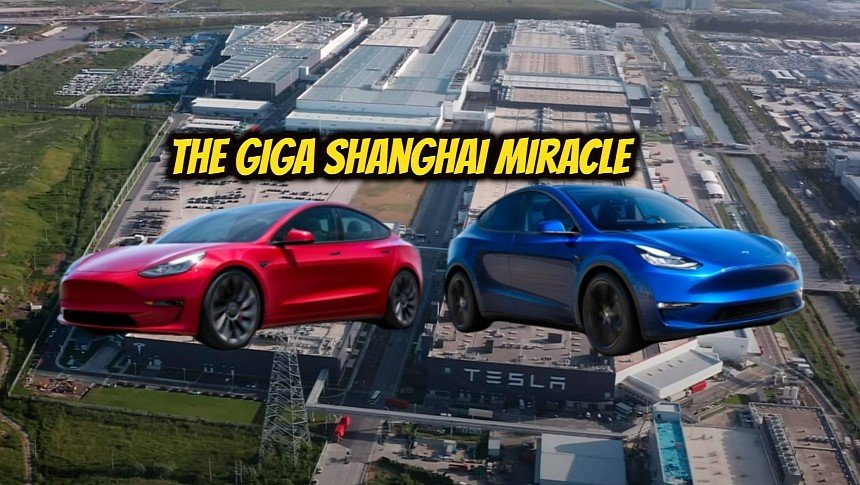
Tesla’s Gigafactory Shanghai has officially achieved unprecedented production throughput for the refreshed Model 3 Highland sedan, solidifying its position as the automaker's primary global export hub in 2026. Official company disclosures indicate export volumes have surged past previous quarterly milestones. The facility continues to supply key markets across Europe, Asia-Pacific, and Latin America with standardized vehicle configurations.
Shipping operations at the Port of Shanghai have scaled dramatically to accommodate elevated output. Logistical tracking from regulatory filings demonstrates optimized vessel loading procedures that reduce turnaround times for transoceanic car carriers. According to official company disclosures, optimized outbound shipping logistics have reduced delivery transit times to European destination ports by nearly fifteen percent compared to earlier export cycles.
Manufacturing automation at the Shanghai complex has reached new integration levels, minimizing build variance across export units. Advanced robotic assembly lines now handle stamping, welding, and final interior fitment with enhanced precision tolerances. Industry analysts note these structural efficiencies allow Giga Shanghai to maintain rapid line speeds while preserving the upgraded cabin quietness characteristic of Highland models.
Advanced Manufacturing and Logistics Integration
Engineering data confirms that structural refinements introduced in the Model 3 Highland have substantially improved aerodynamic efficiency and noise isolation. Acoustic glass installation across all windows, combined with redesigned body panels, lowers ambient cabin noise during high-speed cruising. Continuous suspension tuning updates applied at Giga Shanghai provide an optimal balance between dynamic handling and ride comfort for international roadways.
Battery integration strategy remains central to Giga Shanghai’s competitive export advantage. The plant utilizes updated lithium iron phosphate chemistry alongside high-density nickel variants for longer-range export trims. According to official company disclosures, recent cell manufacturing enhancements have increased energy retention in colder climates while optimizing fast-charging performance, making the vehicle attractive to northern European markets where winter range is vital.
Regulatory filings across multiple continents highlight full compliance with evolving safety, security, and environmental norms for 2026 model-year vehicles. Giga Shanghai has adapted its production routines to fulfill regional homologation requirements without creating line bottlenecks. Vehicles departing the factory floor meet European crash safety standards and Asian cybersecurity protocols without requiring extensive port-of-entry modifications prior to delivery.
Global Market Dynamics and Regional Demand
European market absorption of the Model 3 Highland remains robust, driven by corporate fleet transitions and retail demand. Dispatches landing at key maritime hubs such as Rotterdam and Zeebrugge are routed directly into regional distribution networks. Industry analysts report that refined styling, extended real-world range, and competitive pricing keep the Highland among the top-selling electric sedans across European territories.
In the Asia-Pacific region, right-hand-drive variants produced in Shanghai achieve accelerated delivery cadence. Markets including Australia, New Zealand, Japan, and Singapore have seen reduced customer wait times due to localized shipment schedules. Regulatory filings in these jurisdictions confirm that imported vehicles maintain consistent safety ratings and software functionality, strengthening Tesla’s brand positioning against competing EV manufacturers in regional markets.
Competition within the premium electric sedan segment has intensified, but Shanghai's cost structure gives Tesla strategic flexibility. Localized component supply chains in Eastern China allow the plant to source materials efficiently. Industry analysts emphasize that this structural cost advantage enables Tesla to preserve healthy unit margins while offering flexible trade-in programs and financing incentives in competitive international sales channels.
Financial Performance and Export Margins
Official company disclosures show that international dispatches from Shanghai generate favorable financial returns relative to assembly in higher-cost regions. Localization rates exceeding ninety-five percent for domestic components cushion Giga Shanghai against foreign currency fluctuations and global material price shifts. The facility’s capital efficiency per vehicle produced continues to serve as an operational benchmark for high-volume EV assembly across the automotive industry.
Capital expenditure plans outlined in regulatory filings detail ongoing investments aimed at debottlenecking logistics infrastructure around Shanghai. Upgrades include expanded vehicle staging yards, automated pre-shipment inspection systems, and streamlined port transport links. These strategic enhancements are designed to support higher daily export volumes while minimizing container dwell times and associated port storage expenses during peak shipping months.
Operational Efficiencies and Quality Control
Quality assurance processes integrated into final assembly lines have significantly curtailed post-transport servicing claims. Automated optical inspection systems analyze paint depth, panel alignment, and interior fitment before export release. Industry analysts observe that vehicle quality upon arrival at international delivery centers rivals legacy luxury automotive standards, lowering warranty reserve allocations and enhancing long-term owner satisfaction.
Strategic Outlook for 2026 and Beyond
Ultimately, Giga Shanghai’s expansion of Model 3 Highland exports reinforces Tesla’s strategy of using localized manufacturing centers to drive global electric vehicle adoption. Pairing precise production techniques with efficient ocean transit keeps output high. As industry analysts conclude, Giga Shanghai remains the foundational core of Tesla’s international vehicle dispatch operations throughout 2026 and into future production cycles.
