
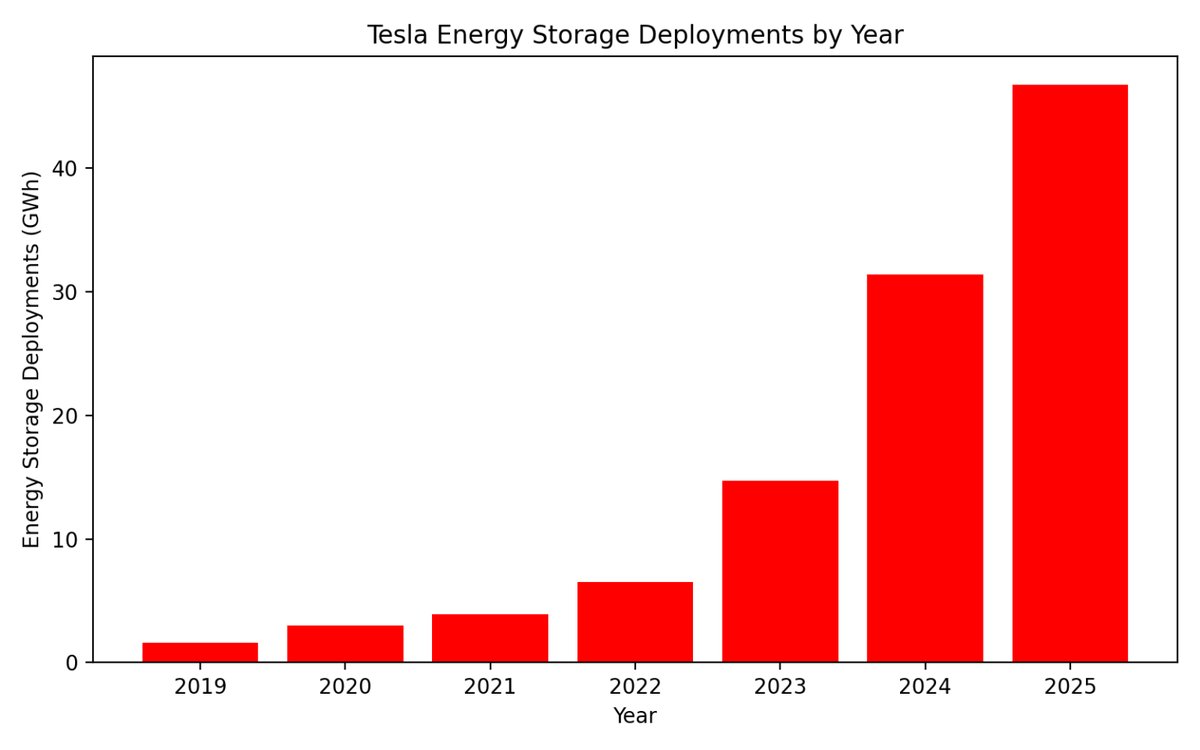
Tesla's energy division has achieved an unprecedented financial milestone, recording its highest-ever quarterly commercial energy storage revenue entering 2026. This performance underscores a massive shift in the automotive manufacturer's long-term business profile, as utility-scale storage deployments outpace broader market expectations. The financial surge highlights how critical clean energy grid architecture has become to modern industrial operations worldwide.
According to official company disclosures, the surging profitability stems directly from accelerated global deployments of the Megapack 2 XL system. Utility providers and independent power producers are rapidly contracting for large-scale battery storage to stabilize regional electrical infrastructure. This commercial momentum demonstrates that grid-scale storage is now a mature, highly lucrative business pillar operating alongside electric vehicle manufacturing.
Utility-Scale Scaling Drive Historic Margin Gains
Engineering data indicates that manufacturing efficiencies at the Lathrop Megafactory in California and the newly expanded Shanghai facility have significantly reduced unit costs. High throughput production lines allowed the company to satisfy backlogged commercial contracts ahead of schedule. Consequently, gross margins for the energy storage segment reached record highs, far exceeding historical performance metrics observed across previous reporting periods.
Industry analysts note that demand for heavy-duty grid storage is being driven by rapid expansion in artificial intelligence data centers and renewable energy integration. High-capacity battery installations allow operators to store excess solar and wind power during peak generation hours, releasing it when spot electricity prices surge. This economic dynamic has turned commercial energy infrastructure into a vital capital expenditure priority for global utilities.
Regulatory filings reveal that international markets contributed more than half of the total energy storage revenue recorded in the most recent fiscal quarter. Massive utility projects across Australia, Western Europe, and North America were connected to local power networks during this period. The rapid commissioning of these projects reflects streamlined integration procedures and standardized hardware architectures developed specifically for massive grid deployment.
Technological Hardware Advances Accelerate Grid Adoption
Engineering data confirms that the latest Megapack architecture incorporates refined lithium iron phosphate chemistry designed to maximize cycle life while lowering thermal risks. Advanced liquid-cooling thermal management systems maintain optimal cell temperatures under extreme environmental loads, significantly lowering long-term maintenance requirements. These hardware improvements have convinced conservative power generation entities to commit to longer multi-gigawatt deployment contracts.
Beyond hardware durability, autonomous energy trading software has played a crucial role in driving commercial revenues. The proprietary platform enables project owners to automatically bid stored electricity into wholesale energy markets in real time. Official company disclosures highlight that software licensing fees tied to this grid-management ecosystem are creating high-margin recurring revenue streams alongside hardware deliveries.
Industry analysts stress that energy storage has evolved from a secondary accessory into a central profit engine for the business. As electric vehicle unit margins adjust to market saturation, utility storage yields stable, highly predictable cash flows. Financial models project that energy storage could soon generate a substantially larger percentage of total corporate income if current deployment trajectories continue throughout 2026.
Supply Chain Optimization and Global Production Expansion
Production capacity expansion across primary manufacturing hubs has proven essential to achieving these record financial results. Regulatory filings demonstrate that raw material supply chains for battery cells have stabilized following years of volatile pricing dynamics. Strategic localized procurement strategies have reduced transport overhead while mitigating geopolitical trade disruptions that previously impacted international utility project timelines.
Engineering data reveals that assembly line automation at key manufacturing centers reached new benchmark speeds over the past year. Automated quality verification systems ensure that full-scale battery modules meet rigorous international grid standards before export. This elevated output pace has enabled the company to fulfill multi-gigawatt utility orders without creating bottlenecks in domestic distribution logistics.
Industry analysts point out that competitors are struggling to match the manufacturing scale and integrated software capabilities currently offered. While traditional industrial suppliers provide individual components, unified turn-key storage solutions offer faster deployment schedules and lower installation overhead. This comprehensive structural advantage allows the company to capture premium pricing power despite increasing global market competition.
Long-Term Outlook for Energy Division Growth
Looking ahead through 2026, official company disclosures project continued double-digit growth for commercial energy storage revenues. Additional production capacity scheduled to come online later this year will further expand global shipping volume. Strategic partnerships with multinational power utilities suggest that contract order books remain filled through the end of the decade, signaling sustained operational tailwinds.
Engineering data underscores that next-generation battery cell formats currently under development will further increase energy density per footprint area. Higher energy density allows developers to construct larger storage capacity reserves on smaller parcels of commercial real estate. This spatial efficiency is particularly valuable for suburban substations and urban data centers where land acquisition costs remain prohibitively high.
Ultimately, the record commercial storage revenue marks a permanent evolution in the electric vehicle pioneer's corporate identity. Regulatory filings prove that clean energy generation and storage assets are fast becoming equal partners to mobility operations. As global electrification accelerates, commercial energy storage stands poised to redefine power grid reliability and corporate financial performance for years to come.
