
Tesla Cybercab Passenger Tests Begin on Public Austin Roads
After years of ambitious promises, controlled demonstrations, and prototype showcases, Tesla’s purpose-built Cybercab has finally begun carrying everyday passengers on public roads. Initial footage captured during recent trials in Austin, Texas, reveals a surprisingly ordinary ride experience. For an autonomous vehicle entirely devoid of traditional physical driver controls like steering wheels or pedals, being completely unremarkable is perhaps the ultimate compliment.
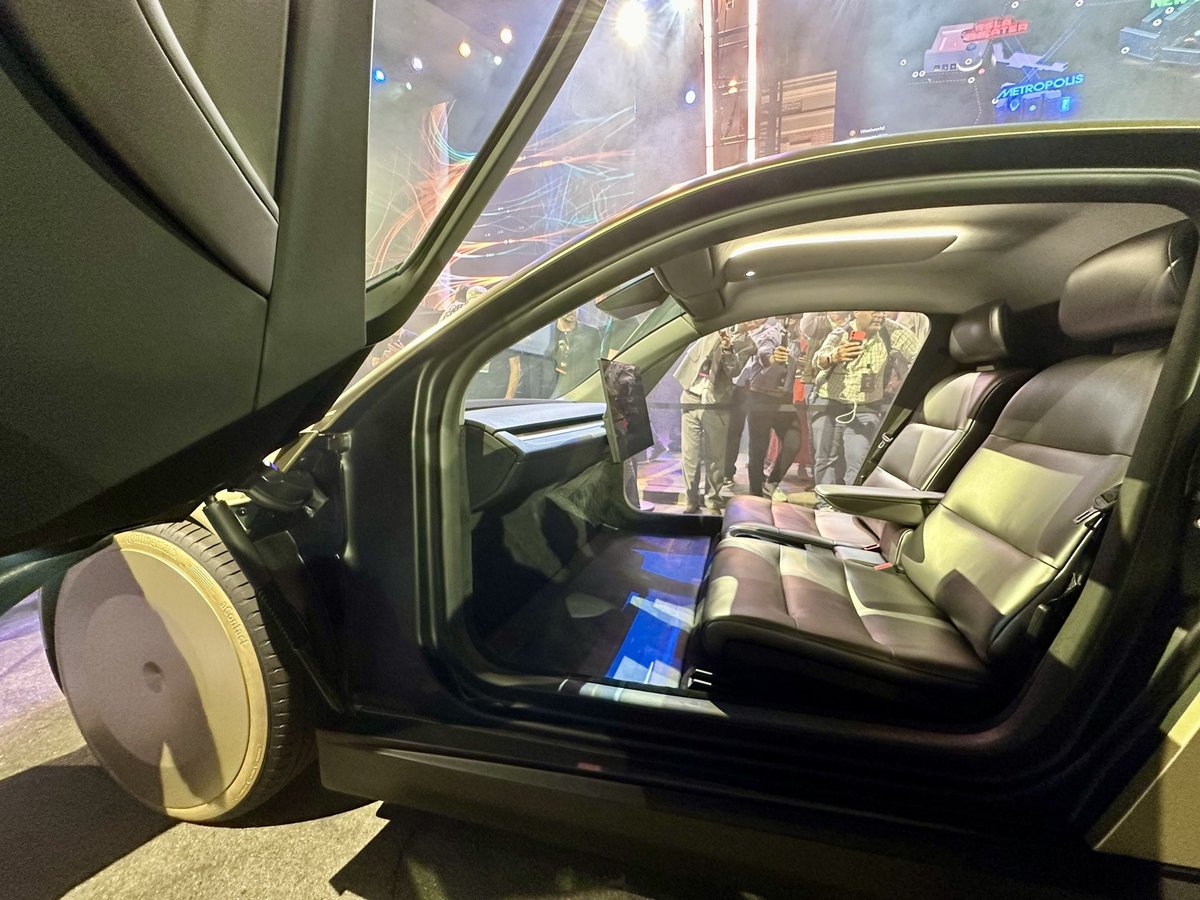
Public video footage shared by early riders demonstrates the straightforward process of hailing and riding in the custom electric vehicle. Passengers enter the two-seater cabin as the motorized butterfly doors automatically swing closed. Once seated, riders simply tap a prominent "Start Ride" button on the massive central dashboard display, prompting the vehicle to seamlessly pull into active traffic without any human driver intervention.
A Driverless Milestone on Public Texas Roads
During the recorded demonstration through residential and commercial zones, the vehicle navigated its designated route with notable composure. Observers highlighted the absence of sudden braking maneuvers, hesitation at intersections, or abrupt steering inputs. The vehicle smoothly approached and absorbed speed bumps along the roadway, maintaining a quiet, comfortable, and controlled ride quality that closely mirrored that of a seasoned human driver.
Industry watchers note that achieving an unexciting, drama-free trip is precisely what autonomous ride-hailing platforms require to gain widespread consumer trust. Driverless taxis must blend seamlessly into the flow of surrounding traffic without alarming passengers or frustrating neighboring motorists. In this initial public outing, the Cybercab delivered an experience described by onboard riders as soft, serene, and delightfully uneventful throughout the entire journey.
Inside the Cabin Experience Without Physical Controls
The absence of a steering column and pedal assembly fundamentally reshapes the interior layout of the Cybercab. Although the vehicle maintains a compact exterior footprint, the cabin offers surprisingly generous legroom and shoulder space. Passengers sit on an integrated two-person bench seat that slides forward and backward as a unified structure, accompanied by reclining backrests designed for long-distance comfort.
Centralized software controls serve as the primary interface for every in-cabin function. Positioned prominently between the seats is a massive display screen, estimated at approximately 21 inches. Through this central hub, passengers adjust climate settings, alter seating positions, open or close the butterfly doors, select entertainment options, and track the vehicle’s real-time progress along the navigation route without needing physical buttons or dials.
Software Glitches and Early Operational Hurdles
While the core mechanical and navigation performance proved exceptionally smooth, the passenger trial was not entirely without minor software hiccups. During the trip, an attempt to use Tesla’s integrated Grok voice assistant to lower the cabin temperature resulted in a momentary misinterpretation. Rather than adjusting the air conditioning, the system briefly mistook the verbal command for a request to alter the navigation destination.
Although quickly resolved via the touchscreen interface, the voice recognition error underscores the ongoing refinement necessary for fully automated user experiences. Early riders and enthusiastic supporters have praised the vehicle's driving capabilities, with some claiming it already rivals human drivers. However, automotive analysts emphasize that a single successful demonstration in favorable conditions represents only an initial step toward commercial readiness and regulatory approval.
Regulatory Filings Point to Scaling Operations
Public regulatory disclosures and state vehicle registrations indicate that Tesla has been steadily laying the groundwork for this operational launch. Production records show the first completed Cybercab units began rolling off assembly lines in February. By June, driverless prototypes featuring no physical controls were actively undergoing street testing in Texas, operating with safety monitors stationed in the passenger seat.
Recent commercial registration filings in Texas reveal that the automaker expanded its local operational fleet to 45 Cybercabs just prior to launching public passenger rides. This rapid buildup suggests a structured effort to collect real-world fleet data, evaluate autonomous dispatch algorithms, and refine passenger interaction protocols across a controlled urban grid before expanding testing parameters to broader geographic regions.
The Long Road to Widespread Autonomous Deployment
Navigating a pre-mapped, geofenced area of Austin under mild weather conditions is vastly different from operating across complex national transport networks. Industry experts stress that the Cybercab must still demonstrate reliability in severe weather scenarios, including heavy rain, fog, and snow. It must also prove capable of responding safely to unexpected construction zones, emergency vehicles, and aggressive driving behaviors from human motorists.
Scaling autonomous ride-hailing services to dense metropolitan environments like New York or Chicago presents vastly higher operational complexity. Urban centers feature dense pedestrian traffic, unpredictable delivery vehicles, double-parked delivery trucks, and erratic cyclist movements. Overcoming these real-world edge cases remains the definitive hurdle for full commercialization, regardless of how polished an isolated suburban test ride appears.
Nevertheless, transitioning from static concept vehicles to carrying real passengers on public streets marks a pivotal turning point for the EV manufacturer. The sight of a steering-wheel-free vehicle handling everyday traffic without incident provides tangible proof that driverless hardware architecture is moving closer to reality. For an industry built on high-stakes innovation, a perfectly boring ride represents substantial progress.
