
Will General Motors Bring Apple CarPlay Back To Electric Cars?
General Motors has unveiled a comprehensive preview of its next-generation infotainment system, sparking renewed debate among automotive enthusiasts. Scheduled to debut on the 2027 Chevrolet Silverado and GMC Sierra, the updated user interface highlights enhanced truck features and built-in navigation options. Surprisingly, buried deep within the product reveal is an unexpected feature announcement: updated integration for both Apple CarPlay and Android Auto.
This revelation has immediately caught the attention of the automotive industry, primarily because of the automaker's recent stance on smartphone integration. For several years, GM has insisted on steering away from external projection software. Seeing Apple CarPlay explicitly mentioned in official product previews for upcoming truck platforms suggests that the company may be reconsidering its software strategy across its broader vehicle portfolio.
A Surprising Software Shift in Next-Generation Trucks
The inclusion of updated smartphone projection tools in upcoming full-size pickup trucks marks a noteworthy pivot in GM’s digital presentation. While full-size gas and diesel trucks have traditionally maintained CarPlay capabilities, the timing of this new software interface raises intriguing questions. Automakers rarely redesign software architectures solely for internal combustion models without considering how those systems scale across their entire manufacturing footprint.
Analysts note that vehicle software development requires immense financial resources, encouraging manufacturers to standardize interfaces wherever possible. By showcasing an upgraded implementation of Apple CarPlay and Android Auto, GM demonstrates a willingness to refine phone projection experiences rather than abandon them entirely. This move has reignited discussion regarding whether drivers will eventually see phone projection return to electric models.
The Controversy Behind GM’s Original CarPlay Ban
To understand the significance of this update, one must look back to GM’s polarizing decision in 2023. The company announced it would eliminate Apple CarPlay and Android Auto from all newly launched electric vehicles, starting with models like the Chevrolet Blazer EV. Instead, GM introduced a proprietary infotainment ecosystem co-developed with Google, aimed at creating a deeply integrated digital experience for drivers.
That strategic decision met widespread resistance from prospective electric vehicle buyers who consider smartphone projection a deal-breaker. Many consumers rely heavily on Apple CarPlay for seamless access to their personal media, navigation, and communication apps. While GM’s built-in software received praise from some reviewers for its clean graphics and smooth responsiveness, the lack of familiar phone connectivity remained a persistent point of contention.
How the New Split-Screen Architecture Changes the Game
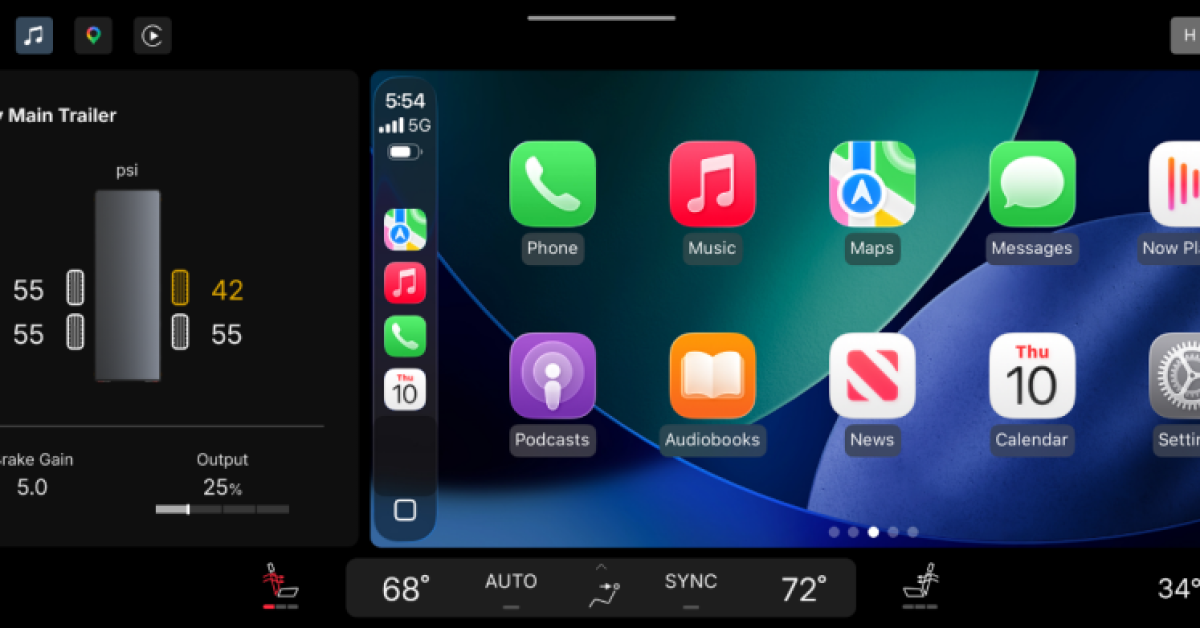
A key highlight of the newly previewed user interface is its innovative split-screen layout for phone projection systems. Historically, activating Apple CarPlay meant taking over the vehicle's entire central display panel. To adjust vehicle-specific controls or check high-voltage battery status, drivers were forced to leave the CarPlay environment, navigate through native submenus, and manually re-launch the phone interface.
The newly designed interface resolves this clunky user experience by isolating smartphone projection within a customizable floating window on the display. Persistent software controls for climate management, audio volume, vehicle settings, and battery range remain constantly visible alongside the projection environment. This hybrid layout reduces driver distraction while allowing third-party phone applications to operate alongside native vehicle functions.
Scalable Tech Across Electric and Internal Combustion Fleets
What truly fuels speculation about a potential CarPlay revival in electric vehicles is a specific detail found within company disclosures. Official documentation describes the new software interface as being built upon a single, scalable foundation designed to span electric, gasoline, and diesel-powered vehicles. This unified software architecture implies that the technological underlying framework is identical across powertrains.
Because both the Chevrolet Silverado and GMC Sierra line-ups feature both internal combustion engine variants and battery-electric models, software compatibility across both power sources is already technically feasible. If the underlying operating system natively supports split-screen CarPlay for gas-powered trucks, implementing the same functionality on electric counterparts would require minimal engineering effort, depending entirely on executive strategic direction.
What This Means for Future EV Buyers
Despite the technical capabilities built into the single scalable foundation, General Motors has not officially confirmed whether Apple CarPlay will return to its electric lineup. Industry observers point out that maintaining software differentiation between internal combustion vehicles and electric models remains a corporate choice. However, offering a refined split-screen solution addresses many of GM's initial technical complaints about phone projection.
Automakers originally argued that external phone interfaces lacked the deep system access necessary for managing battery conditioning, route planning for charging stations, and vehicle telemetry. By implementing a split-screen design, GM can preserve native charging intelligence and battery diagnostics while giving drivers the familiarity of Apple CarPlay. This middle ground could satisfy both corporate software ambitions and customer preferences.
As the automotive industry transitions toward software-defined vehicles, customer pushback continues to shape product development decisions. If GM eventually expands this updated interface to its electric fleet, it could eliminate one of the biggest hurdles facing its EV adoption goals. For now, prospective buyers must wait for further corporate clarity as the 2027 truck updates draw closer to production.
