
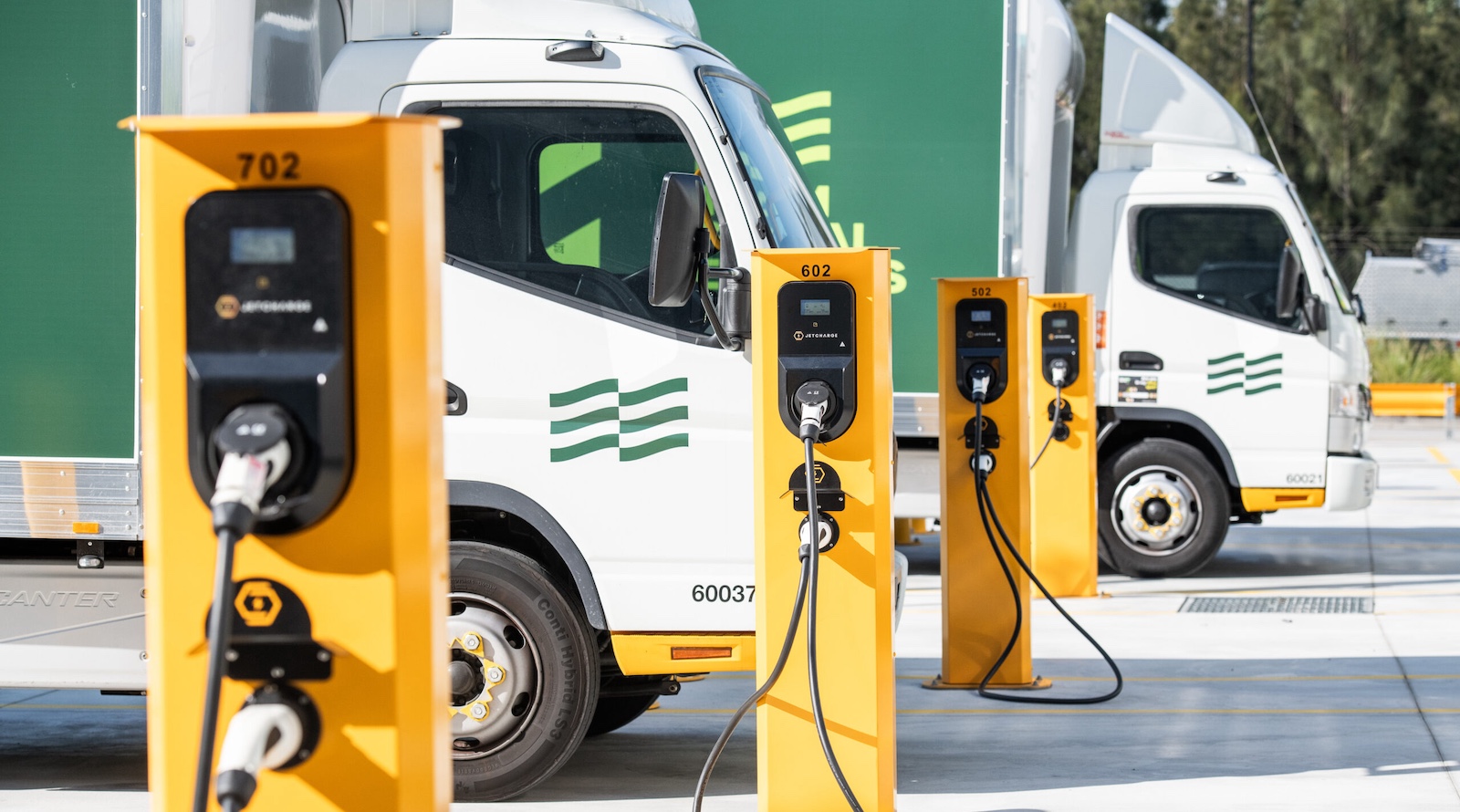
How JET Charge Drives Australia's Heavy Vehicle EV Shift
Australia’s commercial transport sector is standing at a critical juncture as rapidly escalating diesel costs reshape the economics of heavy transport. Charging infrastructure developer JET Charge is urging fleet operators across the country to accelerate their transition toward battery-electric commercial vehicles. According to industry statements from the company, switching commercial fleets to electric power yields fuel cost savings that are no longer marginal, but entirely transformational.
For decades, diesel fuel served as the undisputed backbone of Australia’s freight and logistics industry. However, recent geopolitical tensions and supply chain disruptions have driven pump prices to around AU$2.60 per liter, far exceeding historical baseline models. As operating margins tighten, the financial case for retaining internal combustion engines in commercial fleets is crumbling under the weight of sustained energy market volatility.
Financial modeling indicates that replacing a 100-vehicle heavy transport fleet with electric alternatives can net operators up to AU$4.5 million in direct savings, with potential for even higher returns as fuel costs rise. When combined with significantly reduced mechanical maintenance expenses, the payback period for deploying dedicated depot charging infrastructure is now measured in months rather than years, making electrification an urgent financial imperative.
The Infrastructure Rush and Grid Capacity Bottlenecks
Despite the clear economic advantages, industry executives warn that physical infrastructure readiness remains the primary bottleneck for widespread adoption. JET Charge reports that commercial operators are compressing traditional five-year electrification roadmaps into 18-month deployment windows. This acceleration is driven by standard vehicle leasing cycles, where choosing another cycle of diesel trucks risks locking transport companies into obsolete, high-cost technology for years.
A major challenge facing fleet managers is securing adequate electrical grid capacity before regional substations reach full allocation. Commercial vehicle fleets will increasingly compete for high-power connections against rapidly expanding, well-funded data centers and industrial facilities. Grid power availability operates on a strict first-come, first-served basis, meaning early applicants will secure high-voltage connections while latecomers risk costly project delays.
Operators that delay infrastructure investment risk being effectively locked out of the market until 2027 or 2028. By that time, tightening federal emissions standards will make operating legacy diesel assets increasingly expensive and legally complex. Preparing charging site designs, securing transformer upgrades, and completing civil engineering works require substantial lead times, requiring fleet operators to act well ahead of vehicle deliveries.
Current Market Action in Rigid Trucks and Heavy Semis
At present, the most immediate commercial traction is occurring within the medium rigid and last-mile delivery segments. Major retail and grocery operators, including IKEA and Woolworths, are already deploying zero-emission delivery vehicles across metropolitan distribution networks. These urban delivery routes offer predictable daily mileage and centralized depot returning patterns, providing an ideal operational environment for early-stage battery-electric truck deployments.
However, the focus is rapidly expanding toward heavy-duty Class 8 commercial vehicles and prime movers. Models from established OEMs and emerging manufacturers, including Volvo, Janus Electric, and Mercedes-Benz with the eActros, are gradually entering the Australian market. These platforms demonstrate that high-capacity electric drivetrains can effectively handle demanding regional freight routes previously dominated exclusively by high-displacement diesel engines.
International developments in Europe and China demonstrate the trajectory of heavy transport electrification. Showing this global momentum, specialized imported models like Windrose electric semi-trailers have recently landed at Australian ports. As these heavy-duty electric trucks undergo real-world trial programs in Melbourne and surrounding freight corridors, local transport managers are gaining valuable performance data regarding range, payloads, and duty cycles.
Strategic Fleet Procurement and Future Outlook
The shift away from diesel ends a 70-year dominance in Australia's heavy vehicle transport sector. A combination of persistent fuel price volatility, government-backed decarbonization incentives, and looming 2035 emissions targets has created a pivotal moment for logistics executives. Fleet electrification is no longer viewed as a speculative sustainability project, but rather as an active, high-priority procurement decision essential for long-term commercial survival.
Logistics companies that proactively transition to electric fleets gain a distinct competitive advantage over legacy operators struggling with inflated diesel expenses. By securing depot power allocations and establishing scalable charging hubs today, forward-looking transport companies protect their operational margins against future oil shocks while satisfying increasingly stringent corporate scope-3 emissions mandates set by major enterprise clients.
Ultimately, the transition of heavy road transport requires specialized infrastructure partners capable of scaling power systems ahead of vehicle deliveries. With fuel availability and energy security becoming top-of-mind concerns for commercial transport companies, deploying high-power depot chargers ensures that fleet operators remain resilient, cost-effective, and fully prepared as the zero-emission commercial vehicle market reaches full maturity.
