
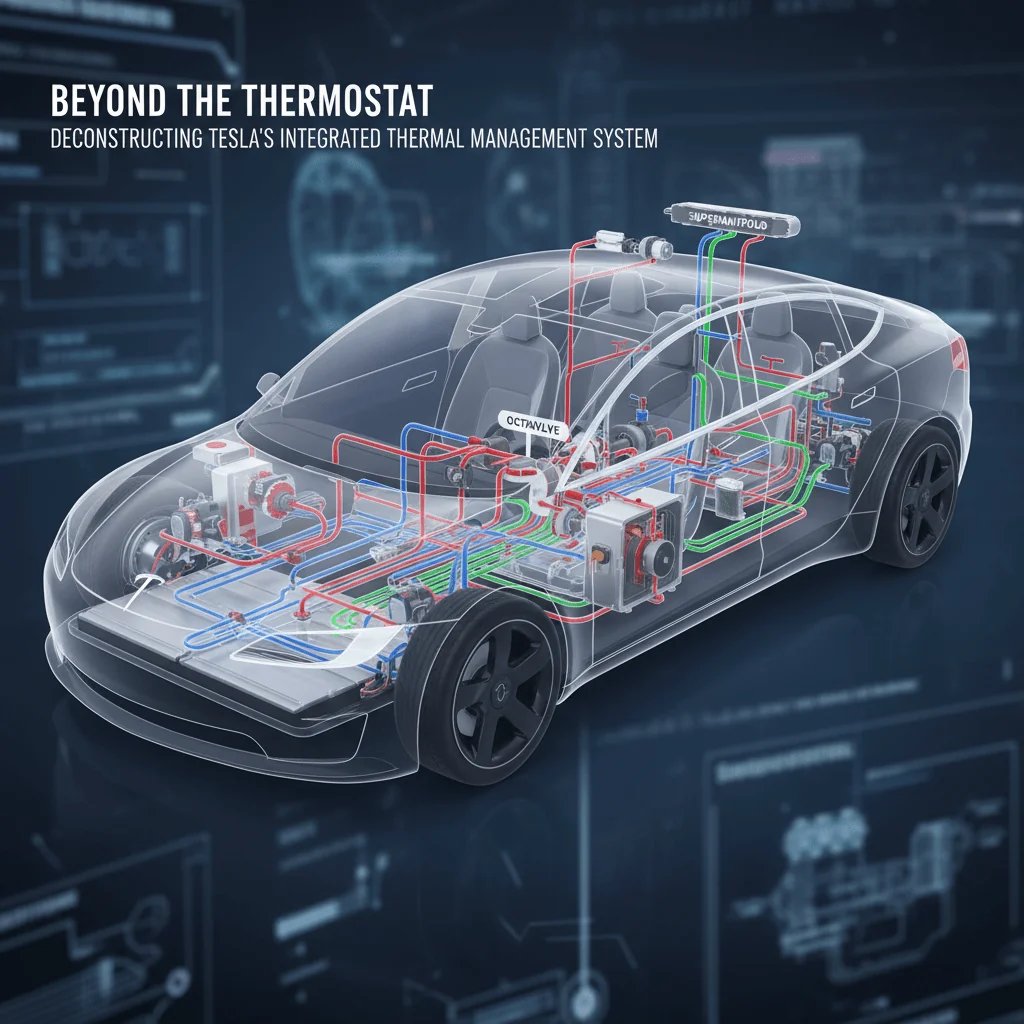
Engineering Evolution of the Octovalve Thermal Loop
As severe winter freezes sweep across North America and Northern Europe in 2026, real-world performance of electric vehicle climate systems faces intense scrutiny. Recent engineering data indicates that advanced thermal management systems have eliminated the catastrophic range drops historically associated with sub-zero motoring. Tesla's integrated heat pump architecture serves as a primary industry benchmark for energy preservation.
The core of this cold-weather capability centers around an intricate fluid distribution valve that orchestrates twelve distinct thermal modes across the vehicle. Official company disclosures reveal that the system dynamically routes thermal energy between drive units, high-voltage battery assemblies, cabin environments, and ambient air. By consolidating heat transfer pathways, parasitic electrical draw drops significantly.
Rather than relying solely on ambient air extraction, which degrades when temperatures plummet below minus fifteen degrees Celsius, the heat pump captures internal losses. Industry analysts note that thermal energy harvested from electric motors, inverter electronics, and onboard computing systems is recycled into the cabin. This closed-loop scavenging technique ensures high heating efficiency during arctic freezes.
Sub-Zero Efficiency and Range Retention Metrics
Comparative engineering data compiled during winter testing demonstrates that modern heat pump configurations retain substantially more usable range at sub-zero temperatures. In controlled trials conducted at minus twenty degrees Celsius, vehicles equipped with advanced thermal scavenging experienced a twenty-two percent drop in driving range. In contrast, legacy resistance heating models lost over forty percent.
The efficiency delta is directly tied to the coefficient of performance achieved by the vehicle refrigerant compressor. Official company disclosures indicate that the coefficient remains above one point five even under severe frost, whereas resistive heating elements are capped at one point zero. This thermodynamic advantage translates into lower energy consumption on frozen highways.
Regulatory filings highlight how cabin comfort management has been optimized without starving the battery pack of necessary thermal conditioning. Lithium-ion chemistry requires moderate internal temperatures to discharge effectively and absorb regenerative braking energy. Modern software management balances passenger warmth with battery heater loops, ensuring full regenerative deceleration capability during low-temperature driving.
Software Control and Automated Pre-Conditioning
Intelligent software integration plays an equally decisive role in managing extreme cold weather efficiency across fleet operations. Engineering data shows that predictive thermal algorithms condition the battery pack miles before arriving at a fast-charging station. Utilizing heat generated by intentional motor inefficiency, the system elevates pack temperatures while preserving primary battery energy.
Automated defrost cycles represent another significant breakthrough in cold-weather climate control software. Official company disclosures explain how sensors monitor frost accumulation on external heat exchanger coils in real time. Instead of running continuous defrost cycles that waste power, the system executes rapid localized heating pulses, clearing ice obstruction while sustaining cabin warmth.
Mobile application integration allows drivers to initiate pre-conditioning routines while connected to grid power prior to departure. Industry analysts observe that pre-heating the battery and cabin while plugged into charging infrastructure preserves full battery capacity for driving. This strategy eliminates initial warm-up penalties, ensuring immediate efficiency upon entering freezing highways.
Regulatory Filings and Regional Performance Benchmarks
Regulatory filings submitted across North American and European transportation authorities underscore the growing performance disparity between modern electric vehicles. Compliance documentation indicates that standardized cold-testing protocols mandate winter range reporting at minus seven degrees Celsius. Under these disclosures, advanced heat pump systems consistently maintain over eighty percent of their rated driving range.
Field evaluations conducted in Northern Scandinavian territories provide extensive operational verification of hardware durability under severe frost conditions. Engineering data collected across millions of fleet kilometers shows zero structural valve failures related to low-temperature refrigerant circulation. Synthetic low-viscosity compressor lubricants have eliminated mechanical wear during cold startup sequences in sub-zero climates.
Industry analysts note that traditional automakers are accelerating efforts to license or replicate integrated heat loop architectures to remain competitive. Standardized comparative testing reveals that vehicles relying on legacy modular plumbing experience severe thermal throttling during fast charging in freezing weather. Integrated thermal loops maintain optimal heat dissipation, enabling consistent charging speeds.
Market Impact and Consumer Adoption Patterns
The proven reliability of modern heat pumps in extreme weather is significantly influencing regional sales distribution trends. Official company disclosures show elevated market adoption in northern regions where cold-weather range anxiety previously muted consumer enthusiasm. Robust low-temperature performance has transformed winter drivability from a major industry challenge into a primary market driver.
Infrastructure requirements are also shifting as vehicle efficiency stabilizes during sub-zero operations. Industry analysts emphasize that reduced winter energy consumption eases peak electrical demand on municipal grid networks during extreme cold snaps. By minimizing battery drain per mile, electric fleets place far less stress on public fast-charging corridors during severe winter events.
Looking ahead, ongoing refinements in thermal management continue to set higher operational standards for the global automotive sector. Regulatory filings suggest that future environmental standards will incentivize further improvements in low-temperature heat exchanger efficiency. As heat pump design matures, sub-zero range loss will soon become an obsolete concern for electric vehicle buyers worldwide.
