
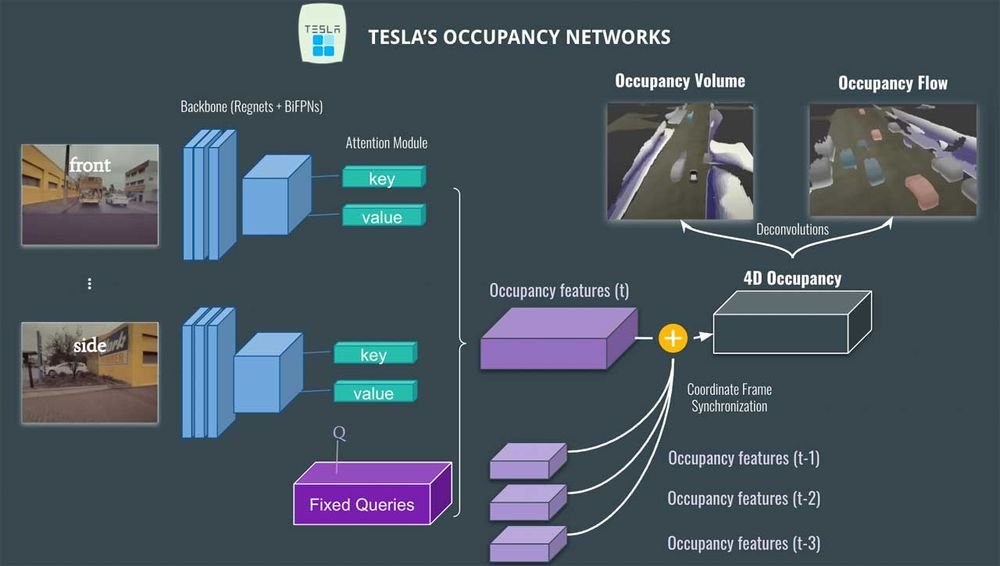
Tesla has officially launched a major software update featuring a redesigned Occupancy Network architecture aimed at eliminating long-standing perception errors. According to official company disclosures, the upgraded neural network enhances three-dimensional spatial understanding without relying on radar or lidar sensors. This milestone represents a significant technical leap for full self-driving capabilities across diverse driving environments.
The revised occupancy framework addresses unpredictable real-world anomalies that previously challenged vision-only navigation systems. Engineering data demonstrates that the new architecture predicts geometric shapes, dynamic debris, and unclassified roadside obstacles with unprecedented temporal consistency. By converting raw camera streams into a voxelized vector space, the vehicle constructs a high-resolution voxel map in real time.
Industry analysts note that solving long-tail edge cases remains the final hurdle for achieving unsupervised autonomous operation. Vehicles operating on the updated software exhibit significantly fewer phantom braking events and smoother path planning through complex intersections. Consequently, the automotive sector is closely scrutinizing this vision-centric approach as an alternative to expensive sensor suites.
Architectural Shifts in Spatial Perception
The fundamental innovation lies in how the neural network fuses temporal video features across all surrounding camera angles simultaneously. Official company disclosures indicate that the occupancy volume is now calculated using multi-camera spatial attention transformers. This approach allows the system to remember occluded objects even when temporary obstacles obscure the direct line of sight.
Previous iterations occasionally struggled with low-contrast conditions, such as driving directly into harsh sunlight or navigating torrential rainstorms. Engineering data shows that the 2026 network updates improve photons-to-control latency by twenty percent while dramatically reducing object misclassification. The system treats every volumetric pixel as either occupied or free, regardless of semantic recognition.
By decoupling physical spatial occupancy from explicit object labeling, the vehicle can avoid novel hazard types it has never encountered during training. Regulatory filings highlight that this class-agnostic perception model significantly reduces accident risk involving unusual cargo, fallen trees, or stray animals. The underlying network dynamically prioritizes immediate collision avoidance above secondary tasks.
Overcoming Edge Case Anomalies in Urban Scenarios
Urban environments present severe challenges due to unpredictable pedestrian movements, erratic cyclist behavior, and non-standard road construction zones. Official company disclosures reveal that the expanded occupancy network leverages high-frequency temporal memory to track moving entities through dense city corridors. The system accurately projects trajectory paths even when subjects navigate behind parked delivery trucks or temporary barricades.
Reflective surfaces and transparent barriers have historically confused pure-vision autonomous drive pipelines across the entire automotive industry. Engineering data confirms that the latest neural network weights filter out specular reflections from glass storefronts and standing water. As a result, vehicles maintain confident trajectory tracking through challenging parking garages, narrow alleys, and construction detours.
Furthermore, extreme weather resilience has seen marked improvement through advanced synthetic dataset generation and self-supervised video alignment. Industry analysts point out that vision processing now maintains spatial accuracy in heavy snow, blinding fog, and nighttime driving scenarios. The network effectively infers road geometry from subtle visual cues when lane markings are completely obscured.
Hardware Scaling and Fleet Learning Dynamics
The deployment of this software breakthrough relies heavily on Tesla's custom AI supercomputing clusters running dedicated training pipelines. Regulatory filings confirm that the training infrastructure processes billions of video frames collected from millions of customer vehicles worldwide. This massive fleet feedback loop automatically extracts rare driving scenarios to continuously refine the neural network weights.
Onboard computing hardware processes these complex transformer models locally without requiring active cloud connectivity or high-definition map data. Engineering data confirms that optimization techniques allow real-time inference on existing vehicle hardware without incurring thermal throttling. Efficient tensor utilization ensures that peripheral safety checks operate simultaneously alongside the core occupancy pipeline.
Industry Reactions and Regulatory Validation
Automotive safety organizations are evaluating the real-world performance metrics of vision-only perception against traditional multi-sensor setups. Regulatory filings demonstrate a measurable decline in disengagement rates per thousand miles driven across varied geographic regions. Federal regulators are analyzing this telemetry data as part of ongoing evaluations for autonomous commercial deployment approvals.
Competitors in the electric vehicle market are re-examining their reliance on expensive lidar hardware suites in light of these operational gains. Industry analysts suggest that demonstrating high safety margins using standard cameras could reshape capital expenditure strategies across the automotive landscape. Lower hardware costs translate directly to superior profit margins for mass-market electric vehicles.
Future Outlook for Vision-Based Autonomy
As vision-based occupancy network architectures mature, the boundary between assisted driving and fully autonomous transportation continues to blur rapidly. Official company disclosures indicate that future updates will integrate end-to-end foundation models to directly translate visual occupancy directly into vehicle control commands. This unified approach promises even lower control latency and more natural driving behavior.
The successful resolution of critical edge cases marks a decisive moment in the evolution of autonomous mobility. Engineering data indicates that scalable neural network models offer an expandable path toward universal self-driving functionality worldwide. The automotive industry now looks forward to seeing how these vision breakthroughs perform during widespread commercial operations.
